







Definition & Meaning
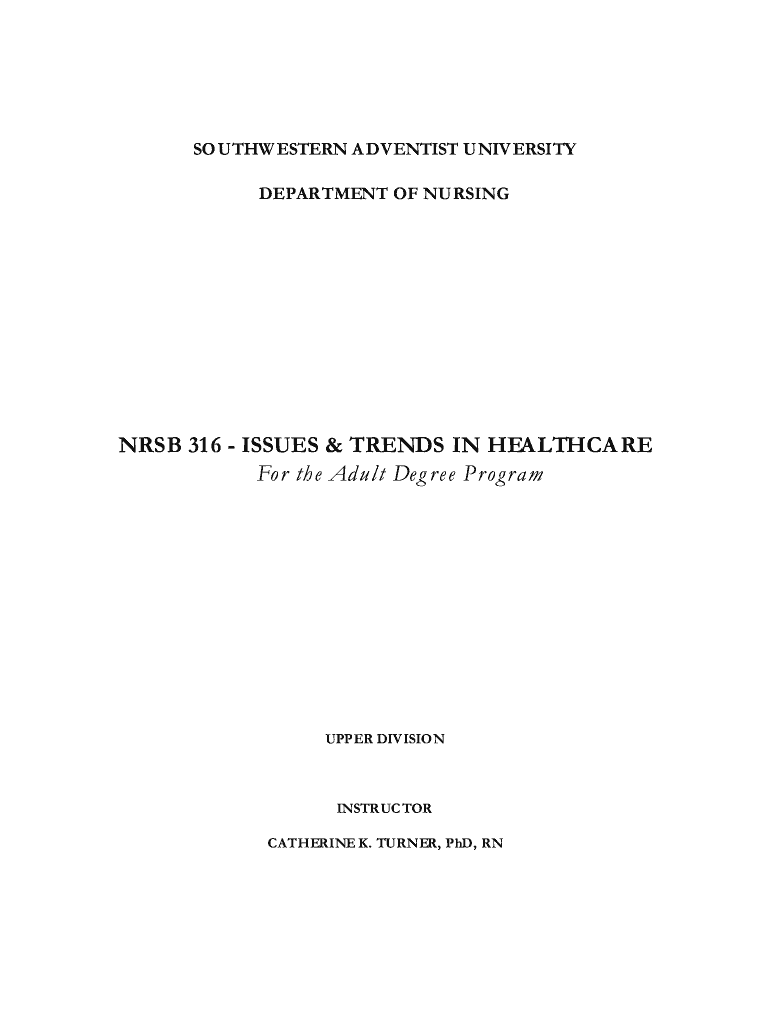
The "NRSB 316 - Issues and Trends in Healthcare - Catherine Turner" refers to a course titled NRSB 316, which is offered by Southwestern Adventist University. This educational course delves into the dynamic landscape of contemporary healthcare, focusing on issues and trends that impact professional nursing practice. Students enrolling in this course will explore a range of crucial topics including healthcare policies, ethical considerations, cultural sensitivity, and alternative healthcare options. Catherine Turner, likely a key figure or instructor, ensures that the course content remains relevant and comprehensive in addressing the challenges nurses face today.
How to Use the NRSB 316 Form
While NRSB 316 primarily refers to a course rather than a typical form, participants should understand how to utilize the course materials effectively for academic and practical applications. Utilizing the course involves engaging thoroughly with the curriculum, participating actively in discussions, and applying learned concepts to real-world nursing scenarios. Emphasis is placed on critically analyzing current trends and issues within the healthcare environment. Nursing students are encouraged to use the insights gained to further their knowledge and improve their practice.
Steps to Complete the NRSB 316 Course
-
Enrollment: Begin by ensuring you meet all prerequisites for NRSB 316, such as prior courses or relevant experience.
-
Access Course Materials: Once enrolled, obtain all required textbooks and resources, typically provided through the university's online portal.
-
Attendance and Participation: Engage fully with all lectures, workshops, and forums. Physical or virtual attendance is essential to capture the nuances of each topic discussed.
-
Assignments and Projects: Complete all assigned tasks, which may include essays, presentations, and group projects focused on contemporary healthcare issues.
-
Assessments and Examinations: Prepare for any mid-term and final assessments by reviewing all materials and engaging with study groups.
-
Feedback and Reflection: Finally, seek feedback from instructors and peers and reflect on your learning process to reinforce your understanding.
Key Elements of the Course
NRSB 316 encompasses several vital components that contribute to a well-rounded educational experience:
- Theoretical Frameworks: Fundamental nursing theories and models that support professional practice.
- Cultural Sensitivity: Analyzing the importance of cultural awareness in patient care and its impact on health outcomes.
- Ethical Considerations: Detailed examination of ethical dilemmas and decision-making processes in nursing.
- Healthcare Policy: Insight into the influence of governmental policies on healthcare delivery and nursing practice.
- Alternative Healthcare Options: Exploration of non-traditional methods and their integration with conventional practices.
Important Terms Related to NRSB 316
Familiarity with key terms enhances understanding and enables students to engage critically with course materials:
- Cultural Competence: Ability to interact effectively with individuals from diverse backgrounds.
- Evidence-Based Practice: Integrating clinical expertise with the best available research evidence.
- Patient Advocacy: Actively supporting patient rights and interests.
- Interprofessional Collaboration: Working collaboratively with healthcare professionals from various disciplines.
- Sustainability in Healthcare: Practices aimed at reducing environmental impact while improving public health.
Legal Use of the Course Content
NRSB 316 educates nursing students on the legal and ethical aspects of healthcare, preparing them for real-world application:
- Compliance with Healthcare Laws: Understanding federal and state regulations that govern nursing practice.
- Patient Consent and Confidentiality: Guidelines on maintaining patient rights and privacy in clinical settings.
- Professional Accountability: Charting the responsibilities and legal obligations of registered nurses.
Who Typically Uses NRSB 316
This course is designed for:
- Nursing Students: Those pursuing a Bachelor of Science in Nursing (BSN), particularly those focusing on enhancing their understanding of current healthcare challenges.
- Healthcare Professionals: Nurses and practitioners aiming to update their skills and knowledge on contemporary healthcare issues.
- Healthcare Administrators: Individuals involved in policy-making and healthcare management seeking deeper insights into nursing trends.
Why NRSB 316 is Important
Understanding these issues and trends is crucial for several reasons:
- Enhancing Patient Care: By keeping abreast of current theories and practices, healthcare professionals can improve patient outcomes.
- Navigating Changes in Healthcare: The course equips students with the tools needed to adapt to innovations and changes within the healthcare industry.
- Professional Development: Continuous learning is integral to a nurse's career advancement and professional satisfaction.
Examples of Using NRSB 316 Knowledge
Nurses who have completed NRSB 316 can apply their knowledge in various contexts:
- Clinical Practice: Implementing evidence-based practices to improve treatment protocols and patient care plans.
- Policy Advocacy: Engaging in initiatives to influence health policy changes at local and national levels.
- Education and Leadership: Sharing insights with peers and guiding new nurses in adopting best practices.
Each of these blocks offers an in-depth look at the components and significance of the NRSB 316 course, providing comprehensive coverage and practical application of its content.




