Definition & Meaning
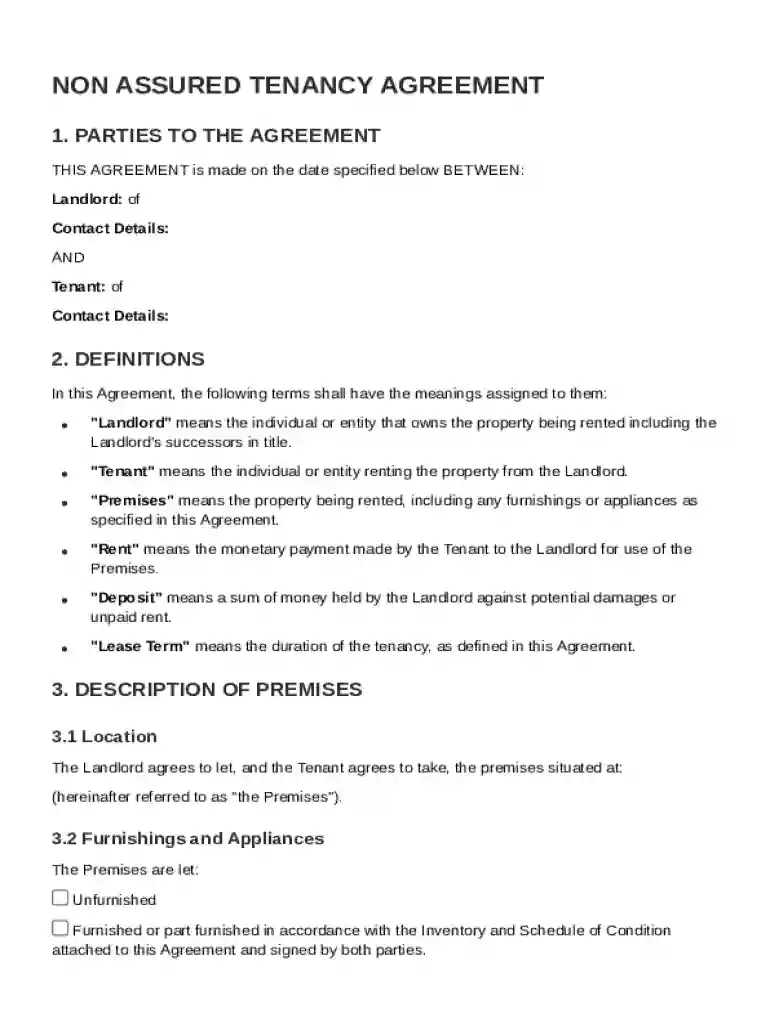
A Non-Assured Tenancy Agreement Template is a legal document used to outline the terms of a tenancy between a landlord and tenant that does not qualify as an assured tenancy under specific housing laws. This agreement typically applies when the property rental does not fall under the jurisdiction of certain statutory protections normally afforded to assured tenancies. Such agreements often cover short-term lets or circumstances where the landlord resides in the same property. The document aims to define roles and responsibilities clearly to prevent disputes.
Steps to Complete the Non-Assured Tenancy Agreement Template
Completing a Non-Assured Tenancy Agreement Template involves several detailed steps to ensure all critical terms are addressed:
- Read and Understand the Template: Begin by thoroughly reviewing the entire document to understand each clause and how it applies to your specific situation.
- Fill In the Landlord and Tenant Details: Input the full legal names and contact details of both parties involved in the agreement.
- Property Description: Include a detailed description of the rental property, including the address and any specific rooms or amenities included.
- Lease Term: Clearly specify the start and end dates of the tenancy, or outline any renewal terms.
- Rent and Payment Terms: State the monthly rental amount, due date, and preferred payment method. Include any late fee policies.
- Deposit Details: Describe the amount and terms under which the security deposit will be held, including conditions for its return.
- Signatures and Date: Both parties must sign and date the agreement to acknowledge understanding and acceptance of all terms.
Key Elements of the Non-Assured Tenancy Agreement Template
The template is composed of several important elements:
- Premises Information: A detailed description of the rental property.
- Rent Payment Schedule: Information on the amount and frequency of rental payments.
- Security Deposit Conditions: Terms related to the deposit amount, protection, and return.
- Maintenance Responsibilities: Allocation of repair and maintenance duties between landlord and tenant.
- Termination Procedures: Guidelines for ending the tenancy, including notice periods.
- Permitted Use of the Premises: Restrictions on how the property can be used, often including clauses about noise levels, subletting, and alterations.
Legal Use of the Non-Assured Tenancy Agreement Template
The legal use of the Non-Assured Tenancy Agreement Template is critical to its enforceability:
- Compliance with Local Laws: Ensure the agreement reflects the legal requirements of the jurisdiction where the property is located, as these can affect tenancy classification.
- Notice and Termination Compliance: Adhere to specific notice periods and termination procedures, which vary by state.
- Signature Requirements: Both parties must sign the agreement, and it may be advisable to have signatures witnessed.
Important Terms Related to Non-Assured Tenancy Agreement Template
Understanding key terms is essential for effectively using the template:
- Landlord and Tenant: The parties entering into the agreement.
- Quiet Enjoyment: A tenant's right to use the property without interference.
- Habitable Condition: The legal standard requiring properties be safe and livable.
- Breach of Contract: What occurs when either party fails to adhere to the agreement's terms.
State-Specific Rules for the Non-Assured Tenancy Agreement Template
State-specific regulations can significantly impact the content and enforcement of the agreement:
- California: May have stricter tenant rights provisions, such as rent control laws.
- New York: Specific disclosure requirements regarding the habitability and safety of rental units.
- Texas: Enforces clear disclosures about landlord access to the property for maintenance or inspections.
Examples of Using the Non-Assured Tenancy Agreement Template
Practical scenarios demonstrate the flexibility and application of the template:
- Short-Term Vacation Rentals: When a landlord rents out a part of their home for short durations, often seen in vacation hotspots.
- Company Lets: Where businesses rent properties for employee accommodation.
- Live-in Landlords: Leases involving a homeowner renting a room in their home while residing in the same property.
Versions or Alternatives to the Non-Assured Tenancy Agreement Template
Different templates might be used based on specific tenancy requirements:
- Assured Shorthold Tenancy Agreement: Used when the tenancy meets specific statutory conditions for more robust tenant protection.
- Exempt Tenancy Agreement: Applied in circumstances where rental agreements are outside the scope of typical residential tenancy laws.