






Definition and Purpose of the Mutual Separation Agreement Template
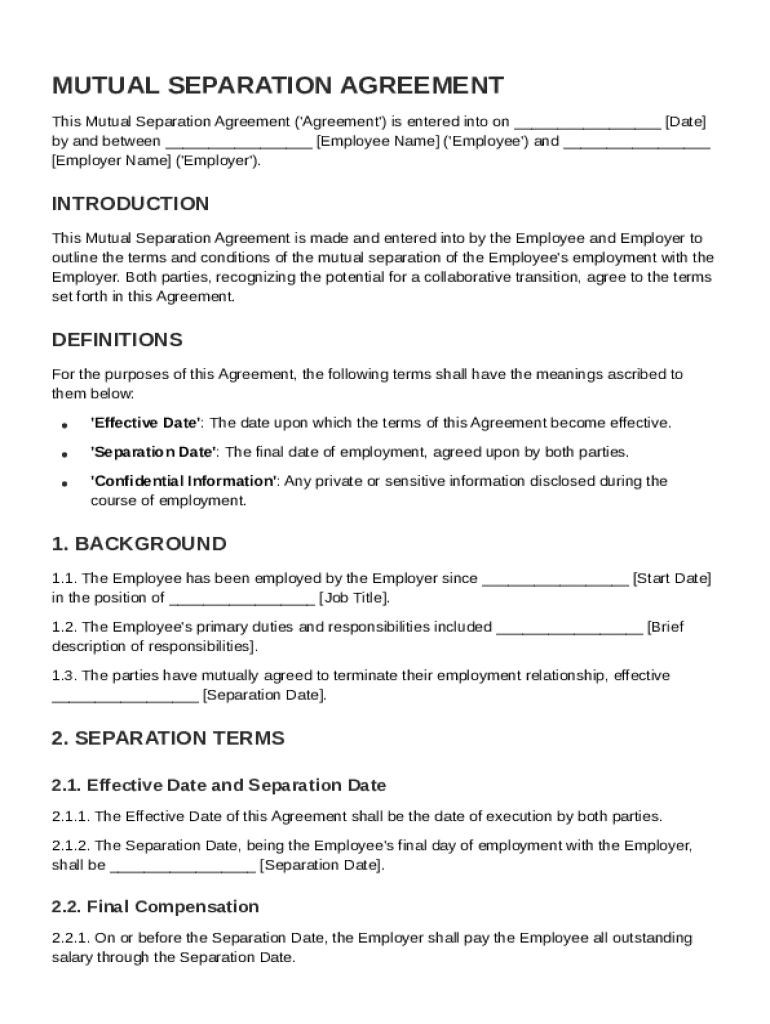
The Mutual Separation Agreement Template is a legal document that outlines the terms under which both an employee and employer mutually agree to end their employment relationship. This form is utilized to ensure that both parties are clear about their obligations and rights upon the separation. The agreement typically encompasses several clauses such as final compensation, benefits, confidentiality, non-disparagement, and mutual release of claims. It serves to protect the interests of both parties, preventing potential disputes or misunderstandings after the termination of employment.
Components Included in the Agreement
- Definitions: Clearly describes key terms used within the document.
- Separation Terms: Details about final compensation and the continuation of benefits.
- Confidentiality Obligations: Ensures that parties maintain confidentiality about business secrets or sensitive information after separation.
How to Use the Mutual Separation Agreement Template
To utilize the Mutual Separation Agreement Template effectively, it is important to customize the template according to the specifics of each case. This involves adjusting sections to reflect the agreed terms between the employer and employee accurately. Typically, legal professionals are consulted to ensure that all terms are legally binding and comprehensive. Once modified, the document should be reviewed by both parties. It may also be beneficial to conduct a final review with lawyers to guarantee that all legal standards are met.
Step-by-Step Customization Process
- Review Default Template: Begin by examining the standard template provided.
- Identify Specific Clauses: Highlight clauses that require customization based on your agreement.
- Consult Legal Advice: Before finalizing, seek professional legal advice to ensure terms meet legal standards.
Key Elements of the Mutual Separation Agreement Template
The template is composed of several critical elements, each serving a unique purpose in the separation process:
Final Compensation and Benefit Continuation
This section addresses how and when the final salary will be paid, including any severance arrangements and continuation of benefits like health insurance.
Mutual Release of Claims
Both parties agree to a release of claims against each other. This means neither the employee nor the employer can pursue legal action post-separation for matters related to their past employment.
Return of Property
Specifies the responsibility of the employee to return company property, which may include electronic devices, work uniforms, or confidential documents.
Legal Use and Implications of the Template
The legal function of a Mutual Separation Agreement is to formalize the end of an employment relationship and protect both parties from future legal claims. It is essential that the agreement complies with local, state, and federal labor laws. Because the U.S. has specific legal requirements for such agreements, it is crucial that the document is reviewed and possibly edited by a legal professional to make it enforceable in court.
Compliance and Enforcement
- State and Federal Laws: Ensure the template conforms with jurisdiction-specific labor laws.
- Employee Rights: Must acknowledge and not infringe upon the statutory rights of the employee.
State-Specific Rules and Considerations
While the core components of a Mutual Separation Agreement remain consistent across states, certain provisions may vary based on local laws. For example, California has specific rules on non-disclosure agreements and compensation. Employers and employees must ensure compliance with these local legal standards when drafting the agreement to ensure it holds up under state law scrutiny.
Variation by State
- California: Restrictions on confidentiality clauses related to unlawful acts.
- New York: Mandatory language on non-waivable rights such as conditions in severance agreements.
Examples and Scenarios of Using the Template
The template can be applied in a variety of employment termination scenarios. For instance, an amicable separation where both employee and employer agree due to personal circumstances of the employee, or in cases where downsizing necessitates a mutual termination arrangement. In each scenario, the document ensures clear terms and obligations, thereby minimizing disputes.
Real-World Applications
- Corporate Downsizing: Where employees are offered a package that includes a separation agreement for voluntary exit.
- Personal Circumstances: An employee's relocation or change in career path prompting mutual separation.
Important Terms Related to the Template
Understanding specific legal terms is crucial for both parties involved. Terms such as "consideration," which refers to what each party offers (benefits and rights for release of claims, for example), or “non-disparagement,” which involves commitment from both parties not to speak negatively about each other post-employment, are fundamental to the agreement.
Glossary of Key Terms
- Consideration: A vital clause detailing what is provided by each side in agreement.
- Non-Disparagement: Mutual agreement not to make negative public statements.
Obtaining and Completing the Template
The template can usually be obtained through HR departments, legal advisors, or online platforms specializing in legal documentation. When completing the template, thorough attention must be paid to all sections ensuring clarity and completeness of the agreement.
Completion Steps
- Download: Secure a copy from a credible source or legal service platform.
- Fill In Details: Input all necessary information specific to the employment relationship and separation terms.
- Review and Sign: Both parties should read through and sign, acknowledging understanding and agreement.
By understanding and utilizing the Mutual Separation Agreement Template with precision, both parties can ensure a smooth transition and maintain a professional relationship post-separation.