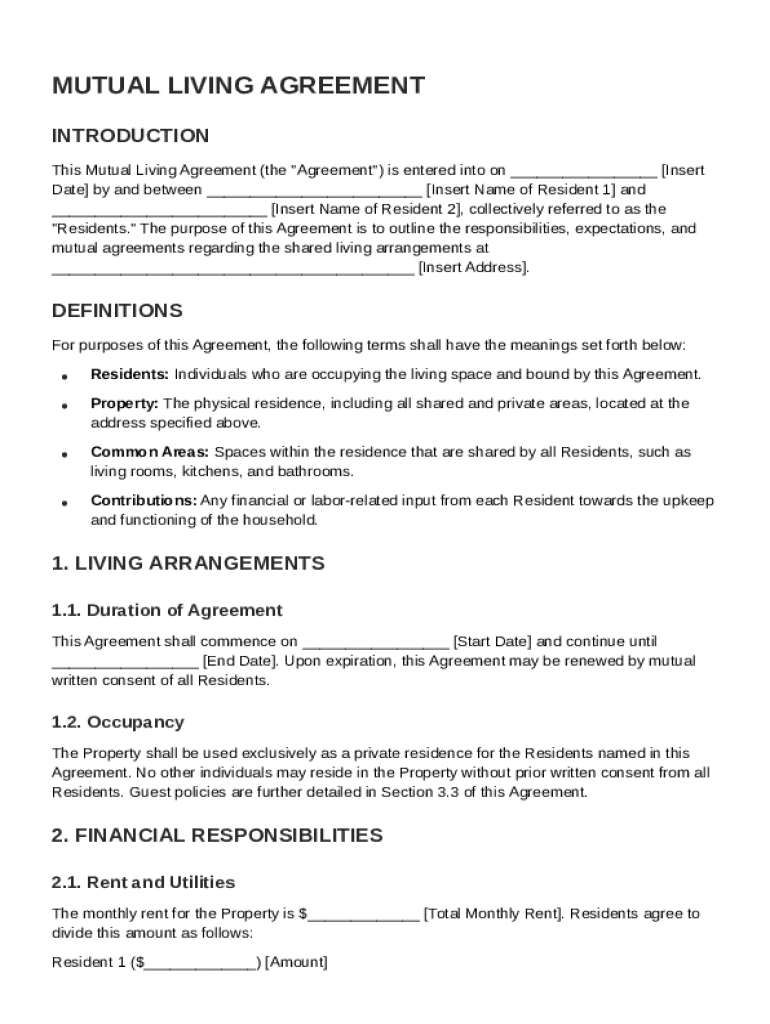







Definition and Meaning
A Mutual Living Agreement Template is a structured document that outlines the responsibilities and expectations for individuals sharing a living space. It serves as a formal understanding between roommates or cohabitants, ensuring everyone is clear about their roles and duties. This agreement typically includes stipulations regarding living arrangements, financial responsibilities, household duties, and other necessary arrangements to avoid misunderstandings and conflicts.
Core Components
- Living Arrangements: Specifics about shared and private spaces, use of common areas, and personal boundaries.
- Financial Responsibilities: Details on how rent, utilities, and other household expenses will be divided and paid.
- Household Rules: Guidelines on cleanliness, noise levels, and guest policies to maintain harmony.
- Conflict Resolution: Procedures for resolving disputes should any arise between parties.
Key Elements of the Mutual Living Agreement Template
In crafting a Mutual Living Agreement, several fundamental components must be addressed to create a comprehensive contract. These elements serve as the foundation for a fair and balanced agreement.
Living Arrangements and Privacy
- Room Assignments: Specific mention of who resides in which room and communal areas.
- Privacy Guidelines: Agreement on respecting each other's need for privacy and personal space.
Financial Responsibilities
- Rent Division: Clear delineation of how rent will be split among residents.
- Utility Payments: Allocation of responsibilities for utilities such as electricity, water, internet, and other shared costs.
- Payment Schedules: Establishing when and how payments will be made to ensure punctuality.
House Rules
- Cleaning Duties: Assignment and rotation of cleaning tasks for shared spaces.
- Guest Policies: Rules regarding visitors, including limits on duration and frequency of stays.
- Pet Policies: Inclusion of any agreements about pets, whether they're allowed, and any related care duties.
Important Terms Related to Mutual Living Agreement Template
Understanding certain legal and financial terms is crucial when drafting a mutual living agreement to ensure clarity and avoid disputes.
Common Terms
- Cohabitants: Individuals living together in a shared environment under the terms of this agreement.
- Leaseholder: Person whose name’s on the lease, responsible for the payment to the landlord.
- Joint and Several Liability: Legal term indicating all parties are collectively responsible for obligations under the agreement.
Special Clauses
- Termination Clause: Conditions under which the agreement can be terminated by either party.
- Amendment Procedures: Steps required to modify the agreement, ensuring mutual consent for any changes.
How to Use the Mutual Living Agreement Template
Utilizing a mutual living agreement involves several concrete steps to ensure it is effective and legally binding for all involved parties.
Steps to Fill Out the Template
- Gather Relevant Information: Collect all necessary data from all parties, including full names, contact information, and financial details.
- Discuss and Agree: Meet with roommates to discuss and finalize each segment of the agreement to ensure everyone has a voice.
- Draft Provisions: Work through each section of the template, filling out duties, responsibilities, and other requirements.
- Review and Revise: Carefully review the drafted agreement for accuracy and clarity, making revisions as needed.
- Sign and Keep Copies: Ensure everyone signs the final agreement and distribute copies to all parties for their records.
Practical Tips
- Customized Agreements: Tailor the template to meet the specific needs of all parties involved, considering unique living arrangements or preferences.
- Legal Review: Consider having a legal professional review the document to ensure compliance with local and state laws.
Legal Use of the Mutual Living Agreement Template
This document holds significant legal value, providing a formalized understanding that can be upheld in court if disputes arise.
Legal Considerations
- Binding Agreement: Once signed, these agreements are legally binding in many jurisdictions, meaning that all parties must adhere to its terms.
- Conflict Resolution: Provides a structured process for resolving conflicts, reducing the risk of escalated disputes.
State-Specific Rules for the Mutual Living Agreement Template
Different states may have specific requirements or customary practices that could influence the drafting of a mutual living agreement.
Key Variations
- State Regulations: How rental laws and tenant rights may impact the terms and enforceability.
- Local Customs: Typical practices within states regarding shared living arrangements, which may offer helpful context.
Examples of Using the Mutual Living Agreement Template
Several real-world scenarios illustrate the benefit and necessity of a well-drafted mutual living agreement.
Scenario Applications
- Student Housing: Ensures college roommates can cohabit peacefully by setting ground rules on study hours and shared responsibilities.
- Shared Business Apartments: Used by professionals sharing urban apartments to create a balanced and respectful living space, avoiding work-life conflicts.
Who Typically Uses the Mutual Living Agreement Template
A wide range of individuals can benefit from implementing a mutual living agreement, providing structure and clarity to a shared living situation.


Common Users
- College Students: Frequently utilize these agreements to set expectations in dorms or rented apartments.
- Young Professionals: Individuals starting their careers and sharing accommodations to mitigate living costs.
- Extended Families: Multi-generational households seeking to formalize family living arrangements.