






Definition & Meaning
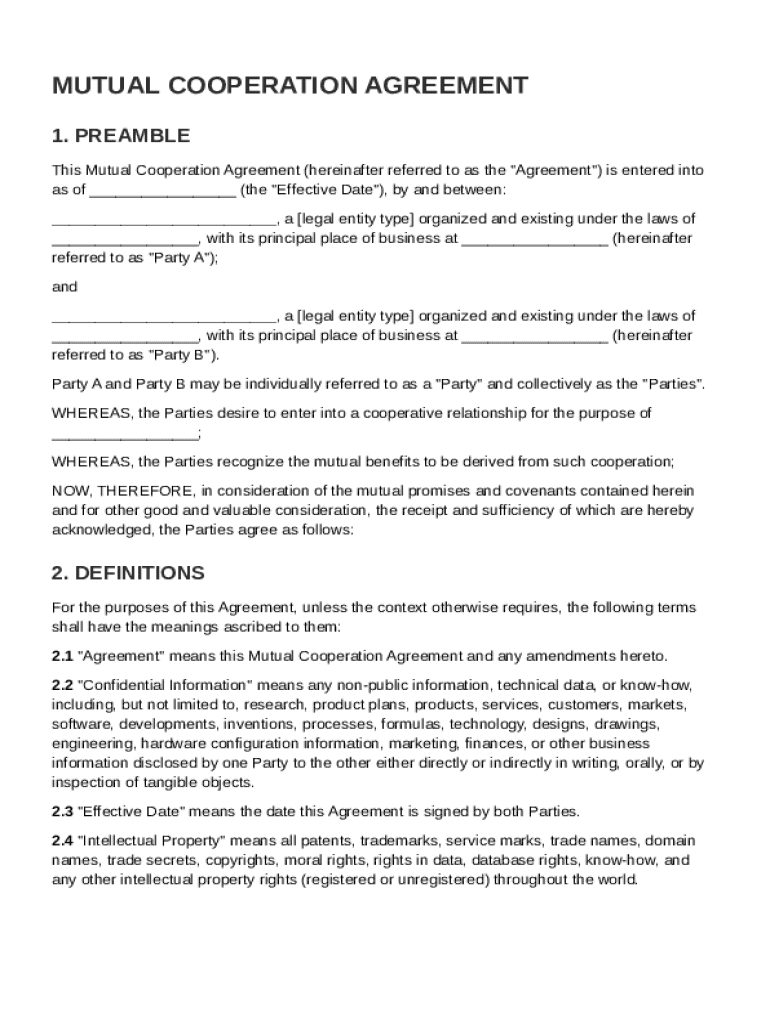
The Mutual Cooperation Agreement Template is a legal document that formalizes the relationship between two parties, typically referred to as Party A and Party B. It establishes the purpose, scope, and terms of cooperation aimed at fostering collaboration to achieve mutual benefits. This agreement is crucial in defining the parameters under which both parties agree to exchange resources, information, and expertise. The template includes specific clauses outlining the roles and responsibilities of each party, ensuring that all parties are clear on their commitments. Understanding this framework can help prevent misunderstandings and disputes, making the cooperation process smoother and more efficient.
Key Elements of the Mutual Cooperation Agreement Template
Key elements of the Mutual Cooperation Agreement Template include:
-
Purpose and Scope:
- Defines the overall objective of the cooperation.
- Establishes the areas in which both parties will collaborate.
-
Responsibilities:
- Details the roles and obligations of Party A and Party B.
- Clarifies expectations to prevent role overlaps or disputes.
-
Confidentiality:
- Includes clauses to protect sensitive information shared during the cooperation.
- Specifies any limitations or conditions on information sharing.
-
Intellectual Property Rights:
- Addresses the ownership and usage rights of any jointly created assets.
- Ensures protection and clear delineation of each party's contribution.
-
Dispute Resolution:
- Sets forth the process for managing disagreements.
- Often includes mediation or arbitration procedures as preferred methods.
-
Governing Law:
- Specifies which jurisdiction's laws will govern the agreement.
- Ensures clarity on legal matters and rights enforcement.
Steps to Complete the Mutual Cooperation Agreement Template
-
Gather Information:
- Collect necessary details about both parties, including names, business titles, and contact information.
- Ensure understanding of the cooperation goals and scope.
-
Customize the Template:
- Fill in party-specific information.
- Specify the project objectives, duration, and scope of the agreement.
- Tailor responsibilities and obligations sections to match agreed terms.
-
Review Key Clauses:
- Examine confidentiality, intellectual property, and dispute resolution clauses.
- Make adjustments as required to address specific legal needs or concerns.
-
Consult Legal Expertise:
- Obtain legal advice to ensure that the agreement complies with relevant laws.
- Adjust clauses to accommodate specific business or legal requirements.
-
Final Review and Signatures:
- Both parties should conduct a final review to confirm all terms are mutually agreed and properly documented.
- Sign the agreement to make it legally binding.
Important Terms Related to Mutual Cooperation Agreement Template
- Parties Involved: Refers to all entities entering the agreement.
- Jurisdiction: The area or system of laws governing the agreement.
- Confidentiality Obligations: Duties to keep shared information private.
- Intellectual Property Rights: Ownership rights related to creations from the cooperation.
- Dispute Resolution Mechanism: Methods adopted for resolving disagreements.
Understanding these terms is vital for anyone drafting or executing a Mutual Cooperation Agreement. They form the basis of the agreement's enforceability and effectiveness.
Legal Use of the Mutual Cooperation Agreement Template
A Mutual Cooperation Agreement becomes a legally binding document once all parties sign. This means it can be used in legal settings to enforce the responsibilities and protections agreed upon in the document. It's essential to ensure the agreement is drafted following U.S. contract law principles, and includes all necessary clauses and stipulations. The legal enforceability of the agreement provides a framework for both parties to rely on, making it a critical tool in formalizing business partnerships and collaborations.
Software Compatibility
Using DocHub, you can effortlessly edit and manage your Mutual Cooperation Agreement Template. DocHub supports a variety of file formats such as PDF, DOC, PPT, XLS, and TXT. This compatibility ensures that you can start working with your document in your preferred format right away, with no need for conversion. With DocHub's integration with Google Workspace, you can also seamlessly import and export from Google Drive or Gmail, effectively maintaining your digital workflow without interruptions.
State-Specific Rules for the Mutual Cooperation Agreement Template
While the Mutual Cooperation Agreement Template provides a standard framework, it's crucial to be aware of any state-specific rules that may affect the agreement. Legal requirements such as governing law, confidentiality, or contract enforceability may vary from one state to another. Consulting with legal professionals familiar with the state's law where the agreement will be enforced can ensure compliance and help avoid legal discrepancies.
Examples of Using the Mutual Cooperation Agreement Template
- Joint Research Projects: Two organizations may enter a Mutual Cooperation Agreement to collaborate on research, agreeing on how to share data, resources, and findings.
- Business Partnerships: Small businesses partnering for a joint venture could use this agreement to outline shared resources, responsibilities, and profit-sharing arrangements.
- Non-Profit Collaborations: Non-profits might use the agreement to collaborate on community programs, detailing how resources and expertise will be shared for program execution.
Such examples highlight the versatility and utility of the template in various contexts, from corporate settings to non-profit endeavors.