
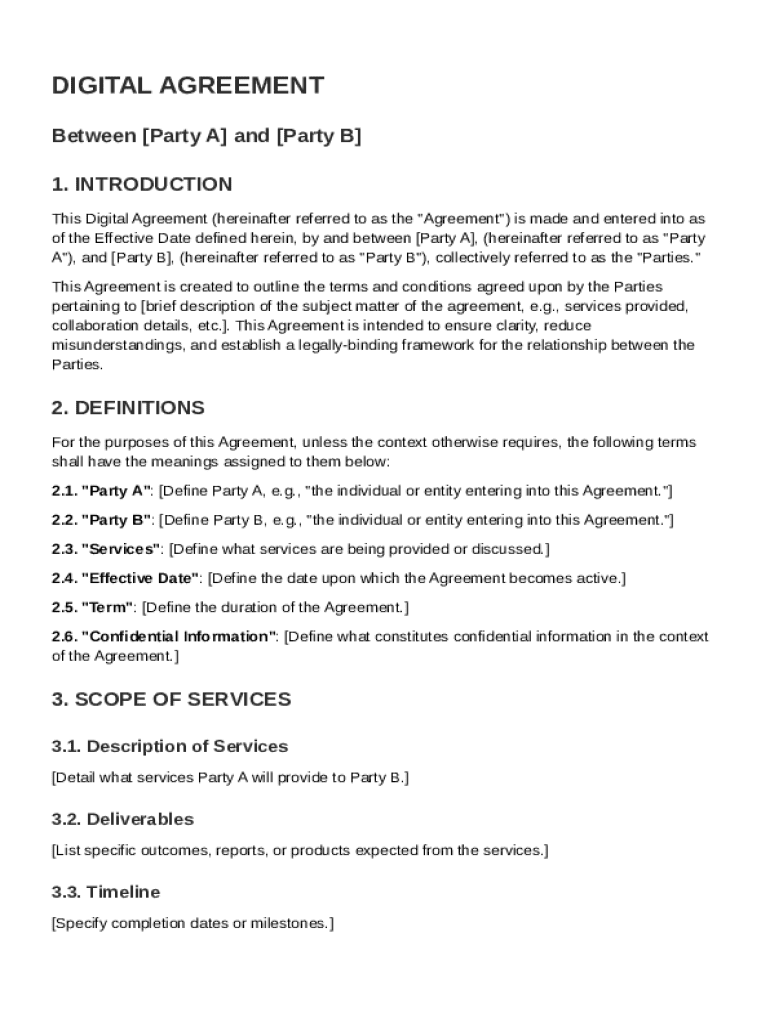







Definition and Purpose of the Digital Agreement Template
A Digital Agreement Template is a pre-structured document designed to articulate the terms and conditions between parties in an electronic format. It serves as a convenient tool for defining parameters such as scope of services, payment terms, and confidentiality obligations. By laying out these elements clearly, the template facilitates smoother transactions, helps prevent misunderstandings, and establishes a legally-binding framework for electronic agreements. Such templates are pivotal in environments that demand efficient, paperless contract management.
Using the Digital Agreement Template
When employing a Digital Agreement Template, the first step is to closely review the existing sections to ensure they align with your specific needs. Identify key elements like the parties involved, the agreement's scope, and any unique terms that may be required for your particular situation. Once the relevant sections are identified, fill in the details such as party names, service descriptions, and payment terms. After completion, the template can be stored as a digital file for easy access and sharing, streamlining your document workflow.
Practical Steps for Implementation
- Open the Digital Agreement Template on a compatible software platform.
- Input the names of all involved parties.
- Detail the scope of work and define any specific responsibilities.
- Set forth the payment structure, including amounts and due dates.
- Review confidentiality and dispute resolution clauses for relevance and completeness.
- Finalize by confirming each section is accurately completed and coherent.
Obtaining the Digital Agreement Template
Digital Agreement Templates can be acquired from various online platforms that offer document management solutions, such as DocHub. It is typically available in multiple formats to suit your software preferences, including DOC, PDF, and other widely recognized document types. Importing these templates into your preferred document management system allows for easy customization to meet your business's or personal needs. Websites providing these templates usually ensure they meet legal standards for electronic agreements, making them a reliable tool for establishing partnerships.
Key Elements of the Digital Agreement
Understanding and correctly implementing the key elements is essential for the effectiveness of a Digital Agreement Template. These elements typically include definitions of terms, the agreement scope, payment terms, confidentiality, responsibilities, and dispute resolution procedures. It may also contain clauses on intellectual property, liability limitations, and termination conditions. Each section should be carefully reviewed and tailored to address the specific needs and risks associated with the relationship between the parties, establishing a comprehensive and enforceable agreement.
Legal Use of the Digital Agreement Template
Digital Agreement Templates must comply with relevant electronic signature and contract laws, such as the ESIGN Act in the United States. This act validates electronic signatures as legally binding, provided they meet certain criteria for consent and record association. It is crucial that all users of the template ensure their contracts are signed electronically using compliant platforms to maintain enforceability. The template should also include a clause confirming the parties' understanding and agreement that the document and signatures are executed digitally.
Who Typically Uses a Digital Agreement Template
Digital Agreement Templates are popular among professionals and businesses that frequently engage in contracts and need a streamlined, repeatable process. This includes freelancers, small businesses, legal professionals, and corporations involved in drafting service agreements, partnership contracts, or any situation that requires formalized terms and conditions. Digital Templates are particularly advantageous for teams or businesses operating remotely, as they enable secure access and instant sharing through digital files.
Examples of Using the Digital Agreement Template
To illustrate the practical use, consider a freelance graphic designer who contracts with multiple companies. Using a Digital Agreement Template, the freelancer can quickly set up standard terms for services rendered, fees, and intellectual property rights, adjusting only the client-specific details each time. Another example is a software company that licenses its technology to third-party developers. Here, a template can detail licensing terms, usage rights, financial arrangements, and confidentiality requirements, simplifying the contract generation process.
Business Types That Benefit from the Digital Agreement Template
Certain business types see considerable advantages from using Digital Agreement Templates. Consultants, for example, can efficiently manage numerous client agreements by standardizing service descriptions and fees. Software-as-a-Service (SaaS) providers can benefit by quickly generating standard user agreements, terms of service, and data protection clauses for new clients. Real estate professionals may use such templates for leasing agreements, ensuring all necessary terms are covered while maintaining the flexibility to adapt to individual clients’ needs.
State-by-State Differences in Digital Agreements
While the majority of Digital Agreement Templates are designed to be broadly applicable, there are variations in legal requirements from one state to another that should be considered. This may include differences in electronic signature acceptance, state-specific clauses on confidentiality, or various disclosure requirements. It's important for users to ensure their templates are compliant with the legal standards and requirements of their particular state to secure enforceability and validity across jurisdictions.




