Definition & Meaning
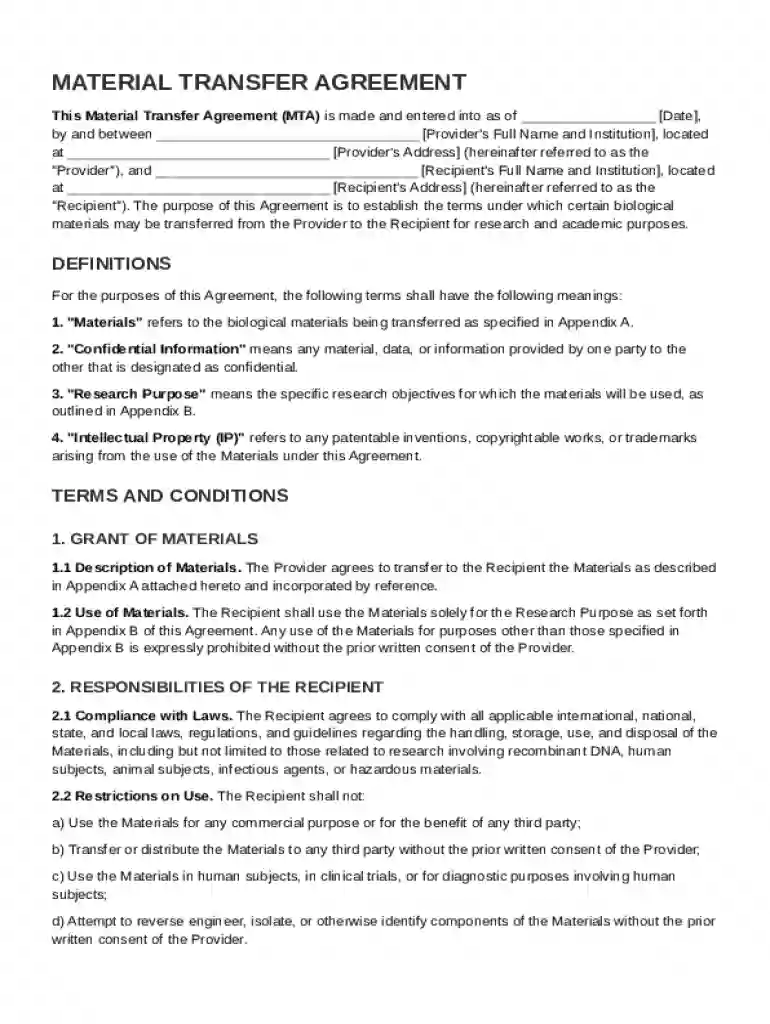
A Material Transfer Agreement (MTA) is a legal document facilitating the transfer of biological materials between two parties, typically for research purposes. The document specifies the rights and obligations of both the Provider and the Recipient, ensuring the materials are used solely for the specified research objectives. MTAs address various crucial issues, such as confidentiality, ownership of intellectual property, publication rights, liability, and the agreement’s termination. Understanding these agreements’ specific terms is essential for maintaining compliance and safeguarding interests.
Key Components
- Provider and Recipient: Clearly identifies the entities or individuals involved in the transfer.
- Material Description: Specifies the biological materials to be transferred, outlining their nature and scope.
- Usage Restrictions: Limits the Recipient’s use of the materials to specific research purposes.
- Confidentiality Obligations: Ensures that both parties protect any shared confidential information.
How to Use the Material Transfer Agreement Template
Using a Material Transfer Agreement template involves customizing it to reflect the particular circumstances of the material transfer. Here is a step-by-step guide to utilizing the template effectively:
- Review the Template: Familiarize yourself with the content and sections of the template to understand what information needs to be filled in.
- Gather Necessary Information: Collect details about the Provider and Recipient, the materials involved, and the research objectives.
- Customize the Template: Modify sections to accurately describe the materials, usage restrictions, confidentiality clauses, and intellectual property rights according to your requirement.
- Legal Review: Consult with legal counsel to ensure all terms comply with applicable laws and regulations.
- Finalize and Execute: Once both parties agree to the terms, sign the agreement to make it legally binding.
Important Tips
- Ensure that all clauses are comprehensible to both parties.
- Clarify any ambiguous terms before finalizing the document.
Key Elements of the Material Transfer Agreement Template
Understanding the key elements within a Material Transfer Agreement is crucial for drafting a comprehensive document. These elements guarantee that both parties are protected and informed of their rights:
- Intellectual Property Rights: Specifies the ownership of any inventions or discoveries arising from the use of the materials.
- Publication Rights: Outlines the conditions under which any research findings may be published or disclosed.
- Liability Provisions: Determines which party is responsible for damages arising from the use of the materials.
- Termination Clauses: Describes the conditions under which the agreement can be terminated by either party.
Additional Considerations
- Dispute Resolution: Methods to resolve any potential conflicts that arise during the agreement’s term.
- Jurisdiction and Governing Law: Establish which legal system will interpret the agreement if disputes occur.
Important Terms Related to the Material Transfer Agreement Template
A clear understanding of specific legal and scientific terms is necessary for interpreting a Material Transfer Agreement. These definitions ensure precise communication between the parties involved:
- Biological Material: Any biological sample, including DNA, cells, tissues, or proteins.
- Confidential Information: Data or details that must not be disclosed to third parties.
- Recipient Scientist: The researcher receiving the material responsible for utilizing it as per the agreement.
- Progeny and Unmodified Derivative: Terms defined within the agreement relating to materials derived from the original transferred samples.
Legal Use of the Material Transfer Agreement Template
Legal considerations are critical when using a Material Transfer Agreement template. Ensuring compliance with laws and regulations solidifies the agreement’s enforceability:
- Compliance with Laws: The agreement must adhere to local, state, and federal laws governing research activities.
- Ethical Considerations: Address ethical guidelines related to the use of biological materials, especially human-derived tissues.
- Privacy Regulations: Ensure compliance with privacy laws when handling personally identifiable information or sensitive data.
Legal Best Practices
- Involve legal professionals in drafting and reviewing the agreement.
- Understand implications of intellectual property rights and non-compliance penalties.
State-Specific Rules for the Material Transfer Agreement Template
Material Transfer Agreements may be subject to varying state laws, affecting their formulation and enforcement. Recognizing these differences helps in drafting compliant documents specific to each jurisdiction:
- State Restrictions: Some states may have particular restrictions on the transfer of specific biological materials.
- Jurisdiction-Specific Clauses: Incorporate clauses that align with the specific legal requirements of the state where the research is conducted.
Examples
- California: Known for stringent regulations regarding genetic materials and privacy.
- Massachusetts: Requires detailed consent agreements for transfers involving human biological materials.
Steps to Complete the Material Transfer Agreement Template
Completing a Material Transfer Agreement involves several key steps to ensure it meets the parties' needs and compliance standards:
- Identify Participants: Clearly specify who the Provider and Recipient are, including contact details.
- Detail the Materials: Accurately describe the materials being transferred, including their origin and any special handling requirements.
- Define Use Limitations: Include specific research objectives and any prohibitions on the use, modification, or reproduction of the materials.
- Consult Legal Experts: Prior to finalization, have the agreement reviewed by legal counsel to ensure it meets all legal requirements.
- Finalize and Sign: Once all parties agree to the terms and conditions, execute the document by obtaining the necessary signatures.
Considerations During Completion
- Double-check that all information is complete and accurate.
- Ensure clarity and unambiguity in the agreement's language.
Examples of Using the Material Transfer Agreement Template
Material Transfer Agreements are commonplace in various research scenarios. Understanding their application through examples aids in realizing their relevance:
- Academic Research: Universities often utilize MTAs when collaborating on research projects requiring the sharing of biological samples.
- Biotechnology Companies: Companies may exchange materials to foster innovation and product development.
- Government Research Facilities: MTAs facilitate the transfer of materials for public health research and policy development.
Real-World Scenarios
- A university researcher receives rare botanical samples from an overseas lab for cancer research.
- A biotech firm shares genetically modified organisms with a partner to develop new agricultural technologies.
Ensuring that the Material Transfer Agreement is adapted to each use case highlights the importance of understanding its specific provisions and tailored applications.