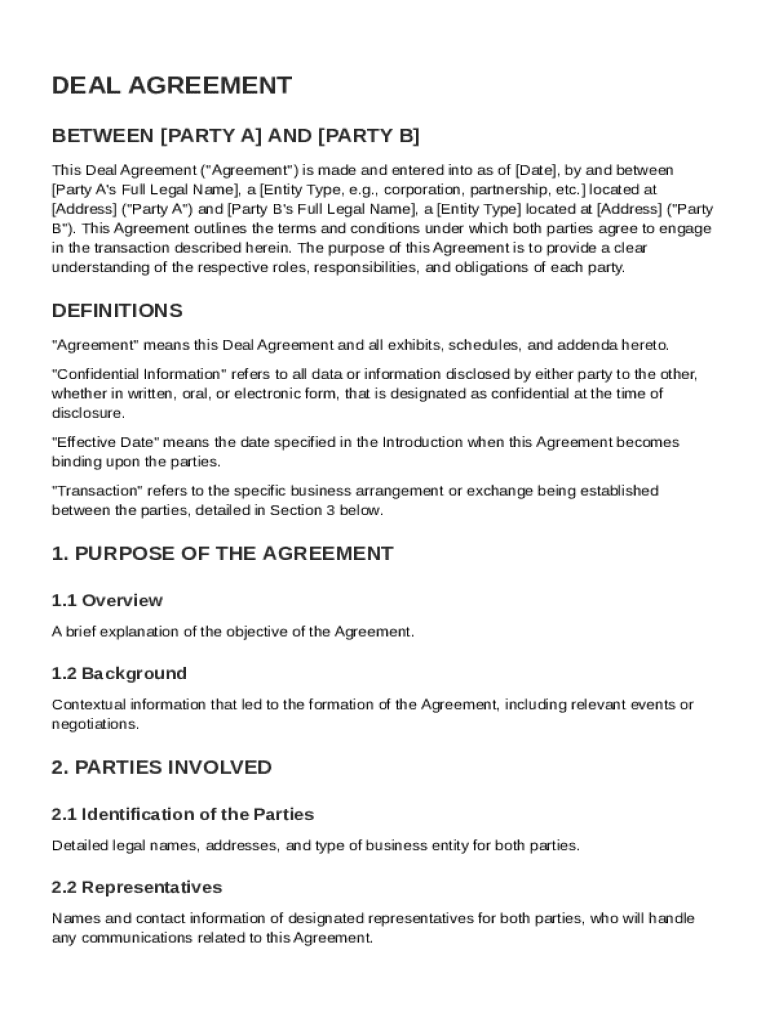







Definition and Meaning
A Deal Agreement Template is a legal document outlining the terms and conditions between two or more parties engaged in a business transaction. It serves as a foundational tool in various business environments, providing clarity and a formalized framework for the relationship between the parties involved. Typically, it includes elements such as the identification of parties, the purpose of the agreement, transaction details, and responsibilities. The template ensures that all parties understand their roles and obligations, which helps in minimizing misunderstandings or disputes that could arise during the transaction.
Key aspects of a Deal Agreement Template include its ability to spell out confidentiality obligations, indemnification terms, and warranties. It may also address dispute resolution processes and include provisions for amendments, all structured to guide the conduct of the parties throughout the relationship. Understanding these components can significantly enhance the effectiveness of a business agreement, fostering trust and cooperation among the parties.
Key Elements of the Deal Agreement Template
The core components of a Deal Agreement Template ensure the comprehensive coverage of the intended business transaction. Here are some key elements commonly found in such agreements:
- Identification of Parties: Includes the names and contact details of all parties involved in the agreement. Precise identification is crucial for legal clarity.
- Purpose of the Agreement: A brief section outlining the reasons for the agreement and the objectives it aims to achieve.
- Transaction Details: Provides a detailed description of the transaction, including the goods or services involved, pricing, payment terms, and delivery schedules.
- Responsibilities: Clearly defines the duties and responsibilities of each party to avoid ambiguity.
- Confidentiality Obligations: Protects sensitive information by setting rules for non-disclosure and use.
- Warranties and Indemnification: Covers assurances provided by the parties and indemnification clauses to protect against potential liabilities.
- Duration and Termination Clauses: Specifies the effective period of the agreement and circumstances under which it may be terminated.
Each element plays a critical role in the enforceability and functionality of the agreement, offering a clear path forward should any issues arise.
Steps to Complete the Deal Agreement Template
Completing a Deal Agreement Template requires attention to detail to ensure that all sections are accurately filled out. Here are the general steps involved:
- Gather Information: Collect all necessary details about the transaction and the involved parties.
- Fill in Identification Details: Enter complete and accurate information about each party.
- Outline the Purpose: Clearly define the objectives of the agreement.
- Detail the Transaction: Include all relevant specifics about the product or service, pricing, and delivery.
- Specify Responsibilities: Clearly outline what each party is responsible for.
- Include Confidentiality Terms: Draft confidentiality clauses to protect sensitive information.
- Add Warranties and Indemnification: Ensure there are clear terms regarding warranties and indemnification.
- Proofread and Revise: Carefully review the filled template for completeness and accuracy before signing.
By following these steps, parties can ensure that their agreement is comprehensive, precise, and ready for execution.
Legal Use of the Deal Agreement Template
Legal compliance is crucial when drafting and using a Deal Agreement Template. The legality of such documents primarily hinges on their adherence to applicable laws and regulations, including contract law principles such as mutual consent, lawful purpose, and consideration. This template can be a valuable tool in establishing rights and obligations between parties, provided it is executed in good faith and all parties are competent to contract.
In the U.S., agreements should comply with both federal and state laws. For instance, clauses related to confidentiality and data protection must align with privacy regulations like GDPR and state-specific data privacy laws. It is also important that the agreement does not include any unlawful provisions that could render it void or unenforceable. Consulting with a legal professional can provide additional assurance that all legal stipulations are met.
Important Terms Related to Deal Agreement Template
Understanding the terminology used in Deal Agreement Templates can facilitate better comprehension and implementation. Some of the critical terms include:
- Consideration: The value exchanged between parties in a contractual agreement. It legitimizes the contract's enforceability.
- Force Majeure: A clause addressing unforeseen events, such as natural disasters, which may prevent fulfillment of contractual obligations.
- Non-Disclosure Agreement (NDA): A legal contract ensuring confidentiality of shared information.
- Severability: A provision ensuring that the remainder of the agreement remains enforceable even if a part is deemed invalid.
- Jurisdiction: Specifies the legal boundaries and authority within which any disputes will be resolved.
Having a clear understanding of these terms can significantly enhance the operational aspect of any business contract.
Examples of Using the Deal Agreement Template
Consider how different organizations might use a Deal Agreement Template in practical scenarios:
- Startup Collaboration: A tech startup entering a joint venture with another company might use this template to outline shared responsibilities and intellectual property rights.
- Supplier Agreement: A manufacturing company securing a supplier for raw materials would use the template to detail quantities, pricing, and shipment logistics.
- Service Outsourcing: An IT firm outsourcing maintenance services to a third-party provider might craft an agreement to manage service levels and performance expectations.
Each example illustrates the versatility of the template in structuring and formalizing diverse business deals.
Software Compatibility
DocHub's Deal Agreement Template offers excellent compatibility with various software solutions and platforms, which enhances its utility. Users can import and export documents across different formats, such as PDF, DOC, and TXT, without hassle. This document workflow flexibility is particularly beneficial for professionals who rely on tools like Google Workspace, as DocHub integrates seamlessly with Google Drive and Gmail, allowing direct edits and updates.
The template's compatibility extends to other software solutions used in business environments, such as Microsoft Office tools, ensuring that users can efficiently manage their contracts without needing to switch platforms or formats. This feature reinforces DocHub's aim to streamline document management and enhance productivity.
State-Specific Rules for the Deal Agreement Template
Deal agreements must often conform to specific state laws, which can vary widely. For instance, some states have unique statutes regarding the enforceability of non-compete clauses or the modification of contract terms. These variations mean that while a Deal Agreement Template provides a valuable framework, it should be tailored to meet the legal requirements of the particular jurisdiction involved in the transaction.
For example, California generally prohibits non-compete clauses outside certain settings, whereas they may be enforceable under New York's more lenient conditions. Understanding these nuances is vital for ensuring that the agreement holds legal weight. Consulting with a legal expert familiar with state-specific laws can provide essential insights for tailoring the template appropriately.