Definition and Meaning
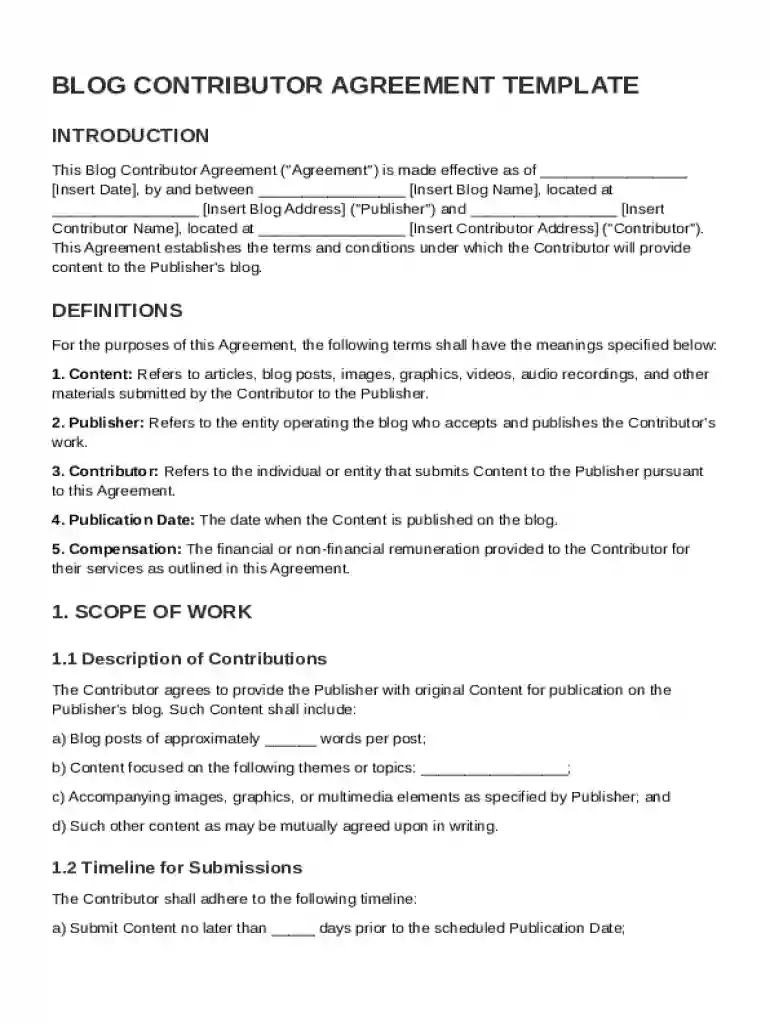
The Blog Contributor Agreement Template is a legal document that establishes the terms and conditions between a blog publisher and a contributor. It details the responsibilities and expectations of both parties when it comes to content submission, ensuring a mutual understanding of the rights and obligations involved. Key terms such as 'Content', 'Publisher', and 'Contributor' are defined to set a clear framework. This document is crucial for formalizing the relationship between the contributor and publisher, providing clarity on content creation, ownership, and distribution rights.
Key Terms Explained
- Content: Refers to the articles, blogs, or any written material submitted by the contributor to the publisher.
- Publisher: The party that owns and operates the blog or website where the content will be published.
- Contributor: An individual or entity responsible for creating and submitting content to the publisher.
Key Elements of the Blog Contributor Agreement Template
The Blog Contributor Agreement Template contains several critical elements that define the professional relationship between the contributor and the publisher. These elements include:
- Scope of Work: Specifies the type and nature of content expected from the contributor, including deadlines and quality standards.
- Rights and Ownership: Outlines the ownership of copyright after submission, detailing whether rights are transferred to the publisher or retained by the contributor.
- Compensation Structure: Describes how and when the contributor will be compensated for their work, whether through a flat fee, per word, or other arrangements.
- Warranties and Representations: Requires contributors to warrant that their content is original and does not infringe on any third-party rights.
- Confidentiality Obligations: Obligates contributors to keep certain information confidential, especially if they have access to unpublished materials or proprietary data.
- Termination Conditions: Defines the circumstances under which the agreement can be terminated by either party.
Steps to Complete the Blog Contributor Agreement Template
Completing the Blog Contributor Agreement Template involves several straightforward steps to ensure all relevant information is correctly recorded:
- Review the Template: Begin by thoroughly reading the template to understand its requirements and clauses.
- Fill in Contributor Information: Enter personal or company details of the contributor, such as name, address, and contact information.
- Add Publisher Details: Provide the publisher’s information, including business name, address, and contact details.
- Specify Content Requirements: Clearly outline the type of content, submission frequency, and quality expectations.
- Agree on Compensation Terms: Detail the agreed-upon payment terms and ensure they are acceptable to both parties.
- Clarify Rights and Ownership: Decide how intellectual property rights will be managed post-submission.
- Add Signatures: Once both parties agree to the terms, signatures from both the contributor and publisher are necessary for the document to be binding.
How to Use the Blog Contributor Agreement Template
For successful implementation of the Blog Contributor Agreement Template, follow these guidelines:
- Customization: Tailor the template to suit the specific needs of your content collaboration, adjusting clauses where necessary to fit unique circumstances.
- Legal Review: Consider having a legal professional review the document to ensure it meets legal standards and protects both parties effectively.
- Distribution: Share the completed agreement with all involved parties, ensuring transparency and mutual understanding of the terms.
- Record Keeping: Maintain a copy of the signed agreement in your records for future reference and legal protection.
Important Terms Related to Blog Contributor Agreement Template
Understanding basic legal terminology within the Blog Contributor Agreement Template ensures comprehensive comprehension of the document:
- Indemnification Clauses: Protects one party from losses or damages related to the agreement caused by the other party’s actions.
- Governing Law: Stipulates which state’s laws will be applied in the event of a dispute over the agreement.
- Amendments: Details the process for making changes to the agreement once it has been signed and executed.
- Entire Agreement Clause: Establishes that the documented agreement is complete and supersedes any prior agreements or negotiations related to the subject matter.
Legal Use of the Blog Contributor Agreement Template
Engaging with the Blog Contributor Agreement Template legally ensures protection and compliance with U.S. law:
- ESIGN Act Compliance: Electronic signatures are legally binding, making electronic submissions of this agreement valid.
- Contractual Obligations: Both parties must understand and agree to the contractual obligations they undertake in the agreement.
- Modification and Termination: Clear legal processes for modifying or terminating the agreement help prevent future disputes and maintain a professional relationship.
Examples of Using the Blog Contributor Agreement Template
Practical applications of the Blog Contributor Agreement Template include:
- Guest Blogging: When a professional in another field contributes an article to a blog, this agreement clarifies their role and rights.
- Content Collaboration: Two or more contributors working on a piece jointly may use the template to determine compensation and rights division.
- Publishing Syndicates: Ensures clarity and legal guidelines when articles are cross-published across different platforms.
- Sponsored Content: Defines terms when contributors create content paid for by another brand or business, clarifying disclosures and rights.
This comprehensive overview of the Blog Contributor Agreement Template emphasizes its core elements, significance, and practical application within various content creation scenarios. These blocks provide a well-rounded understanding for users aiming to formalize their content contributions with clarity and legal assurance.