






Definition & Meaning
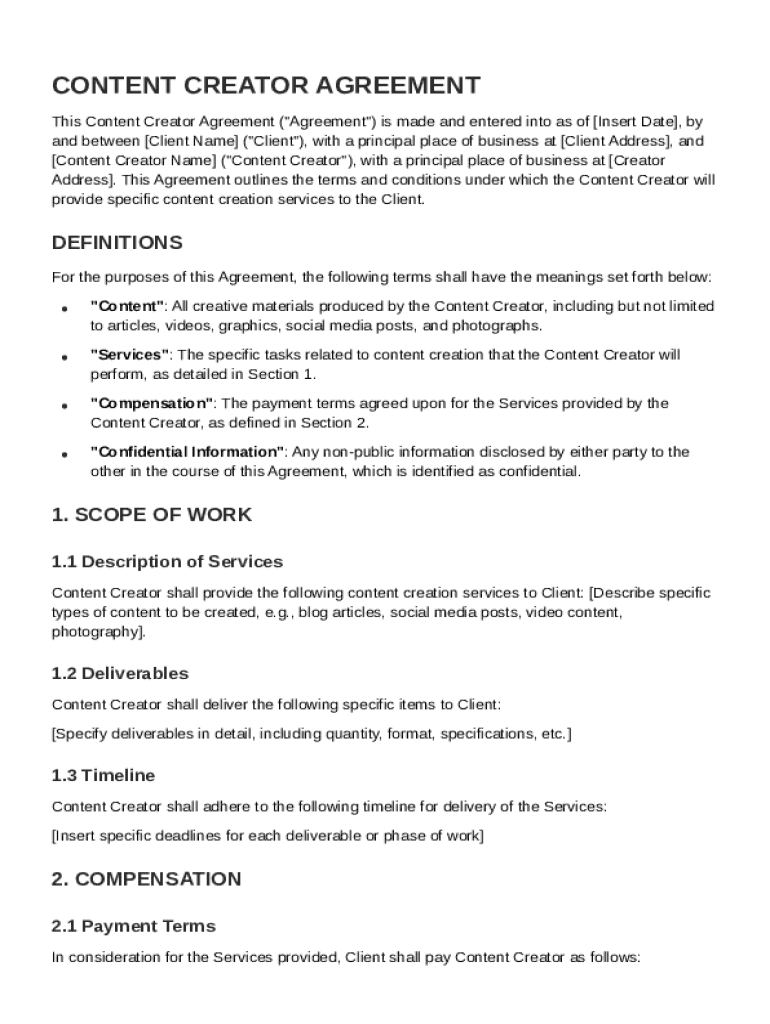
The Content Creator Agreement Template is a legal document designed to outline the terms and conditions between a client and a content creator for content creation services. This document is crucial as it establishes expectations, defines the scope of work, and sets forth compensation terms. The agreement differentiates between various terminologies such as 'Content', which refers to the material produced, and 'Services', which denotes the tasks performed by the content creator. The template ensures that both parties have a mutual understanding of their roles and responsibilities, thus minimizing the potential for disputes.
How to Use the Content Creator Agreement Template
To effectively use the Content Creator Agreement Template, follow these steps:
-
Identify Parties: Clearly delineate the roles of the client and the content creator. Include full legal names and contact information to ensure clarity.
-
Detail the Scope of Work: Specify what type of content is to be created, including any specific formats, platforms, or guidelines that need to be followed.
-
Payment Terms: Outline how and when the content creator will be compensated. Include rates, due dates, and methods of payment to avoid any confusion.
-
Rights and Ownership: Define who will retain ownership of the content upon completion. Specify any licenses or transfer of rights taking place.
-
Confidentiality Obligations: Establish what information must remain confidential between the parties involved.
By ensuring each section of the template is thoroughly completed, you create a legally binding document that protects the interests of both parties involved.
Steps to Complete the Content Creator Agreement Template
Completing the Content Creator Agreement Template involves a systematic approach to ensure all critical elements are addressed:
-
Fill Out Basic Information: Start by entering the names and contact details for both parties involved in the agreement.
-
Outline Duties and Responsibilities: Clearly describe the content creator's duties and any specific milestones or deadlines.
-
Include Payment Details: Provide a clear breakdown of the payment structure, including any upfront fees, completion bonuses, or penalties for late payments.
-
Describe Content Rights: Specify how content rights are managed and whether the content creator grants exclusive or non-exclusive rights to the client.
-
Add Confidentiality Clauses: State what information shared by either party should remain confidential and for how long.
-
Signatures: The agreement must be signed and dated by both the client and the content creator to be legally binding.
Key Elements of the Content Creator Agreement Template
Several key elements ensure that the Content Creator Agreement Template comprehensively covers all necessary legal bases:
-
Compensation and Payment Terms: This should detail the payment structure, including payment frequency and method.
-
Rights and Ownership: Identifies who owns the created content, with any stipulations regarding usage rights.
-
Confidentiality: Outlines expectations regarding the handling of confidential information shared during the project.
-
Termination Conditions: Defines how either party can terminate the agreement and under what circumstances.
-
Dispute Resolution: Suggests the process for handling any disputes that might arise in relation to the agreement.
By addressing each of these elements, the template ensures clear communication between parties.
Who Typically Uses the Content Creator Agreement Template
Various parties benefit from utilizing a Content Creator Agreement Template:
-
Businesses and Organizations: Often hire content creators to produce marketing materials, website content, or social media posts.
-
Freelancers and Independent Contractors: Use the agreement to formalize their engagements with clients and protect their rights regarding work and compensation.
-
Creative Agencies: Employ the template when collaborating with third-party content creators to ensure professional standards are met.
This document is essential for anyone engaged in a professional content creation relationship to maintain clarity and legal protection.


Legal Use of the Content Creator Agreement Template
The Content Creator Agreement Template serves several legal functions:
-
Establishes a Contractual Relationship: Details the independent contractor relationship between the client and content creator, ensuring compliance with legal standards.
-
Enforces Compliance: Utilizes clauses that require both parties to adhere to their obligations under the law.
-
Mitigates Legal Risks: By detailing dispute resolution processes and termination conditions, it provides a framework for legally resolving conflicts.
Ensuring the legal use of this template benefits all parties by securing their contractual agreements.
State-Specific Rules for the Content Creator Agreement Template
While the Content Creator Agreement Template is a standardized document, it may be subject to state-specific regulations:
-
State Labor Laws: Some states have specific definitions and conditions for the classification of independent contractors versus employees.
-
Intellectual Property Laws: Vary between states, particularly concerning ownership rights and licensing.
-
Tax Regulations: Each state has different tax requirements, impacting how payments are reported and taxed.
Being aware of and adjusting for state-specific rules ensures the template remains effective and legally compliant across various jurisdictions.
Examples of Using the Content Creator Agreement Template
Real-world applications of the Content Creator Agreement Template include scenarios such as:
-
A Marketing Firm Hiring a Content Creator: Engaging a freelance writer to produce blog posts for multiple clients while retaining rights to modify and distribute the content.
-
An Influencer Collaborating with a Brand: Producing video content or social media posts under agreed-upon terms and conditions, including payment per post and exclusive content use.
-
A Startup Drafting an Agreement with a Graphic Designer: Ensuring branding materials are developed under clear expectations concerning deliverables and design rights.
These examples highlight the versatility and necessity of the template in various professional contexts.