






Definition and Meaning of Business Tax Forms for 2024
Business tax forms and publications for 2024 tax filing are documents that businesses in the United States use to report their income, expenses, and other financial information to the Internal Revenue Service (IRS). These forms facilitate the calculation of the amount of tax a business owes for the fiscal year. They include a variety of forms such as Form 1120 for corporations, Form 1065 for partnerships, and other similar documents, along with instructions and publications that provide detailed guidance on tax filing protocols for 2024.
Steps to Complete Business Tax Forms for 2024
-
Gather Required Information:
- Collect income statements, balance sheets, and other financial documents.
- Ensure all data is updated for the tax year 2024.
-
Choose the Appropriate Form:
- Determine which form applies based on your business type (e.g., Form 1120 for corporations).
-
Complete the Form:
- Enter income, deductions, credits, and other details accurately.
- Follow IRS instructions carefully for each section.
-
Verify and Review:
- Double-check all entries for accuracy.
- Confirm that all necessary schedules and attachments are included.
-
Submit the Form:
- Choose a submission method: online through the IRS e-file system, by mail, or in person.
- Ensure submission by the IRS deadline to avoid penalties.
Important Terms Related to Business Tax Forms
- Taxable Income: The portion of business income subject to taxes after deductions and exemptions.
- Deductions: Eligible expenses that can be subtracted from gross income to reduce taxable income.
- Credits: Specific reductions that decrease the total tax liability.
- Filing Status: The classification (e.g., corporation, partnership) that affects tax rates and obligations.
Filing Deadlines and Important Dates
- Federal Filing Deadline: Generally, business tax forms must be filed by April 15, 2024, unless the business follows a fiscal year.
- Extensions: Businesses may file for an extension if additional time is needed. This typically grants up to six additional months.
- Estimated Tax Payments: Quarterly payments are often required, with deadlines in April, June, September, and January.
Who Typically Uses These Forms
- Corporations (C-Corporations): Use Form 1120 to report income and calculate taxes.
- Partnerships: File Form 1065 to report income, deductions, and distribute shares to partners.
- Sole Proprietors and Single-Member LLCs: Typically use Schedule C with individual tax returns.
- Non-Profits: Organisations with tax-exempt status file Form 990 to report activities and financials.


Key Elements of Business Tax Forms
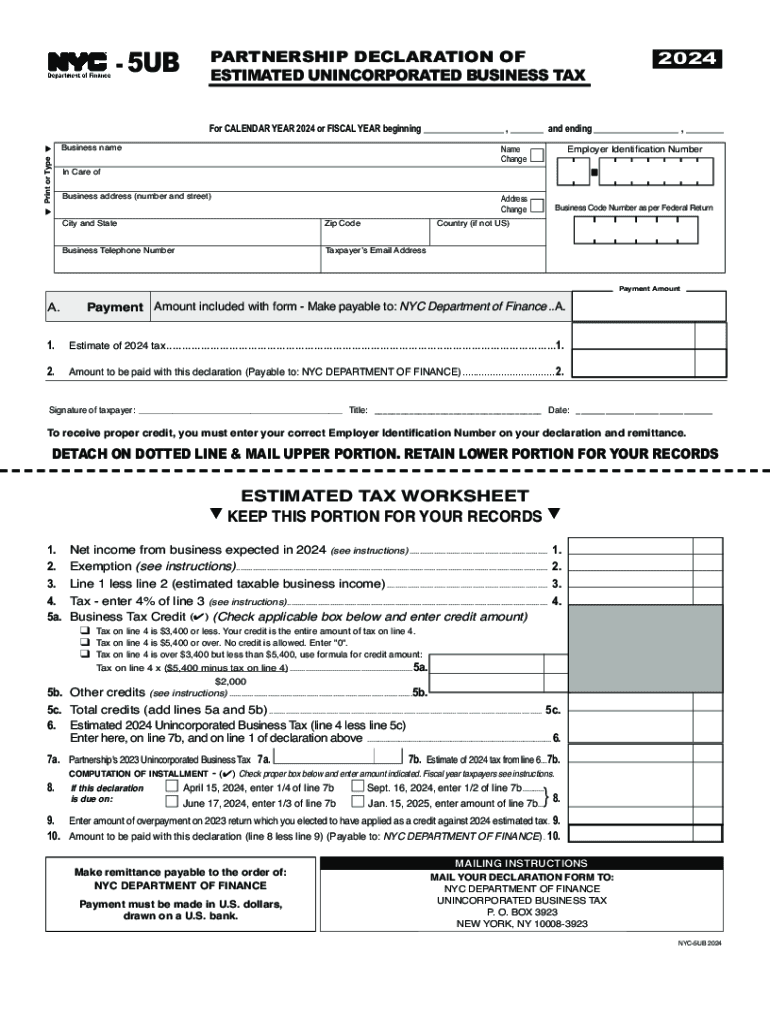
- Form Header: Includes business information such as name, address, and Employer Identification Number (EIN).
- Income Section: Details all sources of business income.
- Deductions and Credits: Lists all allowable deductions and applicable tax credits.
- Tax Calculation: Summarizes tax liability after applying deductions and credits.
Software Compatibility
- TurboTax and QuickBooks: These platforms support business tax form preparation, providing step-by-step assistance and error-checking.
- DocHub Integration: Edit, sign, and submit forms directly through connected storage services like Google Drive, streamlining the filing process.
Penalties for Non-Compliance
- Late Filing Penalties: Businesses filing after the deadline without an extension face penalties of 5% of the unpaid tax per month.
- Failure to Pay: Late payment incurs penalties and interest on the unpaid balance.
- Accuracy Penalties: Misreporting income or deductions may result in additional fines and increased scrutiny from the IRS.
Versions or Alternatives to Business Tax Forms
- EZ Versions: Simplified forms like Form 1120-A for small corporations with uncomplicated tax situations.
- State-Specific Forms: Some states require additional tax filings separate from federal submissions, such as state franchise taxes or sales tax returns.
These comprehensive guidelines on business tax forms and publications for 2024 tax filing offer businesses detailed insights for accurate and efficient tax preparation. Each section aims to provide a thorough understanding of the requirements, ensuring that businesses remain compliant with IRS regulations.