






Definition & Meaning
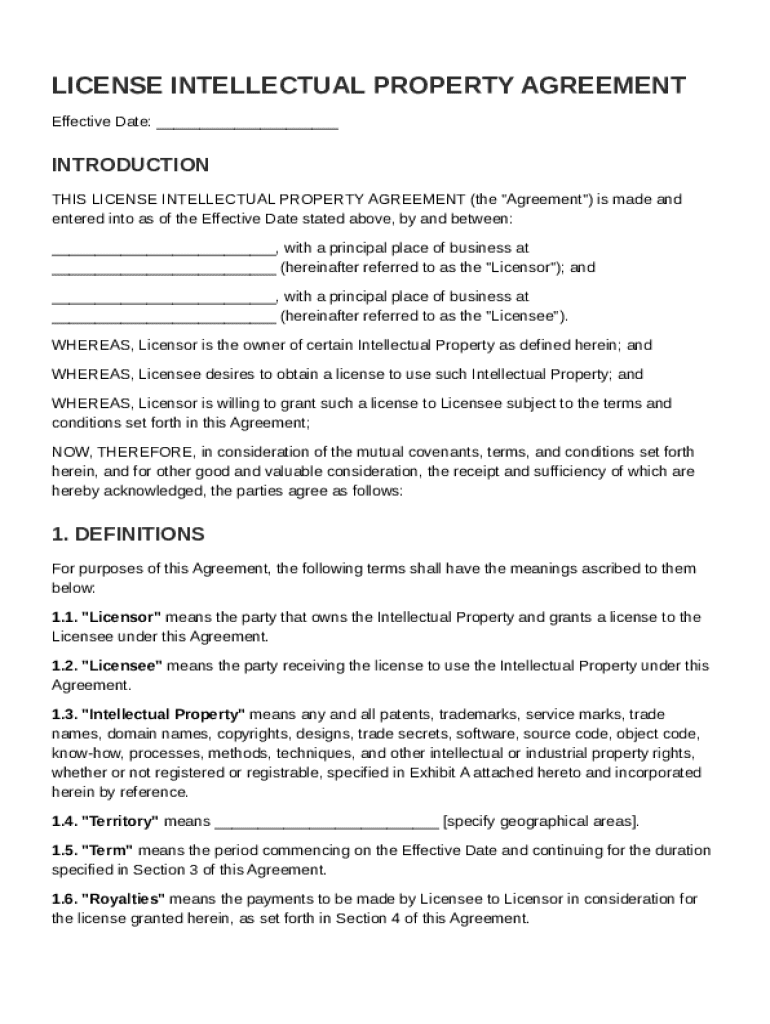
A License Intellectual Property Agreement is a legal contract that outlines the terms and conditions under which a licensor grants a licensee the right to use certain intellectual property (IP). This agreement is pivotal for the protection and utilization of IP, ensuring that the licensor maintains ownership while the licensee gains specific usage rights. The document includes critical definitions such as the nature of the intellectual property, the scope of use, and any restrictions on its use.
Key Definitions in the Agreement
- Licensor: The owner of the intellectual property rights who grants the license.
- Licensee: The individual or entity that is granted the right to use the intellectual property.
- Intellectual Property: This can include patents, copyrights, trademarks, or trade secrets, among others.
Purpose of the Agreement
- Clarifies Usage Rights: It specifies how the intellectual property can be used by the licensee.
- Protects Ownership: Ensures that the licensor retains ownership rights while allowing the licensee specified use.
- Outlines Responsibilities: Details responsibilities of both parties, including payment of royalties and compliance with confidentiality clauses.
Key Elements of the License Intellectual Property Agreement Template
The License Intellectual Property Agreement Template includes several crucial components that frame the arrangement between the licensor and licensee.
Essential Components
- Scope of the License: Clearly defines the rights being granted, including any limitations on geography or duration.
- Payment and Royalties: Details compensation structures, including upfront payments, ongoing royalties, or other financial arrangements.
- Confidentiality Obligations: Obligates both parties to maintain confidentiality of proprietary information shared during the term of the agreement.
Provisions for Dispute Resolution
- Mediation and Arbitration: Many agreements include clauses for mediation or arbitration to resolve disputes without litigation.
- Jurisdiction: Specifies the legal jurisdiction governing the agreement, typically aligned with the licensor's location.
Steps to Complete the License Intellectual Property Agreement Template
Completing this template involves several logical steps to ensure that all parties are in agreement and the document is legally sound.
Step-by-Step Process
- Identify Parties: Clearly state the full legal names of the licensor and licensee.
- Define Intellectual Property: Specify what IP rights are being licensed and how they can be used.
- Detail Financial Terms: Outline any payments, royalties, or financial obligations.
- Clarify Obligations and Restrictions: Include any usage restrictions or obligations each party must adhere to.
- Review and Sign: Both parties should thoroughly review the document, make necessary amendments, and then sign.
Tips for Accuracy
- Review Legal Terms: It's prudent to consult with a legal professional to ensure all terms are fair and legally enforceable.
- Double-check Financial Arrangements: Verifying numbers and payment schedules can prevent future disputes.
Important Terms Related to the License Intellectual Property Agreement Template
This agreement involves terminology that is crucial for all parties to understand to avoid misinterpretations.
Common Terms and Clauses
- Exclusive vs. Non-Exclusive License: Determines whether the licensee has sole rights or if others can also be granted similar rights.
- Indemnity Clause: Protects one party against liability and specifies who bears the risk in case of legal issues.
- Termination Clauses: Conditions under which the agreement can be prematurely terminated by either party.
Handling Ambiguities
- Clear Language Usage: Ensure all terms are defined within the agreement to avoid potential ambiguity.
- Consistent Terminology: Use the same terms consistently throughout the document to prevent confusion.
Legal Use of the License Intellectual Property Agreement Template
The legally binding nature of this agreement requires careful adherence to its terms and legal compliance.
Compliance Requirements
- ESIGN Act Compliance: Provides for legally binding electronic signatures, making digital signing of the agreement valid.
- State-Specific Laws: Each state may have specific laws that influence how this type of agreement should be drafted and executed.
Best Practices
- Record Keeping: Maintain detailed records of the agreement and any subsequent modifications.
- Periodic Review: Regularly review the agreement terms to ensure ongoing compliance and address any evolving circumstances.
Examples of Using the License Intellectual Property Agreement Template
Understanding the practical applications of this agreement helps in effectively leveraging it within various industries.
Industry Applications
- Technology Sector: Licensing software or patented technology allows for broader market reach while protecting innovation.
- Publishing and Media: Authors and creators can license their works for adaptation in films, television, or translations.
Real-World Scenarios
- Joint Ventures: Companies entering new markets collaboratively can use licenses to share proprietary technology.
- Franchising: Licensing trademarks and business models to franchisees can facilitate brand expansion.
Business Types That Benefit Most from the License Intellectual Property Agreement Template
Certain business models thrive on licensing agreements, impacting their strategy and market operations.
Beneficiary Business Types
- Startups: They can leverage third-party IP to supplement their offerings without investing heavily in development.
- Multinational Corporations: Utilize licensing to penetrate foreign markets with locally relevant adaptations of their products.
Strategic Advantages
- Cost-Effective Expansion: Reduces need for capital-intensive development by leveraging existing IP.
- Diversified Revenue Streams: Licensing creates additional revenue avenues through royalties or lump-sum payments.
State-Specific Rules for the License Intellectual Property Agreement Template
While this agreement is standardized, variations exist across different states which can affect its implementation.
Understanding State Differences
- California vs. New York: California may have stricter laws regarding non-compete clauses compared to New York.
- Confidentiality Provisions: Different states have varied requirements related to the enforceability of confidentiality clauses.
Legal Insights
- Jurisdiction Clauses: Select a state jurisdiction that best aligns with your business interests and has clear legal precedents for IP agreements.
- Consult Local Experts: A legal professional familiar with state laws can help tailor the agreement to meet specific state requirements.