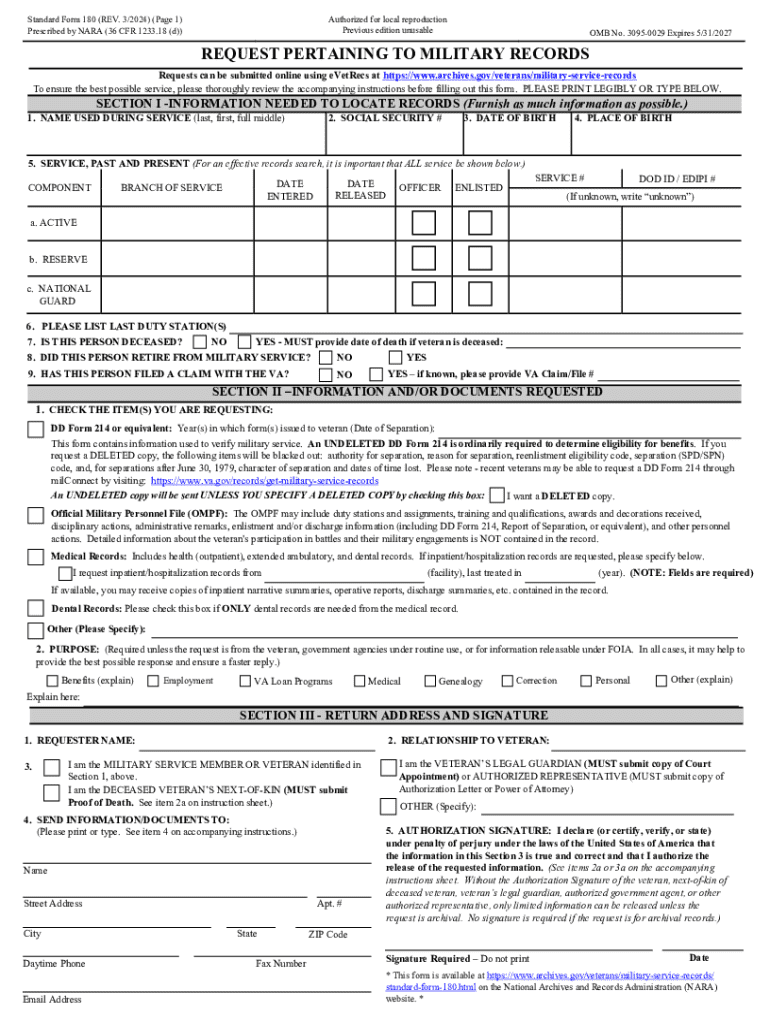







Definition and Purpose of the SF 180
The Standard Form 180 (SF 180) is a vital document used to request specific military records, including both personnel and medical information. This form is particularly significant for veterans, family members, and authorized representatives seeking to obtain a variety of military records, such as discharge documents (like DD Form 214), access to medical history, and other service-related documents. Understanding the purpose of the SF 180 is essential for those exploring military benefits, applying for VA services, or conducting genealogical research related to military service.
Types of Records Available
- Personnel Records: These encompass documents that outline an individual's service history, awards, and duties performed.
- Medical Records: Records related to the medical history and treatment while on active duty.
- Discharge Papers: Important documents indicating the discharge status and type of service completed.
Steps to Complete the SF 180
Filling out the SF 180 requires attention to detail to ensure accuracy and completeness in the information you provide. Here's a breakdown of the process.
- Section 1 - Requester Information: Fill out your name, address, and relationship to the service member. Include the email address and phone number for follow-up purposes.
- Section 2 - Service Member Information: Provide the full name, service number, Social Security number, branch of service, and any relevant dates, such as the date of birth and dates of service.
- Section 3 - Records Requested: Clearly indicate the specific records you are requesting. This section allows you to choose from various types of records or specify any particular documents you need.
- Section 4 - Signature and Date: The form must be signed and dated by the requester. This signature certifies that you are authorized to request the information.
Tips for Completing the Form
- Double-check the information for accuracy before submission.
- Ensure you provide all required identifiers, as this will expedite the processing of your request.
- For military records older than 62 years, check specific archival retrieval processes.
How to Obtain the SF 180
The SF 180 can be accessed through various platforms, making it convenient for users.
- Online Availability: The SF 180 is available as a downloadable PDF from various veterans’ affairs websites. Users can easily print and complete this form.
- Request by Mail: You may also request the form by writing to the relevant military records office if you prefer not to use an online platform.
- In-Person Requests: Depending on the location, veterans can visit VA offices or military record repositories to obtain the form directly.
Submission Methods for the SF 180
After completing the SF 180, there are several submission methods to choose from:
- By Mail: Send the completed form to the appropriate records center based on the service branch of the individual. Ensure your mailing address is correct to avoid delays.
- By Fax: Some offices allow submissions via fax. Check the specific records office for their fax number, as this can expedite processing time.
- Online Systems: Some branches may offer digital submission options through secure web portals. Users should confirm the availability of this feature.
Important Considerations
- Include a self-addressed stamped envelope if you require a hard copy of the records to be sent back.
- Be aware of the current processing times, which can vary based on the types of records requested.
Importance of the SF 180
The SF 180 is crucial for a variety of reasons, especially for those eligible for VA benefits. Here are some ways it can impact the lives of veterans and their families:
- Access to Benefits: Veterans need their military records for accessing numerous VA benefits, including health care and educational assistance.
- Genealogical Research: Family members utilize this form to trace military service in their family histories.
- Correcting Records: The SF 180 offers a formal mechanism for requesting corrections or improvements to existing records where inaccuracies are present.
Who Typically Uses the SF 180
The SF 180 primarily serves veterans, family members, and authorized representatives, but other related entities may utilize the form as well.
- Veterans: Individuals who have served in the military often request their own records for personal or professional purposes.
- Family Members: Spouses, descendants, or next-of-kin often seek records to support claims for survivor benefits.
- Historians and Researchers: Academic researchers may request records for various historical analyses pertaining to military service.


Additional Users
- Legal Representatives: Attorneys may use the form to obtain necessary documentation for legal proceedings.
- Civilian Organizations: Some veteran service organizations may assist in submitting the SF 180 on behalf of individuals in need.
Legal Use of the SF 180
The SF 180 is legally recognized for obtaining copies of military records under the Freedom of Information Act (FOIA) and the Privacy Act.
- Privacy Protection: The form requires signatories to understand potential privacy concerns surrounding the requested information.
- Records Disclosures: It outlines specific processes and limitations regarding who can request access to military records.
This legal framework ensures that requests are processed while respecting the privacy of service members and their families.