






Definition and Purpose of the Actor Agreement Template
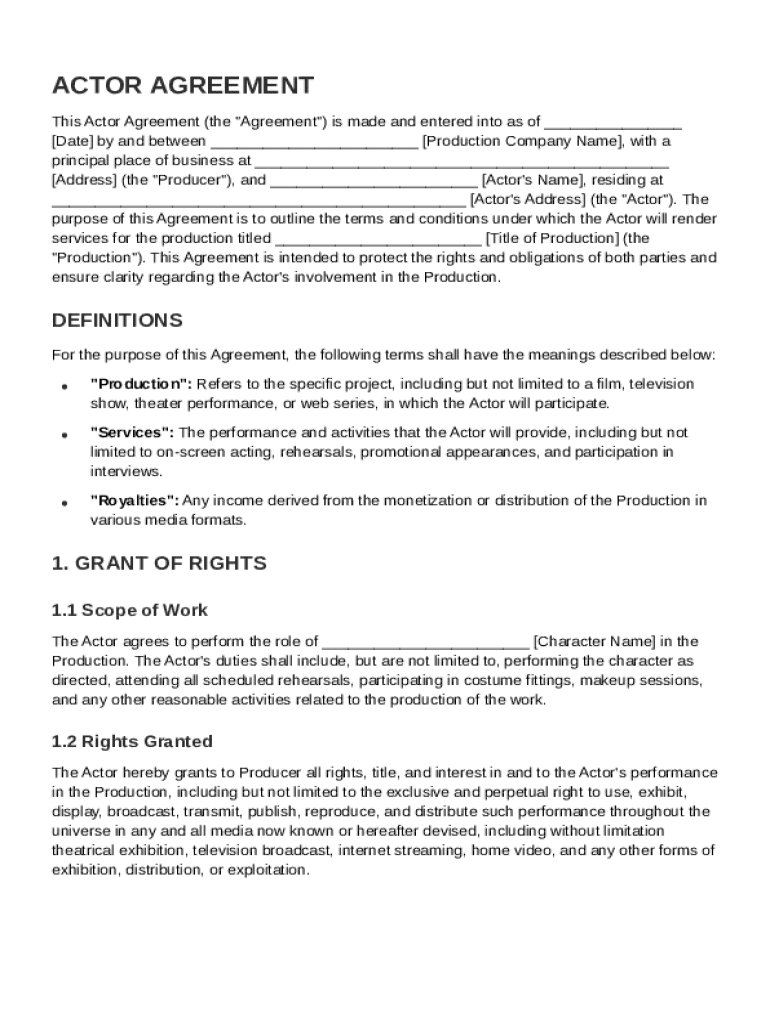
The Actor Agreement Template is a formal document designed to establish the terms and conditions between a production company and an actor participating in a specific production. This template serves as a comprehensive guideline that ensures clarity and mutual understanding between both parties. The agreement typically covers key elements such as the scope of work, compensation, work schedule, and confidentiality obligations. By using this template, both the production company and the actor can ensure that their rights and responsibilities are clearly outlined and protected, reducing the potential for disputes and misunderstandings.
Key Elements of the Actor Agreement Template
-
Scope of Work: This section details the specific tasks and responsibilities the actor is expected to perform. It may include the type of role, required rehearsals, and any promotional activities.
-
Compensation Details: Outlines the financial aspects, including salary, bonuses, and reimbursement of expenses. It may specify payment schedules and conditions for additional compensation.
-
Work Schedule: Defines the actor’s schedule for rehearsals, shooting, and promotional events. This ensures both parties are aligned on availability and commitments.
-
Confidentiality Obligations: Specifies what information is considered confidential and the duration of confidentiality. This is crucial for protecting the production's intellectual property and sensitive information.
-
Duration and Termination Conditions: This part of the template outlines the duration of the agreement and conditions under which either party can terminate the contract. It often includes notice period requirements and termination compensation, if applicable.
-
Warranties and Representations: Both parties provide assurances regarding their legal capacity and authority to enter the agreement, accuracy of information, and compliance with laws.
-
Governing Law: Identifies which state's laws govern the agreement, providing a legal framework for resolving potential disputes.
-
Miscellaneous Provisions: Covers other necessary legal clauses such as amendment processes, assignment of rights, severability, and force majeure.
How to Use the Actor Agreement Template
Utilizing the Actor Agreement Template effectively requires a methodical approach to ensure that all necessary details are covered and personalized for the specific context of a production.
-
Review the Template: Begin by thoroughly examining the template to understand the sections that will need customization based on the specifics of the production and actor involved.
-
Customize As Needed: Modify sections like compensation, scope of work, and work schedule to accurately reflect the unique terms agreed upon by the actor and the production company.
-
Legal Review: It is advisable to have the finalized document reviewed by a legal professional to ensure compliance with relevant laws and regulations, especially those specific to the state where the production is based.
-
Agreement and Signatures: Once customized and reviewed, both parties should agree to the terms outlined and sign the document. The use of electronic signatures can facilitate this step efficiently.
-
Store Securely: Save the signed agreement in a secure location, such as cloud storage that supports document protection, to ensure both parties can access it when needed.
Legal Use and Compliance of the Actor Agreement Template
Ensuring legal compliance when using an Actor Agreement Template is paramount. This involves conforming to both federal laws and state-specific legislations applicable to employment and contract agreements.
Compliance Considerations
-
Federal Laws: Include adherence to the Fair Labor Standards Act (FLSA) regarding compensation, working hours, and child labor laws if minors are involved.
-
State-Specific Rules: Each state may have additional requirements or protections for actors and production companies, particularly concerning employment terms and intellectual property rights.
-
Intellectual Property: The template should account for use and ownership of recorded performances, ensuring clear articulation of who holds rights to the actor's likeness and work.
Importance of a Legal Professional
Employing a legal professional to review and approve the terms ensures:
- Interpretations are consistent with current legal standards.
- There is a reduced risk of unenforceable clauses that could void parts of the agreement.
- Appropriate clauses are included for dispute resolution while protecting each party’s interests.
Examples of Using the Actor Agreement Template
Multiple scenarios highlight the practical applications of an Actor Agreement Template:
-
Television Series Productions: Where actors are contracted for multiple episodes, requiring detailed schedules and progressive payment terms.
-
Film Productions: Often involve complex shooting schedules and significant compensation arrangements, necessitating explicit terms related to rights and obligations.
-
Theatre Productions: Require stipulations regarding live performance duties, rehearsal obligations, and non-compete clauses with other theatre companies.
-
Commercials and Promotions: Typically less complex but demand clear terms on usage of likeness and compensation per commercial run or geographic distribution.
-
Voice-over Work: Requires specific clarifications on the scope and usage of audio recordings, residuals, and exclusivity clauses concerning other voice-over works.
Software Compatibility and Digital Accessibility
Integration with Document Management Systems
To fully leverage the DocHub platform for managing the Actor Agreement Template:
-
Google Workspace Compatibility: Allows for seamless integration, enhancing document sharing, editing, and storage capabilities directly through Google Drive or Gmail.
-
Cloud Storage Services: Store and access templates with services like Dropbox and OneDrive for flexibility and accessibility from various devices.
Electronic Signature Solutions
To facilitate a legally compliant process of signing Actor Agreement Templates:
-
Utilize DocHub’s electronic signature capabilities, ensuring signatures meet ESIGN Act standards.
-
Implement automated workflows that prompt actors and production representatives to review and sign necessary documents efficiently.
By structuring the document process through these tools, organizations can streamline operations and maintain a high level of security and compliance.