






Definition and Purpose of Inventory Check Out Sheet Agreement Template
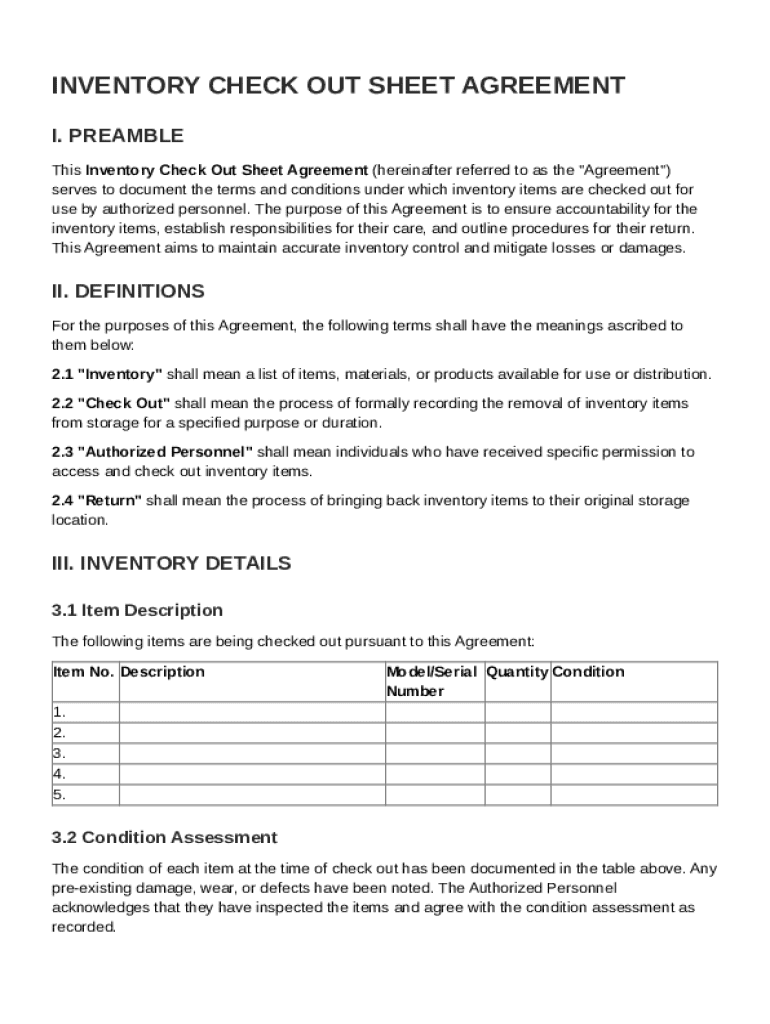
The Inventory Check Out Sheet Agreement Template serves as a crucial document for organizations that deal with the distribution and management of inventory items. This template outlines the terms and conditions under which inventory can be checked out by authorized personnel. It ensures accountability by documenting who is responsible for each item, thus helping in maintaining accurate inventory records and preventing loss or damage. By defining responsibilities clearly, this agreement minimizes misunderstandings related to item custody.
Key Components
- Authorized Personnel: Lists individuals allowed to check out inventory.
- Item Details: Descriptions and identifiers for each inventory item being checked out.
- Terms and Conditions: Specific obligations and restrictions for item use.
- Return Procedures: Steps for returning items to inventory, including timelines and condition requirements.
How to Use the Inventory Check Out Sheet Agreement Template
Using the Inventory Check Out Sheet Agreement Template effectively requires a clear understanding of its structure and purpose.
- Input Inventory Details: Begin by listing all inventory items, including any identifiers such as serial numbers or asset tags.
- Identify Authorized Personnel: Ensure that only those with permission are documented on the agreement.
- Set Terms and Conditions: Outline the specific conditions under which inventory items can be used, including timeframes and usage limitations.
- Define Return Procedures: Specify how items should be returned, including the deadline and acceptable condition.
- Acknowledge Agreement: Both the issuer and the recipient must sign to acknowledge understanding and acceptance of responsibilities.
Practical Scenario
A company might utilize this template to log audiovisual equipment that is frequently checked out by employees for client presentations. By documenting each transaction, the company ensures equipment is returned promptly and in good condition.
Importance of Completing the Inventory Check Out Sheet Agreement Template
The template plays a vital role in inventory management by providing a structured method to track items. It supports:
- Accountability: Establishes clear responsibility and reduces risk of loss or damage.
- Efficiency: Streamlines the check-out process and minimizes paperwork.
- Record Keeping: Provides a historical record of inventory usage.
Example
A technology firm uses the template to manage laptops checked out by remote employees. This practice significantly reduces equipment loss and ensures timely returns.
Who Typically Uses the Inventory Check Out Sheet Agreement Template?
The template is commonly used across various sectors where inventory management is essential:
- Corporate Offices: For managing office equipment and supplies.
- Educational Institutions: To track textbooks and technology lent to students.
- Event Management Companies: For handling inventory of event props and equipment.


Usage in Businesses
Small businesses might use the template to manage shared tools or office equipment, whereas larger organizations may handle a broader inventory spectrum, including machinery or proprietary technology.
Important Terms in Inventory Check Out Sheet Agreement Template
Understanding specific terms within the template is crucial for its effective use:
- Check-Out Date: The date on which the inventory item is issued.
- Return Deadline: The maximum allowable time for an item to be out of inventory.
- Condition Upon Return: Describes the expected state of the item when returned, such as "like-new" or "operable."
Clarification
These terms help prevent disputes and ensure that both parties have a mutual understanding of the expectations and responsibilities involved.
Legal Use of the Inventory Check Out Sheet Agreement Template
The Inventory Check Out Sheet Agreement Template serves not only as a managerial document but also as a legally binding contract when signed by both parties. It outlines the legal implications concerning:
- Liability: Identifies who is responsible for damages or loss.
- Breach of Agreement: Determines consequences for failing to comply with the terms.
- Dispute Resolution: May include policies for resolving disagreements regarding inventory use.
Legal Considerations
When multiple stakeholders are involved, it's crucial to ensure the agreement complies with applicable laws and organizational policies to avoid legal complications.
State-Specific Rules for the Inventory Check Out Sheet Agreement Template
While the template provides a general framework, check-out policies may vary by state due to differing legal requirements or industry standards. For instance, some states might have specific regulations about equipment liability that need to be incorporated into the agreement.
Adaptation by Location
Businesses operating in multiple states may need to customize the template to align with local legal requirements, ensuring that terms of use and liability issues are correctly addressed.
Examples of Using the Inventory Check Out Sheet Agreement Template
Organizations employ this template in various real-world scenarios to manage resources effectively:
- Non-Profit Organizations: For tracking loaned items such as donated laptops or event supplies.
- Film Production Companies: To manage a catalogue of cameras, lenses, and other essential filming equipment.
- Healthcare Facilities: For handling medical equipment provided to staff during field operations.
Case Study
A university's library could use the template to manage technological resources, such as tablets and projectors, borrowed by students for academic projects, thereby maintaining an organized record of item usage.