






Definition and Purpose of the Confidentiality Agreement
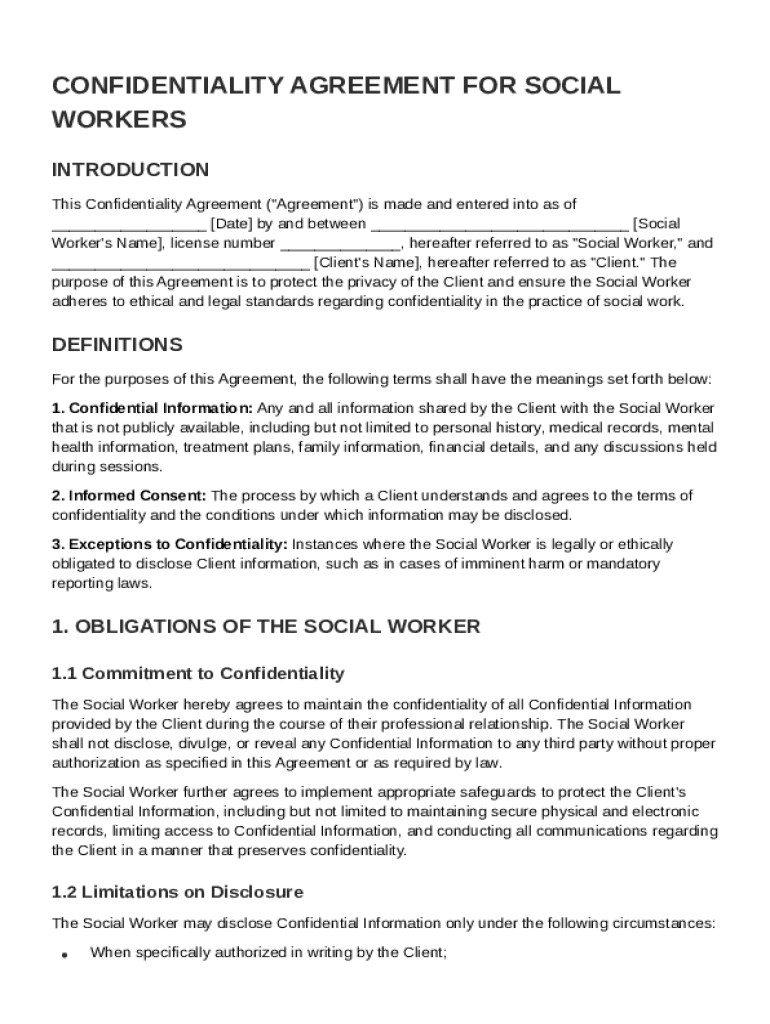
The "Confidentiality for Social Workers Agreement Template" is primarily designed to safeguard a client's private information, ensuring that social workers adhere to established ethical and legal confidentiality standards. This agreement defines key terms like "Confidential Information," which refers to any data shared between the client and social worker intended to remain private unless exceptions are clearly stated. The term "Informed Consent" outlines the client’s right to be aware of the conditions under which their information may be shared.
- Confidential Information: Includes any personal, medical, or identifying details shared within a professional relationship.
- Informed Consent: The client’s understanding and agreement to specific terms under which their data may be shared.
The agreement underscores the indefinite continuation of confidentiality obligations, even after the termination of the professional relationship, highlighting its critical role in maintaining trust between social workers and clients.
How to Use the Confidentiality Agreement Template
To effectively use this template, social workers should customize each section to reflect their specific practice requirements and the unique needs of each client:
- Download the Template: Access the template through a document management platform that supports PDF and other file types, such as DocHub.
- Customize Client Information: Input the specific client's details, ensuring personal data accuracy.
- Specify Confidentiality Clauses: Clearly outline the conditions under which information can be disclosed.
- Review with Client: Discuss each section with the client to ensure their understanding and comfort with the terms.
Once tailored, this document serves as a binding agreement, fostering transparency and understanding between all parties involved.
Key Elements of the Confidentiality Agreement
A well-structured template will include multiple essential components to ensure comprehensive coverage of confidentiality practices:
- Introduction and Objective: An overview of the agreement’s purpose and its role in protecting client privacy.
- Obligations of the Social Worker: Detailed responsibilities regarding information protection.
- Client Rights: Enumerates the rights to access information and rescind consent in certain situations.
- Exceptions to Confidentiality: Specific conditions under which client information might be disclosed, such as safety concerns or legal mandates.
- Procedures for Breach of Agreement: Steps to follow in the event of unauthorized information disclosure.
These elements provide the framework for a robust confidentiality agreement.
Legal Use of the Confidentiality Agreement Template
The use of the "Confidentiality for Social Workers Agreement Template" holds significant legal importance:
- Regulatory Compliance: Ensures adherence to laws such as HIPAA, safeguarding medical and personal details.
- Binding Document: Once signed, this agreement functions as a legally binding contract.
- Liability Limitation: Helps protect social workers from liability by clarifying conditions under which information can be shared.
- Documentation of Consent: Provides documented evidence that the client consented to confidentiality terms under specified circumstances.
These legal implications reinforce the necessity of utilizing a standard confidentiality agreement.
Important Terms Related to Confidentiality
Articulation of specific terms within the agreement is essential for clarity and mutual understanding:
- Breach of Confidentiality: Unauthorized access, use, or disclosure of client information.
- Protection Measures: Procedures and protocols implemented to safeguard data.
- Authorization: Explicit consent from the client permitting disclosure of certain information.
- Third-party Disclosures: Instances where information is shared with external entities, subject to client consent and legal regulations.
Understanding these terms is crucial for both social workers and clients, ensuring the agreement's effectiveness and clarity.
Steps to Complete the Confidentiality Agreement Template
Proper completion of this template ensures clear communication and legally sound practice:
- Initiate Template Review: Begin by thoroughly examining each section of the template.
- Personalize Content: Fill in specific details related to the client and the scope of confidentiality.
- Outline Exceptions and Permissions: Clearly state any agreed-upon exceptions to confidentiality.
- Signatures: Obtain necessary signatures from both parties to validate the document.
Following these steps will ensure that the agreement is complete and enforceable.
State-specific Rules for Confidentiality Agreements
Laws and regulations regarding confidentiality can vary significantly from one state to another:
- State Law Variations: Different states may have unique stipulations that impact how confidentiality agreements should be drafted and enforced.
- Local Regulations: Consider any additional local guidelines that apply to confidentiality in specific regions.
- State Licensing Requirements: Be aware of particular licensing rules that may mandate additional confidentiality protections for social workers.
Acknowledging state-specific rules ensures compliance with local laws and practices.
Examples of Using the Confidentiality Agreement Template
Practical examples can provide clarity on its application within social work practice:
- Scenario A: A social worker utilizing the template to establish terms of privacy when interacting with a new client undergoing counseling.
- Scenario B: Use of the template to document the conditions under which a client’s medical information may be shared with a legal representative.
- Scenario C: Applying the template protocols during an inter-agency collaboration where client information may need to be exchanged.
These examples illustrate the diverse applications of confidentiality agreements in practice.