




01. Edit your 8379 irs instructions online
Type text, add images, blackout confidential details, add comments, highlights and more.

Type text, add images, blackout confidential details, add comments, highlights and more.

Draw your signature, type it, upload its image, or use your mobile device as a signature pad.

Send injured spouse form 8379 instructions via email, link, or fax. You can also download it, export it or print it out.
Form 8379, commonly known as the Injured Spouse Allocation Form, is used to enable a spouse, who has not been responsible for certain debts, to claim their rightful share of a jointly filed tax refund. This form comes into play when a joint tax refund has been partially or fully offset by obligations such as past-due child support, federal debts like student loans, or unpaid state taxes owed by the other spouse. Essentially, the injured spouse uses this form to ensure that their portion of the joint refund is allocated and protected from the other spouse's delinquent debts. This mechanism helps preserve the fairness of the tax system by distinguishing between the financial responsibilities of two legally joined yet distinct economic entities.
The instructions for Form 8379 include several pivotal components that guide applicants throughout the process. The instructions delineate the eligibility criteria, helping taxpayers determine whether they can file for an injured spouse claim. Furthermore, they provide a step-by-step process for filling out the form accurately, offering detailed examples, where necessary, to illustrate precise completion techniques. Clarification of important terms is a critical element, explaining necessary jargon or legal verbiage that may confuse or mislead applicants. The instructions also distinguish the difference between Innocent Spouse Relief and Injured Spouse Allocation, aiding taxpayers in selecting the appropriate form for their situation.
The eligibility to file Form 8379 hinges primarily on a few key conditions. Firstly, the taxpayer must have filed jointly with their spouse, as a separate return eliminates the need for such allocation. Additionally, part of the joint overpayment in question must be determined as subject to offset by federal or state taxing authorities. Importantly, the injured spouse must have reported income on the joint return and contributed towards the reported tax liabilities. The instructions emphasize preserving original proof of income and tax withholdings to establish a solid claim for refund allocation protection.


The Instructions for Form 8379 are essential for guiding taxpayers through the proper filing process for injured spouse claims. To use the instructions effectively, applicants should start by reviewing the eligibility checklist to confirm their qualified status. The instructions guide users through locating each component of their tax return that pertains to the allocation claim. Users are encouraged to follow the steps sequentially as delineated, ensuring they emulate provided examples when filling out their own forms. Cross-referencing their financial documents with the instructions maximizes the precision and reduces the likelihood of errors or omissions.
Form 8379 must adhere to discerning IRS guidelines that govern the injured spouse claims process. When filing, taxpayers are advised to submit the form at the same time as their joint income tax return, although it can be filed separately if needed. Should an applicant choose to file Form 8379 separately, the IRS recommends enclosing a copy of the joint tax return's first two pages to expedite the process. Post submission, taxpayers should monitor for IRS correspondence, which might necessitate further documentation or verification. Adherence to these procedures helps streamline processing and ensures smoother communication with the IRS.
A clear understanding of key terms related to Form 8379 ensures applicants can navigate the intricacies of the injured spouse process. Terms such as "offset," which refers to actions by federal or state agencies to redirect a tax refund towards outstanding debts, and "overpayment," describing any amount refunded due to exceeding paid taxes, are foundational. The term "injured spouse" specifically addresses the individual who seeks protection of their refund allocation against their spouse’s debts. Understanding these terms empowers taxpayers to proceed confidently and accurately in their claims.
Completing Form 8379 involves several well-defined steps, aimed at ensuring comprehensive and accurate representation of the taxpayer's financial circumstances. Applicants should gather all pertinent financial documentation, including Form W-2, 1099, and any income verification that substantiate their claims. When filling out the form, use Section II to allocate income, deductions, and payments specifically attributable to each spouse. It's crucial to specify the type and amount of any offsets applied to the joint refund in Section III. Double-checking all calculations and reconciling figures before submission avoids potential delays arising from inaccuracies.
The typical users of Form 8379 encompass married couples who file jointly but are separated by one partner's financial obligations that the other isn't primary responsible for. Individuals who were previously unaware of their need for injured spouse protection often explore this option after observing an unexpected reduction in their joint refund. Common scenarios include one spouse having significantly different debt obligations, such as unpaid student loans or defaulted federal obligations. Understanding which users benefit from the injured spouse allocation can aid in informing those affected by joint-filing refund alterations.
We've got more versions of the 8379 irs instructions form. Select the right 8379 irs instructions version from the list and start editing it straight away!
At DocHub, your data security is our priority. We follow HIPAA, SOC2, GDPR, and other standards, so you can work on your documents with confidence.




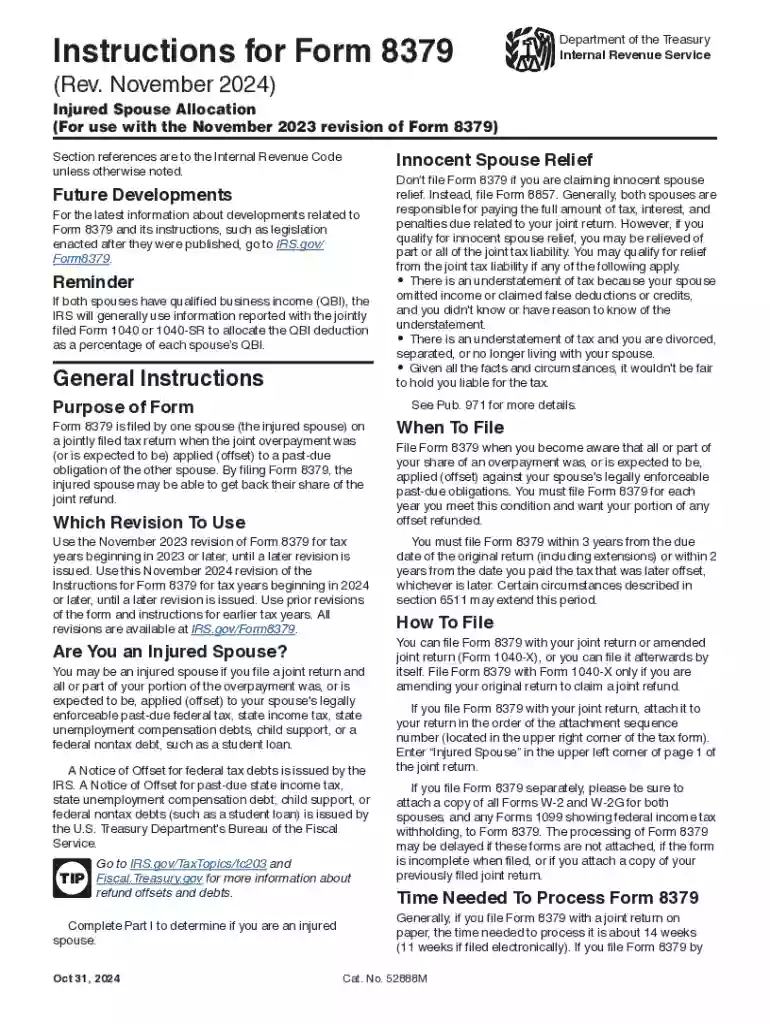
Form 8379 is filed by one spouse (the injured spouse) on a jointly filed tax return when the joint overpayment was (or is expected to be) applied (offset)
How Do I File Form 8379? ○ If you have already filed the joint tax return, mail Form 8379 by itself to the Internal Revenue Service Center for the place.Read more


