






Definition & Purpose of a Common Law Separation Agreement
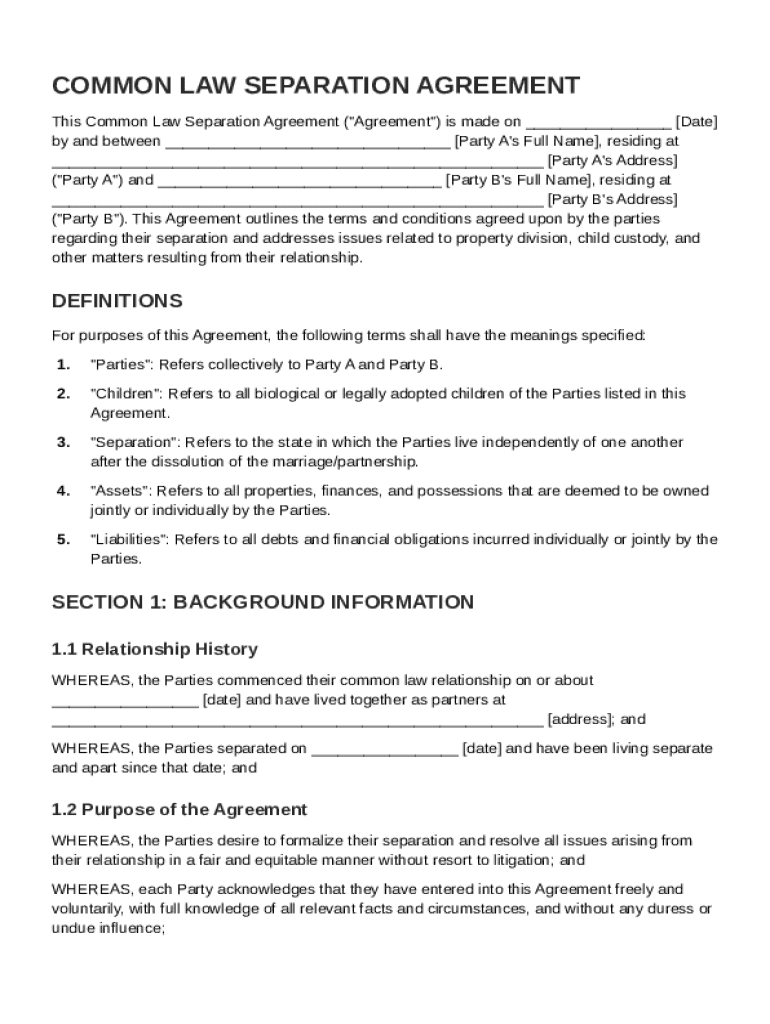
A Common Law Separation Agreement is a legal document that outlines the terms of separation between two individuals in a common law relationship. This agreement serves to formalize the mutual understanding of both parties regarding the division of assets, child custody arrangements, financial support responsibilities, and the methods of resolving any disputes that may arise. By encapsulating these terms in a written document, the parties aim to prevent misunderstandings and legal conflicts, providing a structured approach to separation without the need for court interventions.
Key Elements of the Common Law Separation Agreement Template
The template typically includes several critical sections to capture the essence of a common law separation. Some of the key elements are:
- Property Division: Specifies how shared assets and liabilities will be divided between the parties, such as real estate, vehicles, and financial accounts.
- Child Custody: Details the arrangement concerning the custody and visitation rights for any children involved, ensuring their welfare and consistent parenting.
- Child and Spousal Support: Outlines the financial obligations related to child support and potential spousal support payments, helping maintain the economic stability of both parties.
- Dispute Resolution: Establishes procedures for resolving disagreements, such as mediation or arbitration, to encourage cooperative problem-solving.
- Mutual Consent: Ensures that both parties voluntarily enter into the agreement without duress or undue influence, enhancing its enforceability.
Steps to Complete the Common Law Separation Agreement Template
To complete the Common Law Separation Agreement Template, follow these steps:
- Gather Relevant Information: Collect all necessary personal and financial details that will be included in the agreement.
- Review State Laws: As legal requirements vary by state, ensure that the agreement adheres to local laws governing common law separations.
- Drafting the Agreement: Use the template to input specific information, such as asset division, custody arrangements, and support obligations.
- Consult a Lawyer: For legal precision and to address any unique circumstances, consult with a legal professional familiar with family law.
- Review and Sign: Once both parties are satisfied with the agreement, review it thoroughly, and sign it in the presence of a notary for added validity.
How to Use the Common Law Separation Agreement Template
The template is designed to be user-friendly while covering all necessary legal bases. To use it effectively:
- Customization: Adjust the template to address specific needs and circumstances, ensuring that it reflects the unique aspects of your separation.
- Clarity: Use clear and precise language to avoid ambiguity and ensure mutual understanding.
- Supplementary Documents: Attach any additional documents that may provide further context or detail about financial statements, property deeds, or custody agreements.
Examples of Using the Common Law Separation Agreement Template
Here are some practical scenarios demonstrating the application of the template:
- Scenario One: A couple separating after several years of cohabitation decides to split their jointly owned assets and agree on a custody schedule for their children.
- Scenario Two: Individuals in a common law relationship decide to part ways and use the agreement to outline a fair division of their shared debts and liabilities.
- Scenario Three: A separating couple with no children uses the agreement to establish terms for spousal support and the division of retirement benefits.
Important Terms Related to Common Law Separation
Certain terms are essential for understanding and drafting a Common Law Separation Agreement, including:
- Common Law Relationship: A relationship between two individuals who live together in a marriage-like arrangement without officially being married.
- Cohabitation: The act of living together and sharing a domestic life.
- Division of Assets: The legal split of property and financial assets acquired during the relationship.
- Legal Custody: The rights and responsibilities of parents to make decisions regarding their children's welfare.
Who Typically Uses the Common Law Separation Agreement Template
The template is ideal for:
- Unmarried Couples: Individuals in a relationship akin to marriage but not legally tied by a marital contract.
- Couples with Shared Assets: Those who have acquired property or finances together during their common law relationship.
- Parents Seeking Clarity: Individuals who wish to clearly define custodial arrangements and support obligations for children born within the relationship.


Legal Use of the Common Law Separation Agreement Template
The Common Law Separation Agreement Template must comply with legal standards to be enforceable. The parties should:
- Ensure Voluntary Participation: Both individuals must enter into the agreement willingly, with a full understanding of its terms.
- Adhere to State Laws: The agreement should be tailored to meet the legal requirements of the state in which the parties reside.
- Notarization: While not always necessary, having the agreement notarized can provide additional legal weight and prevent future disputes.
State-Specific Rules for the Common Law Separation Agreement Template
Laws related to common law relationships and subsequent separations vary across states:
- Acceptance of Common Law Marriage: Some states recognize common law marriages, which may influence the structure and enforceability of a separation agreement.
- Property Division Rules: Specific state laws may dictate the method of property division, especially if common law marriages are recognized.
- Custody and Support Standards: Different states may have varying guidelines for child custody and support, affecting the terms included in the agreement.