




01. Edit your form 8919 online
Type text, add images, blackout confidential details, add comments, highlights and more.

Type text, add images, blackout confidential details, add comments, highlights and more.

Draw your signature, type it, upload its image, or use your mobile device as a signature pad.

Send 8919 form via email, link, or fax. You can also download it, export it or print it out.
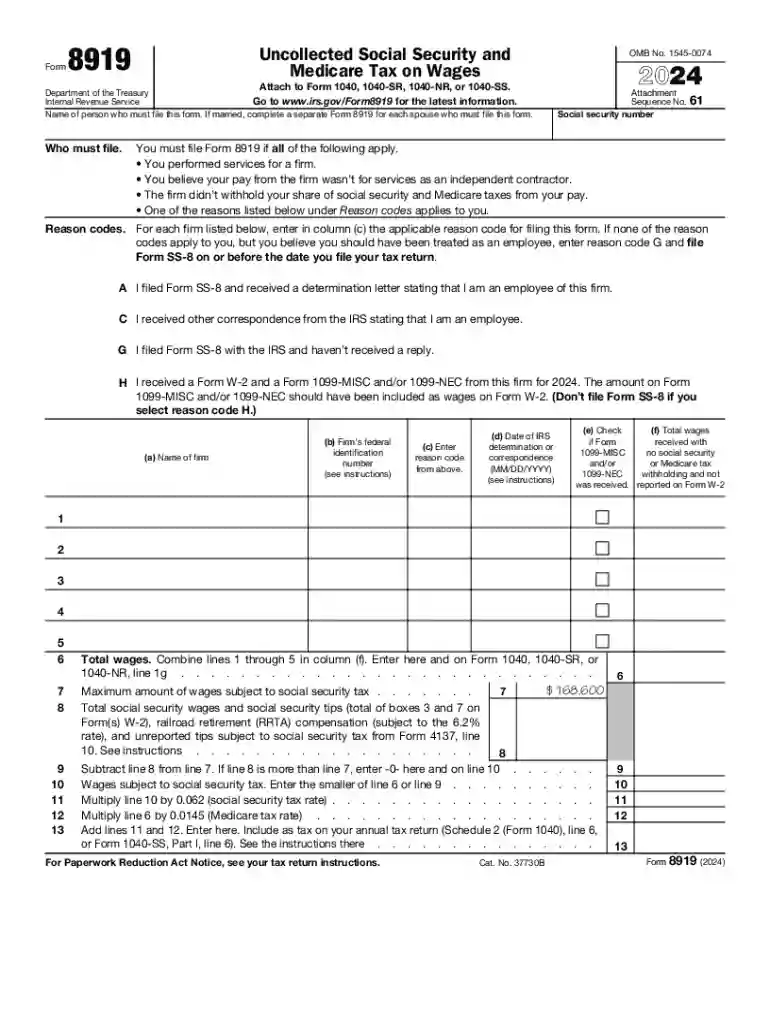
Form 8919, titled "Uncollected Social Security and Medicare Tax," is used by individuals who performed services as employees but were misclassified as independent contractors by their employers. The primary purpose of this form is to report uncollected Social Security and Medicare taxes attributable to wages. It ensures that Social Security earnings are appropriately credited to the individual's account, thereby protecting future benefits. Misclassification can occur intentionally or accidentally, impacting tax obligations and benefits, making this form crucial for accurate reporting.
Completing Form 8919 involves several detailed steps to ensure accurate reporting:
Obtaining Form 8919 is a straightforward process available through several channels:
Individuals who generally need to file Form 8919 include those:
These situations often arise in sectors with high independent contracting rates, indicating a need for vigilance regarding proper tax reporting and compliance.
Understanding critical terms associated with Form 8919 ensures clarity and compliance:
By familiarizing oneself with these terms, individuals better position themselves for accurate tax filing.
The IRS has specific guidelines governing the use of Form 8919, outlining:
Compliance with these guidelines ensures the legitimacy of claims and adherence to federal tax laws.
Deadlines for Form 8919 align with general tax filing periods in the U.S.:
Being mindful of these deadlines aids in timely submission and avoids penalties.
Failing to comply with IRS filing requirements for Form 8919 can lead to several penalties:
Ensuring compliance with Form 8919 requirements minimizes risks of penalties and maintains tax obligations.
We've got more versions of the form 8919 form. Select the right form 8919 version from the list and start editing it straight away!
At DocHub, your data security is our priority. We follow HIPAA, SOC2, GDPR, and other standards, so you can work on your documents with confidence.




Uncollected social security and Medicare tax on wages. Attach. Form 8919 7. Total additional social security and Medicare tax. Add lines 5 and 6. 8.Read more
Use Form 8919 to figure and report your share of the uncollected social security and Medicare taxes due on your compensation if you were an employee


