






Definition and Purpose of the Nurse Practitioner Collaborative Agreement
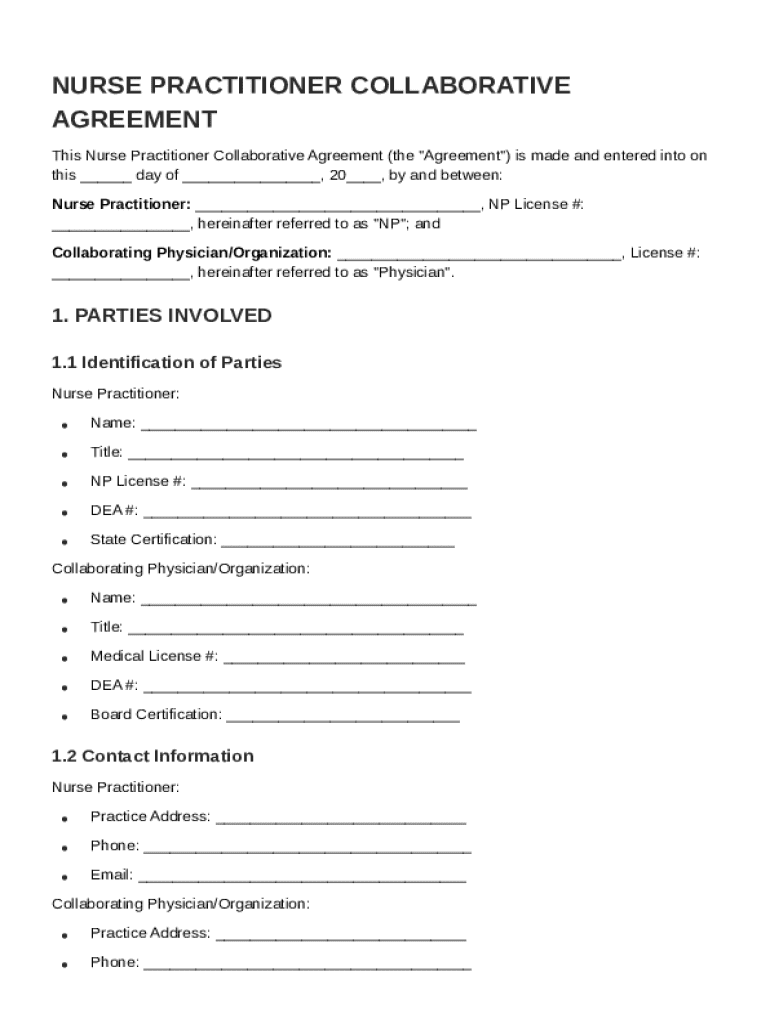
A Nurse Practitioner Collaborative Agreement is a formalized document that defines the collaborative relationship between a Nurse Practitioner (NP) and a Collaborating Physician. This agreement ensures that both parties understand their roles, responsibilities, and the scope of practice within a healthcare setting. It encompasses interdisciplinary cooperation, quality assurance measures, and compliance with healthcare regulations, all aiming to enhance patient care.
How to Use the Nurse Practitioner Collaborative Agreement Template
- Initial Review: Begin by thoroughly reviewing the entire template to understand its structure and the specific information required.
- Customization: Tailor the template to fit your specific circumstances, including details about the NP, Collaborating Physician, and relevant healthcare setting.
- Input Required Information: Ensure all fields are completed with accurate and up-to-date information. This includes professional credentials, contact details, and practice locations.
- Details of Collaboration: Clearly define the roles and responsibilities of each party, the scope of practice, and any limitations on practice acts.
- Compliance and Regulations: Incorporate mandates pertaining to state and federal healthcare compliance to maintain legal adherence.
- Review and Finalize: After completing the template, review it for accuracy, and ensure all parties understand and agree upon terms before signing.
Steps to Complete the Nurse Practitioner Collaborative Agreement Template
-
Gather Necessary Information:
- Identification details of the NP and Collaborating Physician.
- Practice locations and specializations.
-
Outline the Collaboration:
- Define roles, responsibilities, and the decision-making process.
- Establish protocols for patient care and emergencies.
-
Review Legal and Regulatory Requirements:
- Ensure the inclusion of compliance with state and federal laws.
- Incorporate malpractice liability coverage terms.
-
Agreement Review:
- Have all parties involved review the agreement for clarity and mutual understanding.
-
Sign and Implement:
- Obtain signatures from the NP and Collaborating Physician, indicating agreement to the terms.
- Retain copies for each party and practice records.
Key Elements of the Nurse Practitioner Collaborative Agreement
- Parties Involved: Specify the full names and credentials of the NP and Collaborating Physician.
- Scope of Practice: Clearly define the extent of medical services the NP is authorized to perform under the agreement.
- Roles and Responsibilities: Detail the professional duties for each party to ensure efficient cooperation.
- Quality Assurance: Include methods for quality monitoring and improvement processes.
- Communication Protocols: Establish guidelines for maintaining contact and consultation between parties.
Legal Considerations for the Nurse Practitioner Collaborative Agreement
The Collaborative Agreement must adhere to all relevant healthcare laws and regulations to ensure legal validity. It should:
- Comply with state-specific requirements for nurse practitioners.
- Include provisions for liability insurance and its coverage limits.
- Include procedures for resolving disputes that may arise between the NP and the Collaborating Physician.
- Detail the consequences or procedures for agreement termination and amendments.
State-specific Rules for the Nurse Practitioner Collaborative Agreement
State regulations can vary significantly in terms of scope of practice and collaborative requirements. It’s important to:
- Consult respective state nursing boards for specific mandates.
- Include any additional state-specific documents or certifications.
- Adjust the agreement based on differing state guidelines where the NP is licensed to practice.
Who Typically Uses the Nurse Practitioner Collaborative Agreement Template
- Nurse Practitioners: To establish formal practice relationships with physicians.
- Collaborating Physicians: To constructively participate in a shared-care model with NPs.
- Healthcare Facilities: Such as clinics and hospitals, to structure collaborative frameworks between healthcare professionals.


Variations and Alternatives to the Nurse Practitioner Collaborative Agreement Template
Depending on specific needs, variations of the agreement might include:
- Standard Collaborative Agreements: For typical NP-Physician relationships.
- Supervisory Agreements: In states where supervision is more regulatory than collaboration.
- Practice Protocols: Tailored agreements for NPs with specialized certifications or roles within a healthcare team.
Understanding these essential elements and steps ensures that those involved in a Nurse Practitioner Collaborative Agreement are well-prepared to leverage it effectively for quality patient care while maintaining compliance with legal standards.