




01. Edit your ohio bmv transfer registration online
Type text, add images, blackout confidential details, add comments, highlights and more.

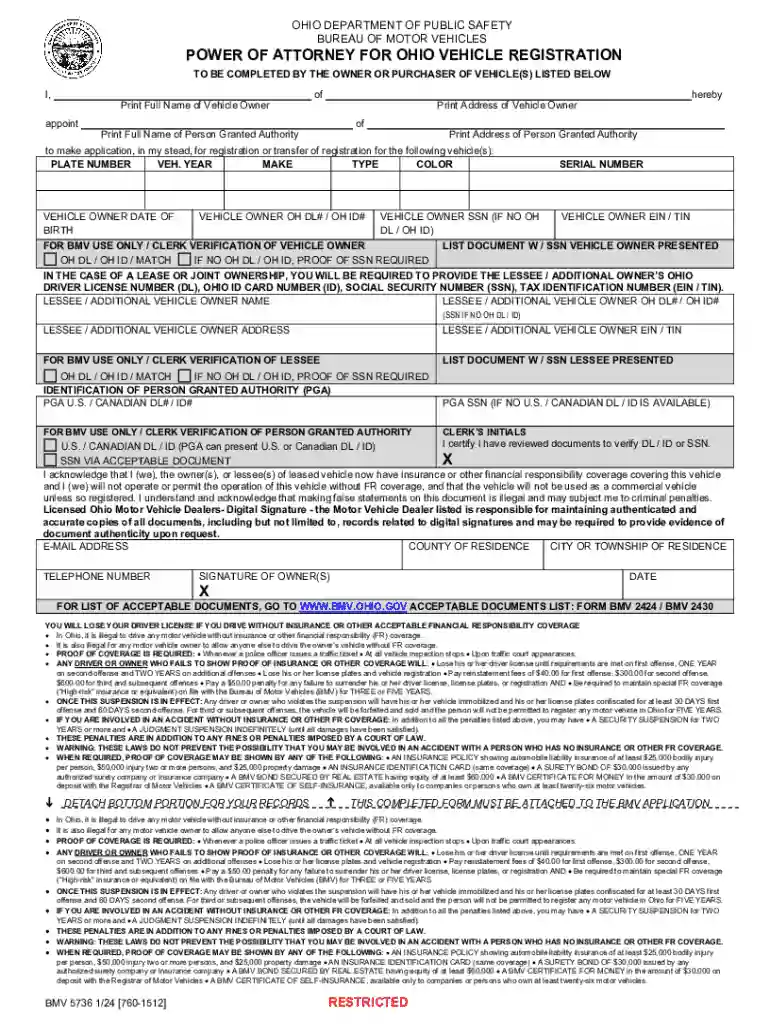
Type text, add images, blackout confidential details, add comments, highlights and more.

Draw your signature, type it, upload its image, or use your mobile device as a signature pad.

Send ohio bmv forms via email, link, or fax. You can also download it, export it or print it out.
The Power of Attorney for Ohio Vehicle Registration is a legal document issued by the Ohio Department of Public Safety, Bureau of Motor Vehicles. This document grants an appointed individual the authority to register or transfer a vehicle on behalf of the vehicle owner. It is significant because it facilitates vehicle management by allowing a trusted person to handle essential registration tasks, especially in cases where the owner cannot be present. Understanding this form is crucial for anyone seeking to delegate their responsibilities related to vehicle registration in the state of Ohio.
To obtain the Power of Attorney form for Ohio Vehicle Registration, you can visit the Ohio Bureau of Motor Vehicles website, where the form is typically available for download. Alternatively, you can obtain a physical copy by visiting a local BMV office. Before obtaining the form, ensure you identify the correct version, as using an outdated form may lead to processing delays. Additionally, verify the requirements for submission, such as the need for any accompanying identification documents or notarization.
The form comprises several crucial elements, including:
Legally, the power of attorney document allows the designated person to act in the owner’s stead for specific vehicle-related duties. This includes filing applications for registration and handling title transfers. It is critical to note that misuse of this document can lead to legal penalties, highlighting the importance of choosing a trustworthy agent. Legitimacy stems from correct execution, which often involves complying with notarization requirements.
Several terms are vital when dealing with this form:
In Ohio, certain rules specifically govern the use and validity of the power of attorney form. These include:
Consider a scenario where the vehicle owner is abroad but needs to transfer car ownership. With the power of attorney in place, a trusted person can complete the registration transfer on their behalf, ensuring compliance with Ohio BMV regulations. Another example may include an individual unable to attend to their vehicle's registration due to health reasons, allowing them to appoint someone to handle these duties legally.
We've got more versions of the ohio bmv transfer registration form. Select the right ohio bmv transfer registration version from the list and start editing it straight away!
At DocHub, your data security is our priority. We follow HIPAA, SOC2, GDPR, and other standards, so you can work on your documents with confidence.





Special or Limited Power of Attorney Gives power over special tasks, such as selling a property or signing a title or registration for a motor vehicle.Read more
power of attorney is a written authorization by one person which permits another person to manage their life decisions if necessary.


