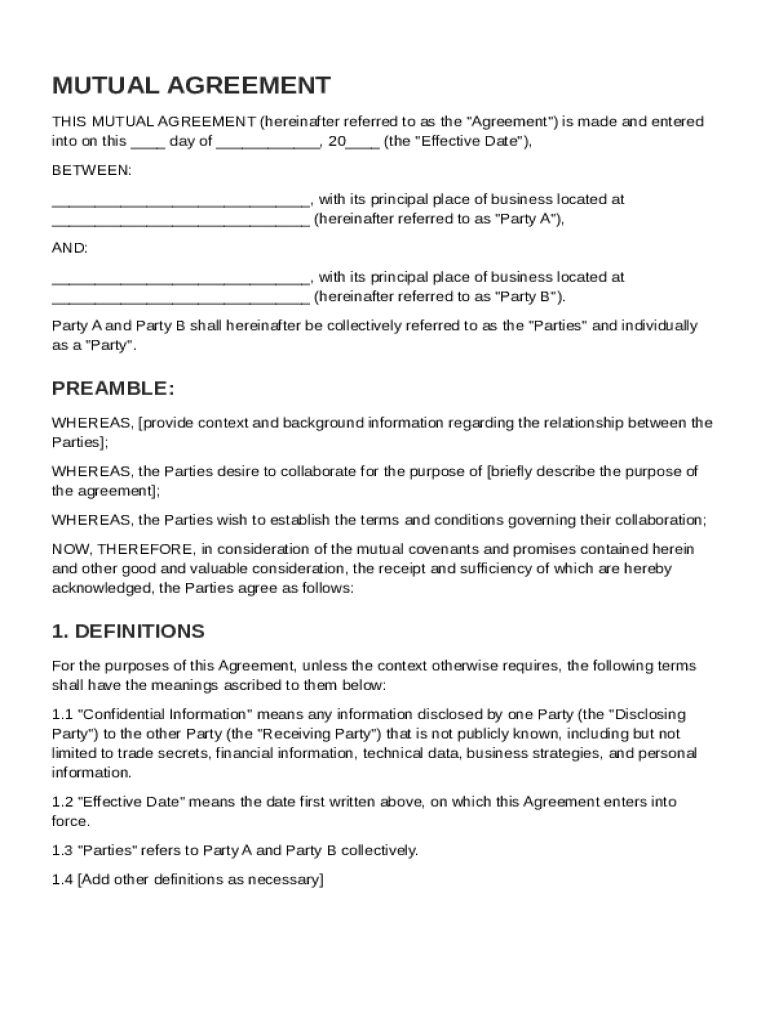







Definition & Purpose of the Mutual Agreement Template
A Mutual Agreement Template is a pre-structured document that outlines the formalized terms and conditions for a collaborative engagement between two parties, known as Party A and Party B. This template covers essential components such as definitions, responsibilities, confidentiality terms, liability limitations, dispute resolution mechanisms, and amendment procedures. The overarching aim is to provide a clear framework that facilitates cooperation while safeguarding confidential information, minimizing potential conflicts, and delineating the obligations of each party involved. By utilizing this template, parties can ensure that their collaboration is underpinned by an agreement that is comprehensive and legally sound.
How to Use the Mutual Agreement Template Effectively
Utilizing the Mutual Agreement Template involves a structured approach to ensure all conditions and clauses are thoroughly understood and correctly applied. Begin by reviewing each section of the template to ensure the information aligns with the specific requirements and needs of both parties. Pay particular attention to the definitions to avoid ambiguity and ensure clarity in expectations. It is often beneficial to hold a joint discussion session with the involved parties to customize the template, focusing on unique terms such as confidentiality agreements or liability limitations pertinent to the collaboration. Once both parties agree on the terms, each section should be filled out meticulously, followed by revisiting the agreement to confirm mutual consensus prior to finalizing and signing the document.
Steps to Complete the Mutual Agreement Template
-
Review the Template Components: Start by thoroughly analyzing each section of the template, ensuring comprehension of all terms and clauses.
-
Customize Definitions: Adjust definitions to precisely reflect the project scope and clarify specific terminologies unique to the agreement.
-
Outline Obligations: Explicitly state the responsibilities of each party, ensuring that these are detailed and unambiguous.
-
Incorporate Confidentiality Clauses: Add confidentiality requirements that are critical to protecting sensitive information shared during the collaboration.
-
Specify Liability Limitations: Define the extent and limits of liabilities for each party to manage risk exposure effectively.
-
Define Dispute Resolution: Include clear procedures for resolving any potential disputes, selecting arbitration or mediation as needed.
-
Finalize and Review: Both parties should review the filled-out template to confirm agreement before signing the document.
Who Typically Uses the Mutual Agreement Template
This template is a versatile tool used by various entities ranging from business partners, corporations, non-profits, and individuals in collaborative ventures. Businesses often implement such templates when entering joint ventures or partnerships to ensure clarity and legal protection. Similarly, freelancers and independent contractors may use it to outline project expectations and confidentiality with clients or collaborators. Additionally, organizations engaging in collaborative research or development projects may rely on mutual agreements to ensure all parties are aligned on shared goals and responsibilities.


Key Elements of the Mutual Agreement Template
-
Parties Involved: Clearly identifies Party A and Party B, their roles, and contact information.
-
Definitions: Provides specific definitions for all significant terms to ensure clarity.
-
Obligations: Enumerates the responsibilities and duties that each party is expected to fulfill.
-
Confidentiality: Specifies terms for maintaining the confidentiality of sensitive information exchanged.
-
Liability: Outlines the extent of each party's liability in case of default or unforeseen events.
-
Dispute Resolution: Describes methods for resolving disagreements, often choosing mediation or arbitration.
-
Amendments: Details how modifications to the agreement can be made and approved by both parties.
Legal Use of the Mutual Agreement Template
The Mutual Agreement Template provides a legally binding document, facilitating the enforcement of duties and obligations should conflicts arise. It ensures that both parties have a documented understanding of the collaboration terms, reducing the potential for misinterpretation or disputes. Moreover, when executed properly, the template serves as evidence in legal proceedings, protecting both parties from claims of non-compliance or breach of agreement. Given its legal nature, it is often prudent to have legal professionals review the finalized agreement to ensure it meets all necessary legal requirements.
Examples of Using the Mutual Agreement Template
Consider a scenario where two tech companies decide to partner in developing a new software product. They would utilize the Mutual Agreement Template to outline project responsibilities, intellectual property rights, resource sharing, and timelines, among other factors. Alternatively, two non-profits collaborating on a community outreach project might use the template to delineate each organization's roles and financial commitments. These examples showcase how the template functions to provide legal clarity and structure in various professional relationships.
Required Documents for Completing the Mutual Agreement
To accurately complete the Mutual Agreement Template, certain supplementary documents might be necessary, such as:
-
Identification Documents: For both parties, verifying their identities and legitimate representation.
-
Project Proposals: Detailed proposals that articulate the scope and objectives of the collaboration.
-
Financial Statements: If relevant, to verify financial capabilities and commitments.
-
Legal References: Such as previous agreements, historical amendments, or court rulings relevant to the collaboration.
These documents support the accuracy and comprehensiveness of the agreement, ensuring all individual and collective interests are properly addressed.