
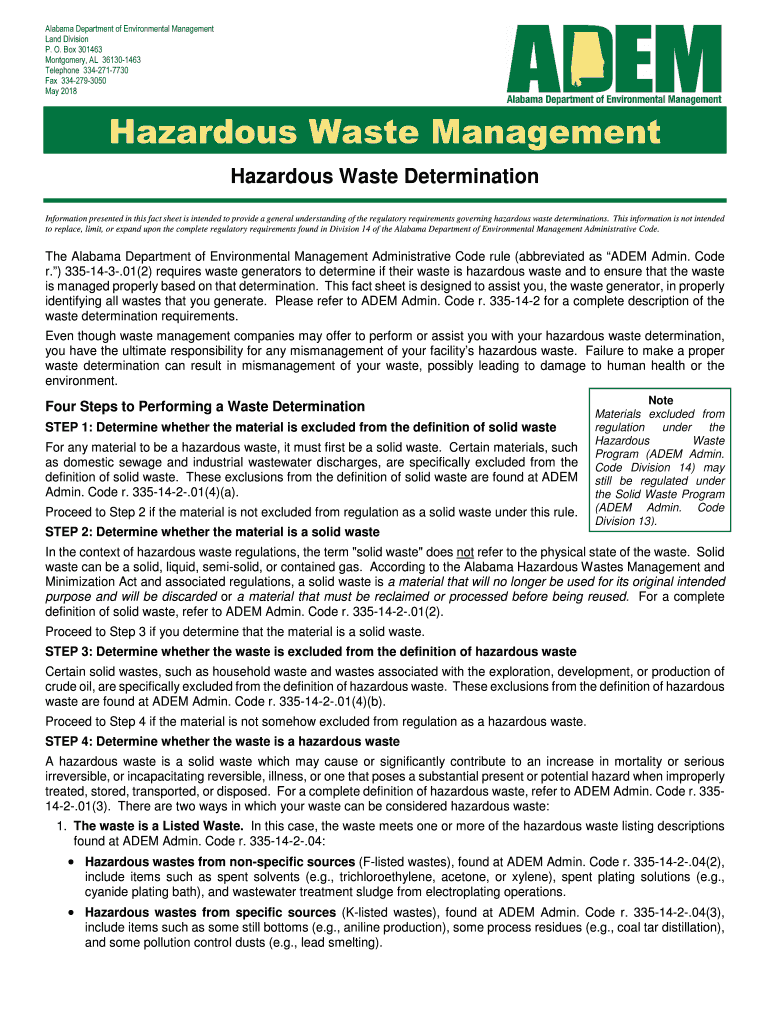







Definition and Importance of Hazardous Waste Determination
Hazardous waste determination is a crucial process aimed at identifying waste materials that pose potential harm to human health and the environment. In Alabama, this process follows guidelines established by the Alabama Department of Environmental Management (ADEM). The primary goal is to prevent mismanagement of hazardous waste, which could lead to environmental contamination and health risks. This determination is vital for entities that produce waste, ensuring compliance with legal standards and promoting safe waste management practices.
Steps in Hazardous Waste Identification
-
Determine if the Waste is Solid: The first step involves assessing whether the material qualifies as solid waste, per regulatory definitions. Not all waste is considered solid—liquids, sludges, and contained gases can also be classified as solid wastes.
-
Check for Exclusions: Some wastes are exempt from being classified as hazardous. This step requires understanding specific regulatory exclusions that may apply.
-
Evaluate Hazardous Characteristics: This involves checking if the waste exhibits hazardous traits, such as ignitability, corrosivity, reactivity, or toxicity.
-
Consult Hazardous Waste Listings: Specific waste types are listed as hazardous under federal and state laws. Cross-referencing these lists ensures accurate classification.
How to Complete the Hazardous Waste Determination in Alabama
Completing the hazardous waste determination in Alabama requires careful adherence to defined procedures. Organizations must evaluate waste streams using either generator knowledge, which relies on the producer's familiarity with the waste, or through direct sampling and analysis.
Detailed Procedure
-
Gather Necessary Information: Utilize detailed data about the waste, including its source, components, and processes used in its production.
-
Document the Determination Process: Create comprehensive records of the evaluation process, including techniques used and results obtained.
-
Follow ADEM Guidelines: Ensure all steps are in compliance with ADEM's outlined procedures to ensure legal accuracy and protection.
Key Elements of the Determination Process
The hazardous waste determination process in Alabama involves several key components:
-
Regulatory Knowledge: Understanding state-specific regulations that govern waste identification.
-
Accurate Recordkeeping: Maintain thorough documentation of all evaluation steps for compliance and audit purposes.
-
Expertise in Waste Characteristics: Having proficiency in recognizing and categorizing different waste properties ensures effective determination.
Tools for Determination
-
Sampling Equipment: For physical waste analysis, proper sampling tools are essential to obtain representative samples.
-
Analytical Laboratories: Certified laboratories can perform required tests to ascertain hazardous characteristics of waste samples.
Legal and Compliance Considerations
Ensuring legal compliance when performing hazardous waste determination is crucial. In Alabama, adherence to both state and federal laws is required to avoid penalties and ensure safe waste management.
Potential Penalties
Organizations failing to comply with hazardous waste regulations may face significant penalties, including fines and legal action. Misclassification of hazardous waste can lead to severe ecological and public health repercussions.
Mitigation Strategies
-
Regular Training: Keep your team informed about current regulations and methods through periodic training sessions.
-
Consulting Specialists: When in doubt, work with environmental consultants specializing in hazardous waste determination.
State-Specific Regulations and Differences
Different states have varying regulations concerning hazardous waste. While the federal government provides baseline regulations through the Environmental Protection Agency (EPA), states like Alabama may impose additional rules that must be followed.
Alabama's Unique Regulations
-
ADEM's Role: The Alabama Department of Environmental Management enforces state-specific rules, which can include stricter definitions of hazardous materials or additional documentation requirements.
-
State Initiatives: Alabama may implement initiatives focusing on particular industries or types of waste, reflecting ecological priorities or industrial trends within the state.
Why Accurate Determination Matters
Accurate hazardous waste determination has far-reaching implications:
-
Environmental Protection: Proper classification reduces the risk of environmental contamination.
-
Public Health: Minimizing exposure to hazardous substances prevents health issues within communities.
-
Economic Efficiency: Avoid unnecessary regulatory scrutiny and optimize waste management costs through correct waste categorization.
Case Studies
-
Industrial Facilities: Manufacturing plants that misjudge waste classifications have faced shutdowns and fines, underscoring the need for accurate determination.
-
Municipal Successes: Cities implementing stringent waste determination protocols have reported significant reductions in hazardous waste incidents.
Who Should Undertake the Determination Process
The hazardous waste determination process is primarily conducted by waste generators, including industries, hospitals, and laboratories that produce diverse waste streams. These organizations must integrate waste determination into their standard operating procedures.
Supporting Roles
-
Environmental Managers: Oversee compliance and verification processes.
-
Health and Safety Officers: Ensure workplace policies align with waste management strategies.
-
Regulatory Officers: Liaise with state and federal agencies to keep procedures up-to-date with legal standards.




