Definition & Meaning
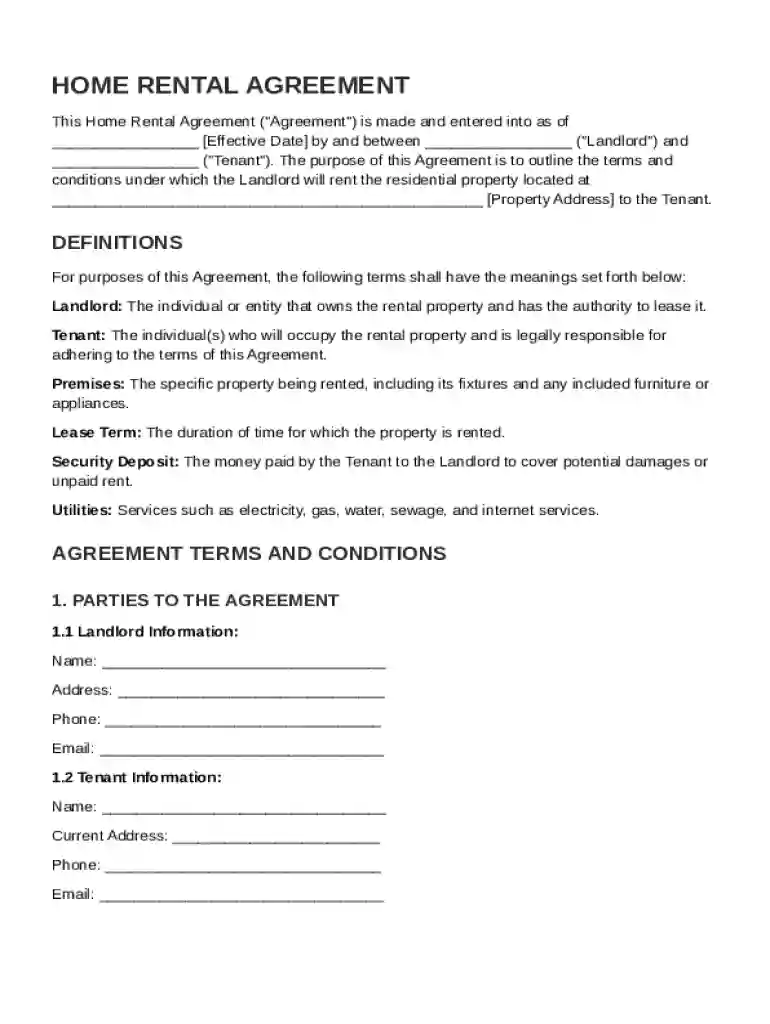
The "Home Rental Agreement Template" serves as a foundational document that formalizes the rental arrangement between a landlord and tenant. This agreement outlines the essential terms and conditions that both parties must adhere to during the rental period. Key elements typically covered include:
- Lease Duration: Specifies how long the tenant is allowed to occupy the property.
- Rent Payment Terms: Details the amount of rent, the due date, and the acceptable payment methods.
- Security Deposit Requirements: Establishes the amount of the security deposit and the conditions for its return.
- Utility Responsibilities: Clarifies which party is responsible for paying utilities such as water, electricity, and gas.
- Maintenance Obligations: Outlines which maintenance tasks are handled by the landlord and which are the tenant’s responsibility.
- Termination Conditions: Lists the scenarios under which the lease can be terminated early by either party.
This document is essential for protecting the rights and responsibilities of both the landlord and tenant, helping to prevent disputes.
Key Elements of the Home Rental Agreement Template
Understanding the critical components of a Home Rental Agreement is vital for users aiming to create a legally sound and comprehensive document. The template typically includes the following sections:
- Premises Description: Details the exact location and description of the rented property, including any related property, such as storage units or parking spaces.
- Lease Term: Defines the start and end dates of the lease, along with any procedures for renewal.
- Rent and Payment: Specifies the monthly rent amount, due dates, accepted payment methods, and potential late fees.
- Deposits and Fees: Includes the security deposit, its purpose, and conditions for its return, along with any other applicable fees.
- Use of Property: Sets the limitations on how the property can be used, ensuring it remains conducive to residential purposes.
- Property Maintenance: Clarifies the responsibilities for maintenance and minor repairs.
- Pet Policies: States if pets are allowed, any pet deposit fees, and what, if any, restrictions apply.
These elements are designed to ensure clarity, thereby minimizing misunderstandings or legal challenges.
Steps to Complete the Home Rental Agreement Template
Completing a Home Rental Agreement Template requires careful attention to detail to ensure that all legal and practical considerations are addressed. Here are the necessary steps:
- Gather Information: Collect details about the property, landlord, and tenant. Ensure accuracy to avoid future disputes.
- Review Terms: Understand the lease terms, including rent amount, payment schedule, and lease duration, and ensure they align with both parties' expectations.
- Fill Out the Template: Enter the collected details into the Home Rental Agreement Template. Ensure every section is completed accurately.
- Custom Adjustments: Amend sections to cater to unique situations or state-specific laws. Consider consulting legal advice for complex scenarios.
- Proofread: Double-check for errors or omissions. Ensure that all information matches the agreed terms.
- Signatories: Both parties should read the agreement thoroughly before signing. Ensure all required signatures, including any co-signers, are present.
- Distribute Copies: Provide both parties with a copy of the signed agreement for their records.
Adhering to these steps ensures a legally robust agreement, reducing the risk of future conflicts.
Legal Use of the Home Rental Agreement Template
The legal validity of a Home Rental Agreement Template hinges on adherence to relevant laws and proper documentation. In the U.S., the template must comply with both federal and state laws to be enforceable:
- Landlord-Tenant Laws: These laws regulate aspects like eviction processes, security deposit limits, and disclosure requirements.
- Fair Housing Act: Asserts that leases must not have discriminatory clauses against protected classes.
- Local Ordinances: Control rent control measures, zoning laws, or health and safety regulations.
To ensure that a lease is enforceable, both parties need to enter into it voluntarily, with a mutual understanding of its terms. Legal advice might be wise to tailor the agreement to specific jurisdictions.
Important Terms Related to Home Rental Agreement Template
A thorough understanding of the following essential terms can enhance clarity and communication between parties involved in the rental process:
- Lessee: The tenant renting the property.
- Lessor: The landlord or property owner leasing out the property.
- Monthly Rent: The agreed-upon amount that the tenant pays to the landlord monthly.
- Lease Term: The duration for which the lease is valid.
- Notice Period: The time frame required for either party to inform the other about ending the lease.
- Subletting: The act of the tenant renting the property to another party, usually requiring landlord consent.
Familiarity with these terms is crucial in interpreting the implications and rights within the agreement.
State-Specific Rules for the Home Rental Agreement Template
The validity of a Home Rental Agreement Template can be influenced by state-specific regulations. Some areas may have unique requirements:
- Security Deposit Regulations: States often set limits on the amount that can be charged and the timeline for returning the deposit.
- Rent Control Laws: Certain cities implement rent control, affecting permissible rent increases.
- Disclosure Requirements: States may require disclosure of specific information, like mold readings or lead-based paint warnings.
- Eviction Laws: Each state prescribes its process for evictions, outlining how much notice must be given and for what reasons.
Understanding state-specific rules ensures compliance, helping to safeguard against legal disputes.
Examples of Using the Home Rental Agreement Template
Real-world application of the Home Rental Agreement Template showcases its importance and flexibility:
- Case Study: First-Time Landlord: A new property owner managed to draft a precise lease with clear terms, providing both themselves and the tenant with legal protection.
- Scenario: Family Rental: A family uses the template to rent a larger home, ensuring their specific needs, like pet allowances, are documented.
- Use Case: Shared Apartment: Multiple tenants occupying a shared apartment use a single agreement detailing individual responsibilities and rules, such as noise restrictions.
These examples illustrate the template's adaptability to various rental situations, underscoring its utility in real estate transactions.