






Definition & Meaning
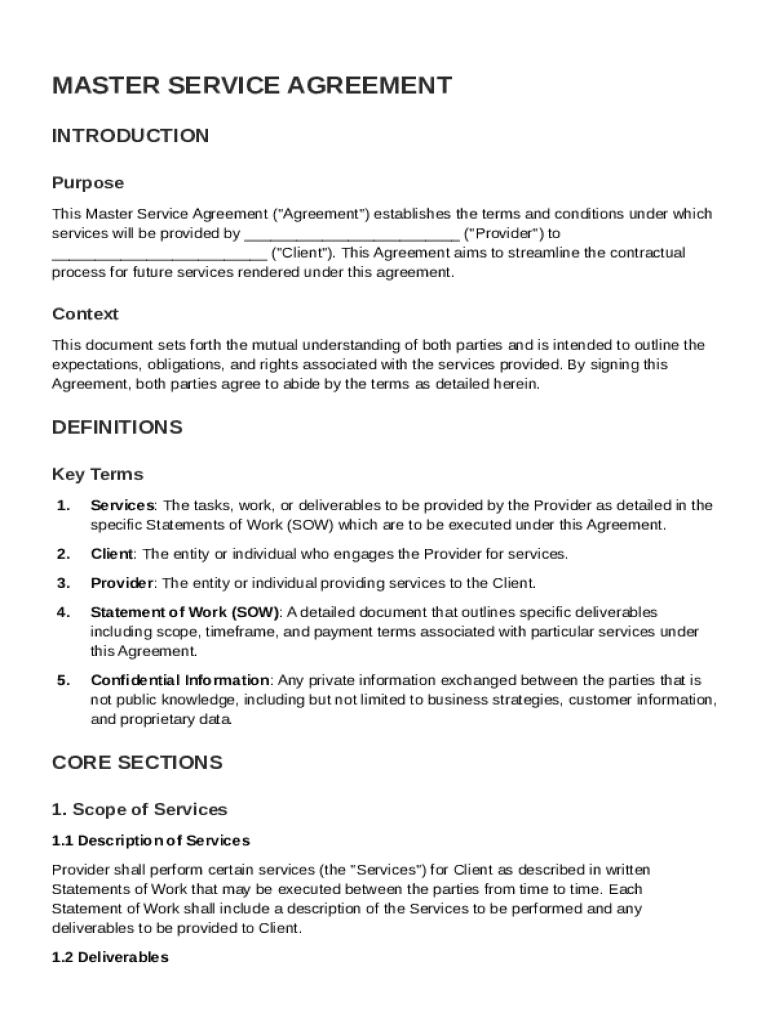
A Master Service Agreement (MSA) Template is a comprehensive document that outlines the terms and conditions between service providers and clients. Its primary goal is to establish a mutual understanding of expectations, services, and responsibilities. The MSA Template serves as a foundational contract that covers various critical aspects such as scope of services, payment terms, intellectual property rights, confidentiality obligations, indemnification responsibilities, and conditions for termination. By using a standardized template, companies can streamline the creation of future contracts while ensuring they adhere to consistent legal and business principles. An MSA is particularly useful in long-term business relationships where multiple work orders might be issued under the umbrella of the master agreement.
Key Elements of the Master Service Agreement Template
The Master Service Agreement Template is composed of several crucial elements that provide structure and clarity to the agreement:
- Scope of Services: Details the specific services to be provided, including deliverables, timelines, and methodologies.
- Payment Terms: Defines billing methods, payment schedules, and any applicable penalties for late payments.
- Confidentiality Clauses: Highlights the obligations of both parties to protect sensitive information.
- Intellectual Property: Establishes ownership rights for any intellectual property created during the service provision.
- Indemnification and Liability: Specifies the responsibilities of each party in case of legal disputes or liabilities.
- Termination Conditions: Outlines the circumstances under which the agreement can be terminated by either party.
These elements ensure that both parties are clear about their obligations, resulting in fewer disputes and smoother collaboration.
How to Use the Master Service Agreement Template
Utilizing an MSA Template involves several key steps to ensure its effectiveness and comprehensiveness:
- Customize the Template: Adapt the template to suit specific business needs by including relevant details unique to the service or relationship.
- Review Legal Requirements: Ensure that the MSA complies with applicable state and federal regulations relevant to the industry.
- Consult Stakeholders: Collaborate with stakeholders, such as legal advisors or department heads, for input and validation.
- Negotiate Terms: Engage in discussions with the other party to agree on terms that reflect mutual interests and mitigate potential conflicts.
- Finalize and Sign: Once both parties agree on all terms, the MSA can be signed and implemented.
The template not only acts as a legal safeguard but also as a framework for project management and communication.
Who Typically Uses the Master Service Agreement Template
The Master Service Agreement Template is commonly used by:
- Technology Firms: For software development, licensing, and IT services.
- Consulting Agencies: To outline terms with clients across various projects.
- Manufacturers and Suppliers: For ongoing supply chain agreements.
- Marketing and Advertising Agencies: When engaging clients for multiple campaigns.
These entities benefit from the standardization and clarity the MSA provides, reducing the need for repeated contract negotiations.


Legal Use of the Master Service Agreement Template
Using a Master Service Agreement Template carries various legal implications:
- Compliance with Laws: The MSA must adhere to applicable federal and state laws, especially concerning consumer protection and fair trade practices.
- Enforcement of Terms: The template serves as a legal document, making its terms enforceable in court if disputes arise.
- Limitations of Liability: Clear definitions of liability limits can protect service providers from excessive claims.
It's crucial to involve legal counsel when drafting the template to ensure comprehensiveness and avoid any inadvertent legal pitfalls.
Steps to Complete the Master Service Agreement Template
Successfully completing an MSA Template involves:
- Identify Service Requirements: Clearly define what services will be provided, including scope and deliverables.
- Draft Core Components: Populate the template with specific details about payment, timelines, and intellectual property.
- Consultation with Legal Counsel: Ensure all components comply with relevant laws and regulations.
- Review by All Parties: Both client and provider must review and agree on the terms stipulated.
- Finalize Agreement and Obtain Signatures: Once all parties accept the terms, the document is signed, marking its execution.
These steps create a solid contractual foundation to build professional business relationships.
Important Terms Related to the Master Service Agreement Template
Several important terms are integral to understanding and using an MSA:
- Deliverables: The tangible or intangible outputs expected from the service provider.
- Milestones: Key phases of the project timeline that trigger payments or other actions.
- Force Majeure: Clauses that release parties from obligations due to events beyond their control, e.g., natural disasters.
- Amendments: Process for making changes to the agreement post-signing.
Knowing these terms aids in navigating and negotiating the MSA effectively, ensuring clarity and readiness for potential scenarios.
Examples of Using the Master Service Agreement Template
Real-world scenarios demonstrate the versatility of an MSA Template:
- IT Contracting: A tech company utilizing the template for ongoing software updates across client networks.
- Logistics Services: A transport company detailing scope and responsibilities with a long-term freight partner.
- Consultant Engagements: Consultants employ MSAs to delineate periods of engagement, deliverables, and payment schedules.
These examples show how MSAs provide critical support across industries by facilitating clear and efficient contractual relationships.