




01. Edit your ptax form illinois blank online
Type text, add images, blackout confidential details, add comments, highlights and more.

Type text, add images, blackout confidential details, add comments, highlights and more.

Draw your signature, type it, upload its image, or use your mobile device as a signature pad.

Send il ptax form 203 printable via email, link, or fax. You can also download it, export it or print it out.
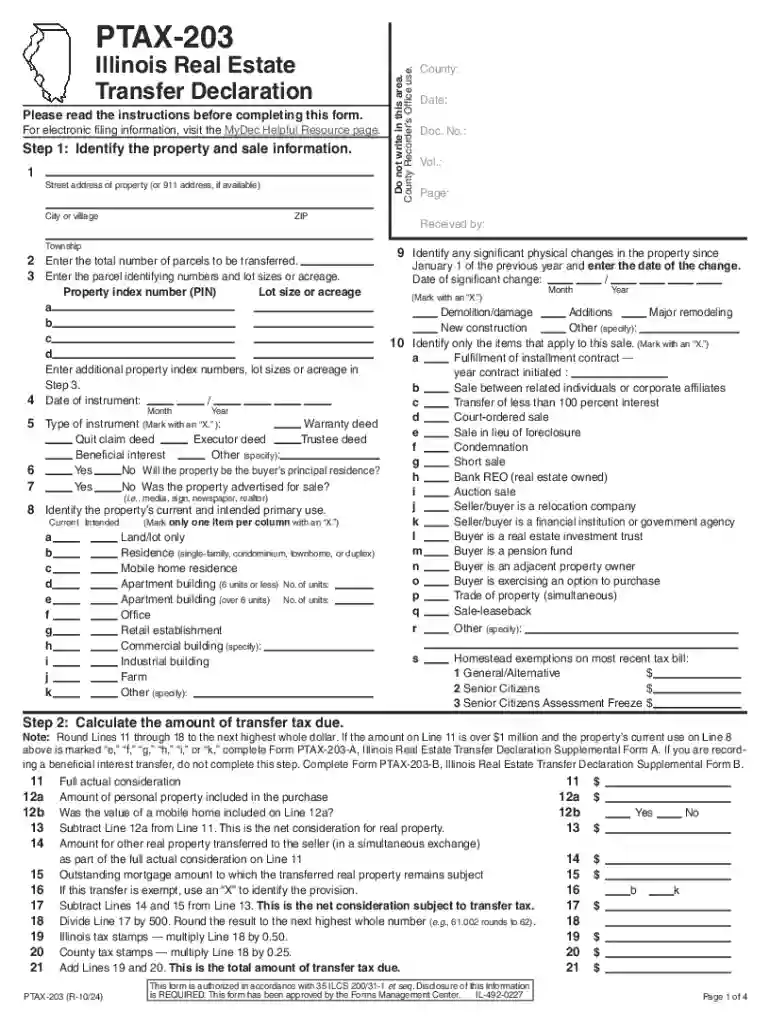
The Illinois Real Estate Transfer Declaration Form, commonly referred to as the PTAX-203, is a mandatory document used in the state of Illinois to report the sale or transfer of real property and calculate the applicable transfer taxes. This form ensures that property sales are accurately recorded and that appropriate taxes are levied. Buyers and sellers are required to complete the form, verifying property details, sale price, and any exemptions from transfer taxes. It is an essential tool for maintaining transparency and accuracy in real estate transactions within Illinois.
The PTAX-203 form is used in real estate transactions to record and verify sales. Sellers often initiate the form, filling in property details and the agreed-upon sale price. Both parties must verify the accuracy of the information provided. Detailed instructions are included on the form to guide users through identifying the property, documenting any exemptions, and calculating the transfer tax. Buyers and sellers must ensure all sections of the form are fully completed to avoid processing delays or penalties.
Obtaining the blank PTAX-203 form is straightforward. It is available through multiple sources such as the Illinois Department of Revenue’s website. Real estate attorneys and local county recorder offices usually provide the form. To get a digital copy, you can visit document management platforms like DocHub, which offer editable templates for ease of use and submission.
Completing the PTAX-203 involves several steps, requiring careful attention to detail. Instructions on the form assist users in identifying the property, recording the selling price, and applying for any applicable exemptions. Both parties involved in the transaction should verify the filled information for accuracy before submission. This verification process is crucial to prevent any omissions or errors that could lead to processing issues or financial penalties.
The PTAX-203 embodies several critical components that must be carefully completed. These elements include sections for property identification, sale conditions, exemptions, and signatures from the involved parties. Complete and accurate information is critical to prevent delays with county offices and ensure legal integrity in the transaction.
The PTAX-203 has specific legal functions and implications. It collects vital data to determine tax obligations and provides official documentation for the property exchange. Illinois mandates its use in all qualifying real estate transactions, which ensures uniformity and fairness in how property assessments are conducted for tax purposes. Compliance with the form's requirements is crucial, with the possibility of audits if data irregularities are suspected.
Several Illinois-specific regulations affect the use of the PTAX-203 form. Illinois law dictates the precise rates and exemptions applicable to property transfers, which can affect how the form is completed. Understanding local exemptions (e.g., for family transfers or charitable contributions) is essential for accurate completion. Additionally, the form helps in declaring and applying these exemptions, supporting legal transparency in the transaction.
Failure to properly complete and submit the PTAX-203 can result in significant penalties, including fines or liens on the property. Misstatements or omissions, whether intentional or accidental, may attract penalties and cause financial or legal repercussions. It is crucial that all involved parties understand these risks and strive for accuracy and honesty in all disclosures on the form. Careful attention to the form’s requirements helps ensure both legal compliance and the smooth processing of the property transaction.
We've got more versions of the ptax form illinois blank form. Select the right ptax form illinois blank version from the list and start editing it straight away!
At DocHub, your data security is our priority. We follow HIPAA, SOC2, GDPR, and other standards, so you can work on your documents with confidence.
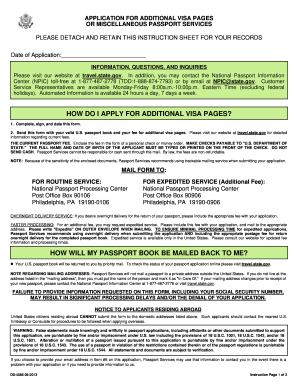
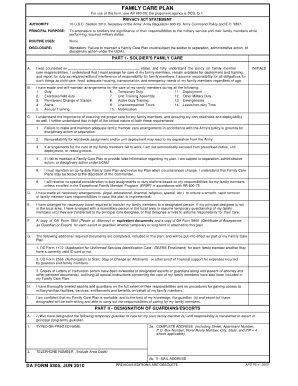
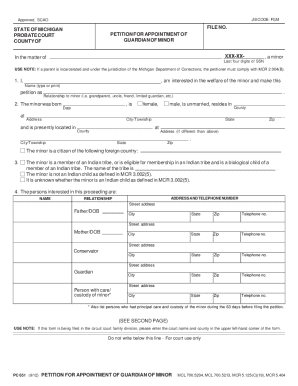

Apr 2, 2001 Alternatively, they may require applicants to file Form PTAX-323, Application for Homestead Improvement Exemption.
County offices and the Illinois Department of Revenue use PTAX-203 to collect sales data and to determine if a sale can be used in assessment ratio studies.


