
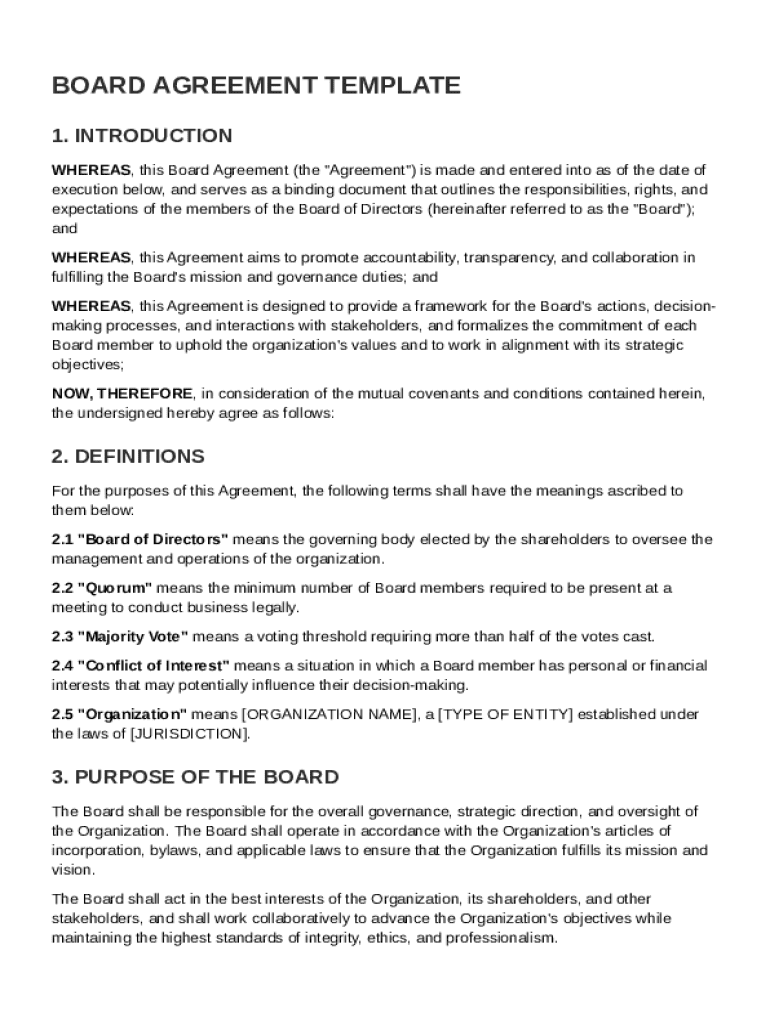







Definition and Purpose of the Board Agreement Template
The Board Agreement Template serves as a crucial document for organizations, outlining the responsibilities, rights, and expectations of the Board of Directors. It fosters an environment of accountability and transparency, enhancing collaborative governance. This template serves as a roadmap by detailing the Board's purpose, its governance duties, financial oversight, and strategic planning roles. It addresses membership composition, specifying term limits and reviewing the conflict of interest policies. Additionally, the agreement outlines meeting procedures, confidentiality obligations, and indemnification of Board members. This comprehensive document also details the processes for amending or dissolving the agreement, ensuring adaptability and relevance over time.
How to Use the Board Agreement Template
Using the Board Agreement Template involves several key steps to ensure its effective implementation:
-
Review and Customize: Begin by reviewing the template in detail. Customize it to suit your organization’s unique governance structure and strategic goals.
-
Define Roles: Clearly outline the specific roles and responsibilities of each board member to avoid ambiguities.
-
Set Guidelines: Establish meeting procedures, reporting timelines, and decision-making processes.
-
Incorporate Legal Requirements: Ensure the template meets any legal or regulatory requirements pertinent to your state or industry.
-
Obtain Approval: Once customized, present the agreement to the board for approval. Make sure that all members understand and agree with the terms outlined.
-
Implement and Monitor: After approval, implement the guidelines and monitor compliance. Regular reviews and updates ensure ongoing relevance.
Steps to Complete the Board Agreement Template
Completing the Board Agreement Template is a detailed process that requires careful attention to detail:
-
Gathering Information: Collect comprehensive details about your board members, including their roles, responsibilities, and terms of service.
-
Drafting the Agreement: Use the template to draft a board agreement that is tailored to your organization. While drafting, focus on clarity and precision to minimize misunderstandings.
-
Incorporating Feedback: Involve legal advisors and board members in the review process to gather feedback and make necessary adjustments.
-
Finalizing the Agreement: After integrating feedback, draft the final version of the agreement. Ensure that every board member reviews and signs the agreement to confirm their commitment to the outlined responsibilities.
-
Regular Reviews: Schedule regular reviews of the agreement to keep it updated with organizational or regulatory changes.
Key Elements of the Board Agreement Template
The Board Agreement Template includes several critical elements that ensure its thoroughness and effectiveness:
-
Board Purpose: Defines the overarching goals and objectives of the board.
-
Roles and Responsibilities: Clearly delineates the duties expected of each member, including leadership roles and committee assignments.
-
Meeting Procedures: Establishes how meetings will be conducted, including frequency, quorum requirements, and decision-making protocols.
-
Conflict of Interest Policy: Addresses potential conflicts to ensure decisions are made in the best interest of the organization.
-
Financial Oversight: Outlines the board’s role in financial planning and oversight, critical for sustainable governance.
-
Confidentiality Commitment: Ensures information shared within the board remains protected to maintain trust and integrity.
Legal Use of the Board Agreement Template
The legal use of the Board Agreement Template requires adhering to several standards to establish its enforceability:
-
Compliance with Laws: Ensure the agreement complies with federal and state laws governing board operations.
-
Written Consent: Obtain written consent from all board members indicating their understanding and agreement to the terms.
-
Legal Review: Having a legal professional review the agreement before its implementation is advisable to satisfy regulatory compliance and legal enforceability.
-
Document Retention: Keep a signed copy of the agreement for each board member in legal records as confirmation of adherence to the stipulated terms.
Examples of Using the Board Agreement Template
Real-world examples demonstrate the versatility and importance of the Board Agreement Template:
-
Non-Profit Organizations: Non-profits often use the template to define roles clearly and ensure compliance with donor requirements.
-
Corporate Boards: Corporations employ these agreements to streamline governance and align board activities with their strategic vision.
-
Educational Institutions: Schools use board agreements to establish governance structures that support efficient management and educational outcomes.
By examining these examples, organizations can gain insights into the diverse applications of board agreements across various sectors.
Business Types That Benefit Most from the Board Agreement Template
Several types of businesses can significantly benefit from using a Board Agreement Template:
-
Startups: In early-stage companies, clear governance structures are critical. The template helps startups define board responsibilities as they navigate growth.
-
Family-Owned Businesses: Family businesses utilize these agreements to manage governance complexities and ensure fair and transparent decision-making processes.
-
Large Corporations: Established businesses adopt board agreements to align executive decisions with long-term strategic goals and shareholder interests.
Each type of business, whether small or large, can leverage these templates to bolster governance and operational efficiency.
State-Specific Rules for the Board Agreement Template
Navigating state-specific rules is essential when drafting a Board Agreement Template:
-
Registration and Compliance: Comply with state registration requirements and ensure the template reflects local corporate governance laws.
-
Diversity Requirements: Some states have specific diversity mandates for board composition; ensure these are incorporated into the agreement.
-
Recording and Reporting Obligations: Align the template with state-mandated reporting procedures to avoid legal complications.
Understanding and integrating state-specific rules into your board agreement ensures comprehensive compliance and legal standing.




