Definition & Meaning
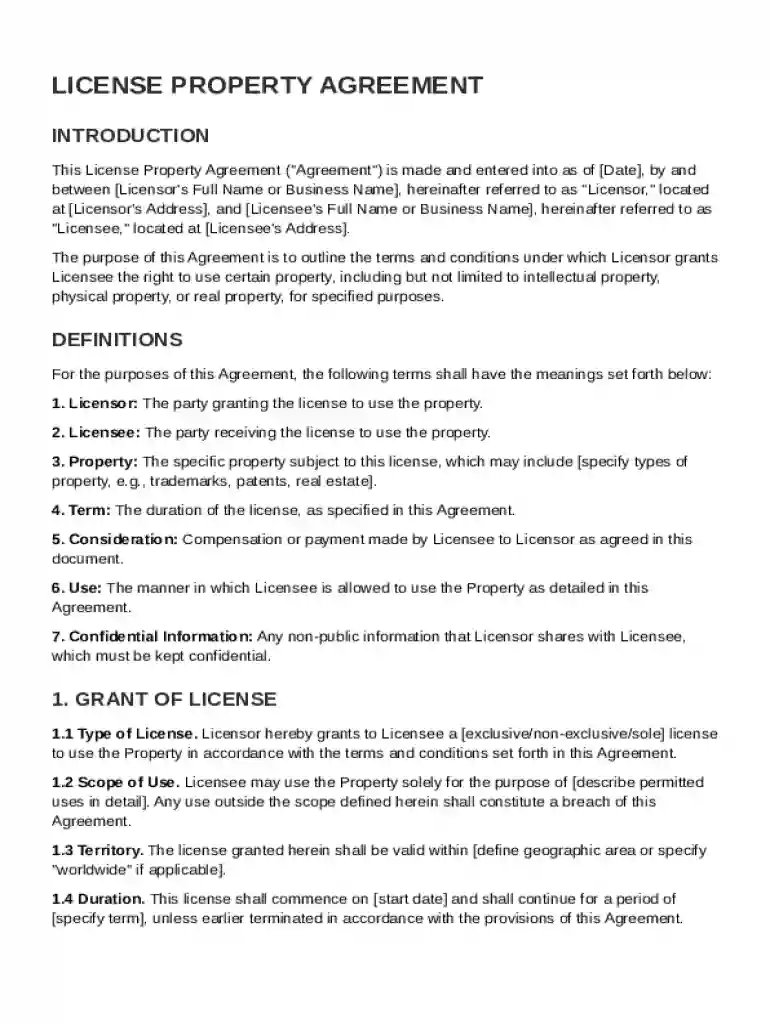
The License Property Agreement Template serves as a contractual framework that defines the relationship between a Licensor and a Licensee. The agreement outlines how the Licensee is granted the right to use specific property, which can include both intellectual and physical assets. This template is crucial for detailing the specific terms under which the license is granted, encompassing aspects like usage scope, duration, and payment obligations. By providing a structured format, it helps avoid misunderstandings and protects the interests of both parties involved. Furthermore, the template includes sections addressing confidentiality, indemnification, and other legal protections to ensure clarity and compliance.
Key Elements of the License Property Agreement Template
The License Property Agreement Template is designed to cover all essential elements required in a typical licensing agreement. Key components include:
- Parties Involved: Identification of the Licensor and Licensee, including their roles and responsibilities.
- Grant of License: Specifies the particular property being licensed, along with the terms defining its usage.
- Payment Terms: Details the financial obligations of the Licensee, including licensing fees or royalties and the payment schedule.
- Duration and Termination: Outlines the period the agreement covers and the conditions under which it may be terminated.
- Confidentiality Clauses: Protects sensitive information that may be exchanged during the agreement's term.
- Indemnification: Clarifies liability responsibilities and risk allocation between parties.
- Dispute Resolution: Describes the methods for resolving potential disputes, such as mediation or arbitration.
Steps to Complete the License Property Agreement Template
Completing the License Property Agreement Template involves several steps to ensure accuracy and compliance:
- Identify Parties: Clearly state the full legal names and contact details of both the Licensor and Licensee.
- Define Licensed Property: Specify the exact property or intellectual rights being licensed.
- Set Terms and Conditions: Determine the scope of use, restrictions, and geographical or market limitations.
- Determine Financial Obligations: Outline payment procedures, including amounts, frequency, and methods.
- Draft Legal Clauses: Include necessary legal terms like indemnity, confidentiality, and dispute resolution.
- Review and Sign: Both parties should review the completed document, make amendments if necessary, and formally sign the agreement.
Legal Use of the License Property Agreement Template
Ensuring that the license agreement complies with legal standards is crucial, especially since it is intended to hold up in potential legal proceedings. The template includes:
- Compliance with Relevant Laws: Adheres to regulations such as the Uniform Commercial Code (UCC) and federal or state licensing laws.
- Legally Binding Terms: Each clause is crafted to establish enforceable rights and obligations.
- Privacy Laws Compliance: Includes clauses that protect personal and confidential information per U.S. privacy laws.
State-Specific Rules for the License Property Agreement Template
While the template provides a comprehensive foundation, legal requirements can vary between states. It is advisable to:
- Consult State Laws: Understand specific state statutes that may impact licensing agreements.
- Amend Clauses Accordingly: Adjust sections of the agreement to meet state-specific legal requirements.
- Seek Legal Advice for Complex Cases: Secure specialized legal counsel to address intricate or high-stakes licensing arrangements.
Examples of Using the License Property Agreement Template
Real-world scenarios where the License Property Agreement Template is applied include:
- Software Companies: Licensing proprietary software solutions to other businesses or end-users.
- Publishing Houses: Granting book publishing rights to another entity while retaining copyright control.
- Franchisors: Licenses for using branding and proprietary business processes.
- Creative Agencies: Licensing marketing content or media to clients.
Digital vs. Paper Version
Choosing between digital and paper versions of the License Property Agreement can impact convenience and efficacy:
- Digital Version Benefits: Offers easy editing, signing, and sharing capabilities. It is ideal for remote collaborations and environmentally friendly practices.
- Paper Version Advantages: Some parties may prefer the tangibility and traditional reassurance of a physical contract, particularly in conservative industries.
- Hybrid Approach: Use digital for initial drafting and amendments, while final versions could be printed for storage in hard copy if required.
Business Types That Benefit Most from the License Property Agreement Template
Various business entities can derive value from using this template, particularly those engaging in the licensing of tangible or intangible assets. Beneficiaries include:
- Tech Startups: Often engage in licensing regarding software or technological innovations.
- Consultancy Firms: Licensing proprietary methodologies or training modules.
- Creative Design Studios: Engaging in the licensing of artistic works or designs.
- Manufacturers with Proprietary Processes: Licensing manufacturing techniques or certain branded products to third parties.
By understanding these aspects of the License Property Agreement Template, users can effectively manage and formalize their licensing arrangements, ensuring both parties retain clear expectations and legal safeguards.