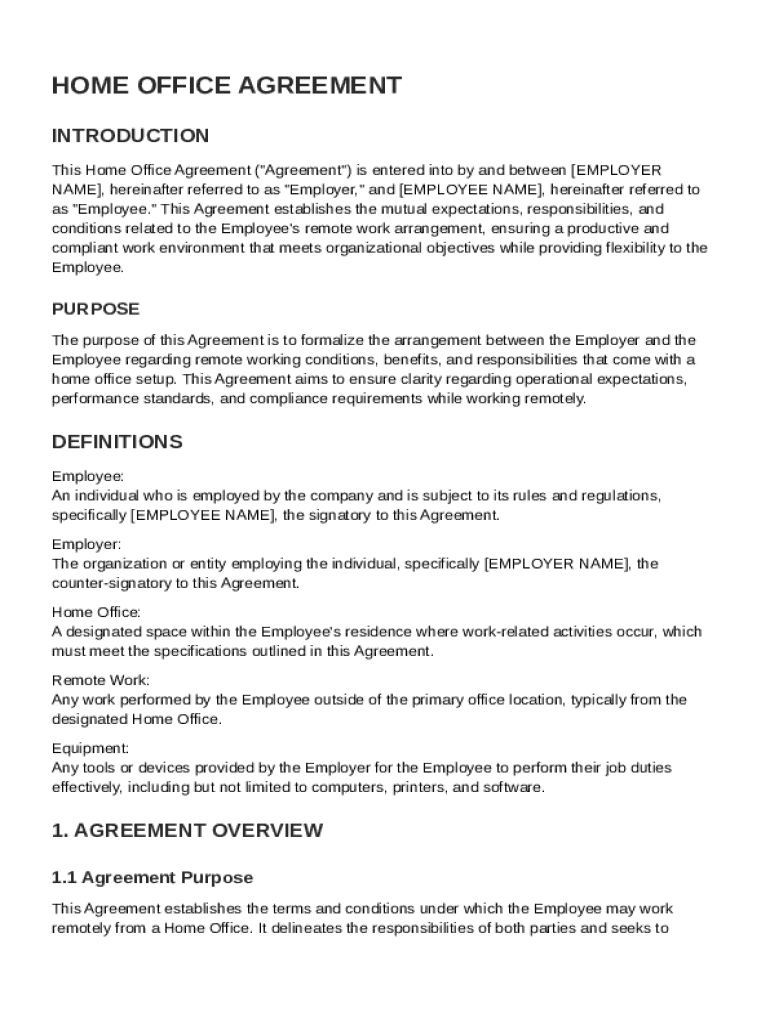







Definition and Purpose of Remote Work Agreements
The Home Office Agreement Template is a document designed to formalize the terms and conditions of remote work arrangements between an employer and an employee. It serves as a comprehensive guide to setting mutual expectations regarding workspace requirements, communication protocols, equipment usage, and compliance with labor laws. This document is crucial in ensuring that both parties understand their responsibilities and rights, creating a conducive and compliant remote work environment. By clearly delineating these elements, the agreement helps prevent misunderstandings and provides a legal framework that supports both flexibility for the employee and operational efficiency for the employer.
Key Components of the Home Office Agreement Template
Workspace and Safety Protocols
A central aspect of the Home Office Agreement Template is defining the employee’s workspace. It outlines the minimum requirements for a home office setting, including ergonomic furniture, reliable internet connections, and safety standards. This section is crucial for adhering to workplace safety regulations and ensuring that the employee can perform their duties without risking injury.
- Ergonomics: Recommendations for desk and chair setups to prevent physical strain.
- Internet: Requirements for a consistent and high-speed internet connection.
- Safety: Protocols for maintaining a hazard-free home office environment.
Employment Terms and Work Hours
The agreement specifies the employee's work schedule, which includes start and end times, break periods, and expectations for overtime. It clearly states how working hours will be tracked and the flexibility around scheduling.
- Schedule: Defined hours of availability and flexibility clauses.
- Breaks: Mandatory breaks as per labor laws to ensure well-being.
- Overtime: Guidelines for obtaining approval and compensation.
Communication and Reporting
Effective communication is vital in remote work arrangements. The agreement details the preferred communication channels and reporting structures, ensuring seamless interaction between the employee and their team.
- Tools: Platforms and tools approved for official communications.
- Meetings: Frequency and format of virtual meetings.
- Reporting: Requirements for submitting progress reports and updates.
Steps to Complete the Home Office Agreement Template
Completing the Home Office Agreement Template involves several decisive steps. Each step ensures the agreement is tailored to fit the specific needs of both the employer and employee.
- Initial Draft: Begin by outlining the main components based on the job role and responsibilities.
- Review Legal Compliance: Ensure all terms meet state and federal labor laws to avoid legal issues.
- Customization: Adjust the template to reflect individual circumstances, such as unique scheduling needs.
- Employer-Employee Discussion: Conduct a meeting to discuss the draft, allowing for input and modifications.
- Finalization: Incorporate any agreed-upon changes and prepare the document for signing.
- Signatures: Obtain signatures from both parties to execute the agreement.
Who Uses the Home Office Agreement Template?
The Home Office Agreement Template is primarily used by employers and human resources departments seeking to establish clear guidelines for employees working remotely. It is a valuable tool for organizations aiming to maintain compliance with remote work regulations while promoting a structured yet flexible work environment. Moreover, it is utilized by employees who require clarity on their remote work conditions, ensuring they meet the expectations set forth by their employers.
- Corporations with remote work policies.
- Startups and tech companies often supporting flexible work arrangements.
- Human Resources professionals leveraging it for onboarding remote workers.
Legal Considerations for Remote Work Agreements
Compliance with Labor Laws
The legal framework of the Home Office Agreement Template ensures alignment with U.S. labor laws. It includes provisions related to fair wages, non-discrimination clauses, and adherence to occupational safety regulations. This compliance is essential for creating enforceable agreements.
- Non-Discrimination: Ensuring equal treatment irrespective of remote status.
- Fair Compensation: Guaranteeing payment aligns with state and federal requirements.
- Safety Regulations: Compliance with OSHA standards for remote work setups.
Privacy and Confidentiality
Confidentiality clauses protect the employer's intellectual property and sensitive information, detailing the employee's responsibilities to secure data properly.
- Data Protection: Guidelines for managing confidential information.
- Intellectual Property: Clauses detailing ownership of work-related outputs.
Examples of Using the Home Office Agreement Template
The practical application of the Home Office Agreement Template can be seen across various scenarios. For instance, a software development company implementing a remote work policy may utilize the template to set developer expectations regarding code confidentiality and online collaboration. Similarly, a marketing agency could use the agreement to define flexible working hours for creatives while establishing communication protocols and deliverables.
By embedding detailed examples and scenarios into the agreement, users gain a clearer understanding of its application, ultimately leading to more effective and harmonious remote work arrangements.