
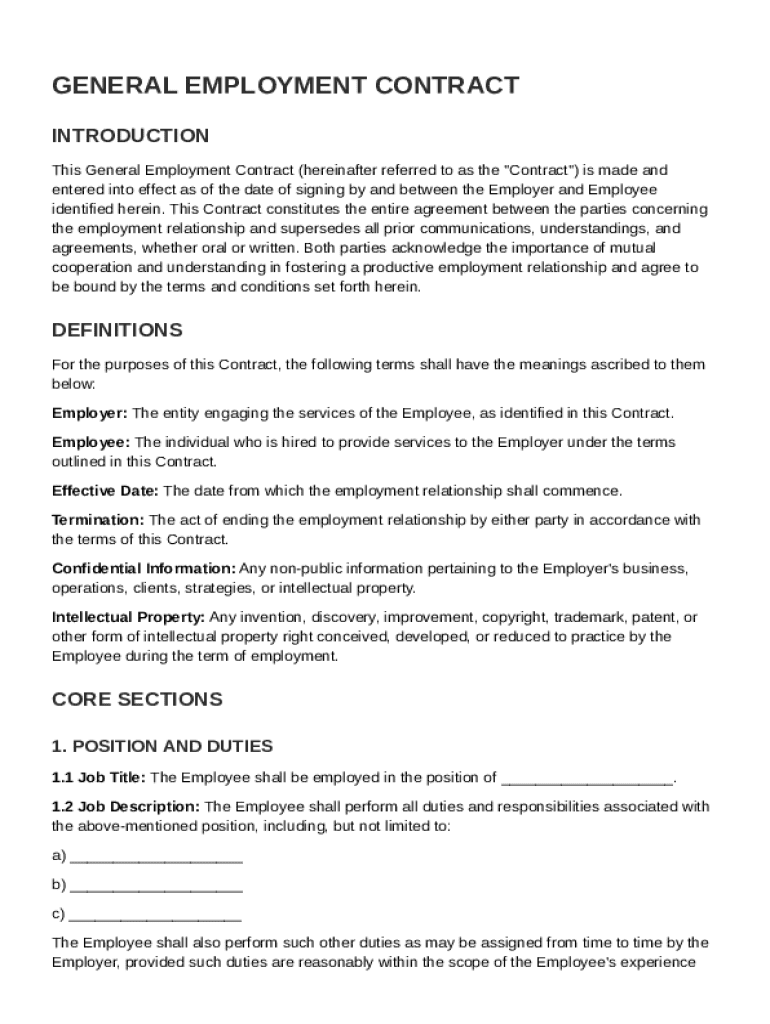







Key Elements of the General Employment Contract Template
The General Employment Contract Template serves as a comprehensive document that outlines the terms and conditions applicable to the employee-employer relationship. This template includes several critical sections crucial for ensuring clarity and mutual understanding.
- Definitions: Understand the roles, terminologies, and parties involved in the contract. Clear definitions reduce ambiguities, setting a solid foundation for the contractual relationship.
- Job Duties: Detailing specific responsibilities expected from the employee ensures both parties are aligned on day-to-day operations, performance expectations, and long-term objectives.
- Compensation: Includes the structure of payment, bonuses, and other financial benefits. Transparent compensation clauses help prevent disputes and ensure both parties know what is owed and expected.
- Work Hours: Specifies the standard workweek, overtime conditions, and any flexibility in scheduling. This section aids in managing expectations regarding availability and time commitments.
- Confidentiality Obligations: Critical in safeguarding sensitive business information, this clause outlines how proprietary data should be managed.
- Intellectual Property Rights: Addresses the ownership and usage rights of creations and innovations developed during employment, thereby protecting the company's assets and interests.
- Termination Procedures: Defines the processes for terminating the employment relationship, including notice periods and exit protocols. Clear termination processes reduce potential conflicts.
- Governing Law and Amendment Processes: Specifies the legal framework applicable to the contract and procedures to modify the agreement.
How to Use the General Employment Contract Template
Using the General Employment Contract Template effectively requires understanding its structure and customizing the content to fit specific needs.
- Review the Template: Start by reading through the entire template to understand the sections and the legal implications of each.
- Customize Content: Modify sections like job duties, compensation, and confidentiality to tailor-fit specific roles and company policies.
- Consult Legal Professionals: When in doubt, engage legal counsel to review any changes, especially concerning compliance with state and federal laws.
- Final Review: Carefully check the entire document to ensure no critical information is left unaddressed, ensuring a comprehensive agreement.
- Implementation: Once finalized, both parties should review and understand the terms before signing to confirm mutual agreement.
Legal Use of the General Employment Contract Template
The use of the General Employment Contract Template must comply with applicable laws to be enforceable.
- Compliance with Federal and State Laws: Ensure the contract aligns with employment laws, including but not limited to wage laws, labor rights, and anti-discrimination statutes.
- ESIGN Act Adherence: If utilizing electronic signatures, confirming the template’s compliance with the ESIGN Act is essential.
- Confidentiality and Non-Compete Clauses: These sections must meet legal standards to be enforceable; clauses that are overly restrictive may be invalidated.
State-Specific Rules for the General Employment Contract Template
Employment laws can vary significantly across states, necessitating the tailoring of the contract to comply with local statutes.
- Wage and Hour Laws: Different states have varying minimum wage requirements and overtime laws.
- At-Will Employment: While the majority of states follow at-will employment norms, some impose restrictions.
- Termination Protections: Some states offer greater protection for employees regarding termination reasons and processes.
- Non-Compete Enforceability: States differ in the enforceability of non-compete agreements; consult with legal professionals familiar with state laws.
Steps to Complete the General Employment Contract Template
Creating a thorough and tailored General Employment Contract Template involves comprehensive steps.
- Gather Initial Information: Collect all necessary details about the employer, employee, and position.
- Draft Specific Clauses: Customize each section of the template with applicable details particularly related to job duties and compensation.
- Ensure Compliance: Verify that all sections comply with current legal standards and address any state-specific requirements.
- Review by Stakeholders: Employer and employee should both review the contract, suggesting revisions if necessary.
- Finalize and Execute: Once all parties agree on the terms, prepare the final document for signatures.
- Document Safekeeping: Store signed copies securely for future reference and compliance management.
Who Typically Uses the General Employment Contract Template
This contract template is beneficial for a wide array of entities.
- Small and Medium-sized Enterprises (SMEs): They use it to standardize hiring processes and secure agreement clarity.
- Human Resources Managers: Use it to ensure consistency in employment agreements across the organization.
- Startups: Benefit from the template to quickly and effectively onboard new talent while maintaining legal clarity.


Versions or Alternatives to the General Employment Contract Template
It is crucial to know about other variations or alternatives that might suit specific needs.
- Part-time or Temporary Employment Agreement: Tailored for roles with limited hours or short-term engagements.
- Freelance or Independent Contractor Agreement: For roles not intended as traditional employment, focusing on project-based jobs.
- Internship Agreement: Typically used to define the terms of internships, focusing on learning objectives and compensation.
Important Terms Related to General Employment Contract Template
Key terminologies in the context of a General Employment Contract help clarify its comprehensive nature.
- Probationary Period: Duration during which an employee’s performance is evaluated to confirm suitability.
- Severance Pay: Compensation provided upon employment termination under certain conditions.
- Annual Leave: Paid time off allocated to the employee each year.
- Restrictive Covenants: Provisions limiting post-employment activities, such as non-compete and non-solicitation clauses.




