
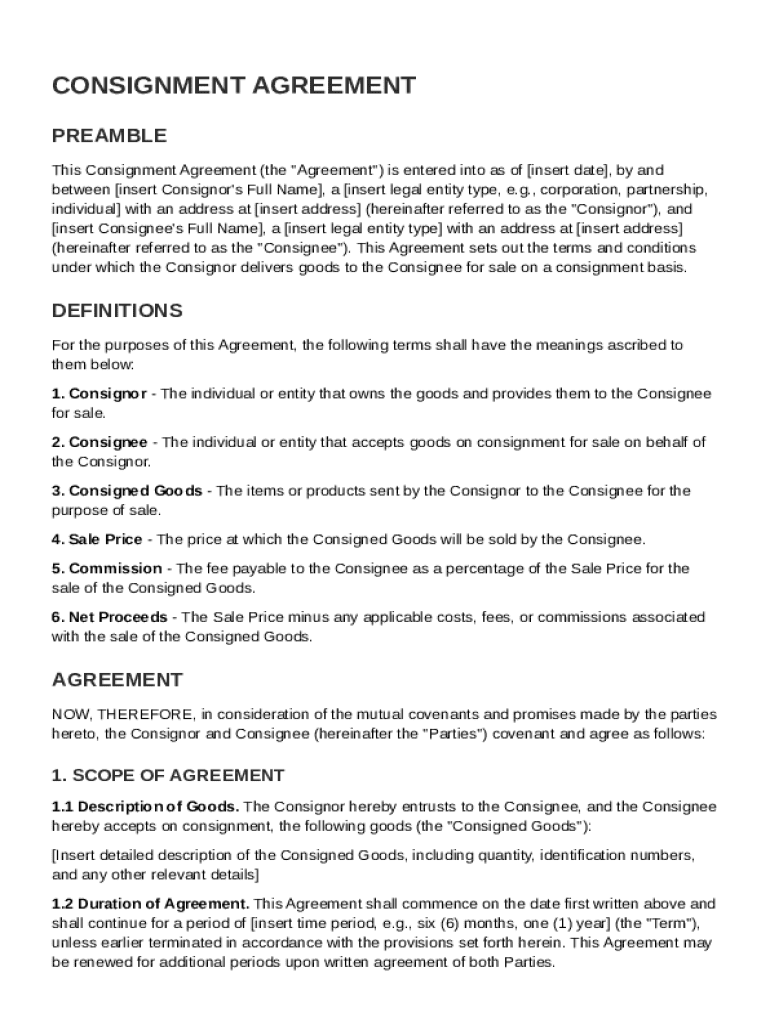







Understanding the Consignment Agreement Template
The Consignment Agreement Template sets the foundation for a relationship between a consignor who provides goods and a consignee who intends to sell those goods. This document plays a crucial role in delineating responsibilities, financial arrangements, and legal stipulations between the involved parties. It defines key terms, details responsibilities related to the delivery and sale of goods, and outlines reporting requirements. Additionally, the template includes clauses on commissions, payment schedules, and termination terms, providing a comprehensive guide to manage the consignment effectively.
How to Use the Consignment Agreement Template
Using the Consignment Agreement Template involves several steps aimed at addressing the needs and expectations of both the consignor and consignee. Each party must carefully read through the document to understand its terms. The template should be customized to reflect the specific details of the agreement, such as the type of goods, commission structure, and duration of the consignment. Parties should ensure that all chosen terms align with their business practices before finalizing the document. After mutual consent is achieved, both the consignor and consignee must sign the document to enforce its validity.
Key Elements of the Consignment Agreement Template
The Consignment Agreement Template is structured around several critical components. These include:
- Parties Involved: Identifies both the consignor and consignee, including their contact information and business details.
- Description of Goods: A detailed list of the items consigned, including descriptions, quantities, and any special handling instructions.
- Commission and Payment Terms: Specifies the commission rate payable to the consignee and the timeline for payments to the consignor.
- Term and Termination: Outlines the duration of the agreement, procedures for renewing or terminating the deal, and any associated costs.
- Governing Law: Indicates the jurisdiction under which the agreement is governed, providing legal context for dispute resolution.
Legal Use of the Consignment Agreement Template
The Consignment Agreement Template serves as a legally binding document that safeguards the interests of both parties involved. It details enforcement aspects under relevant state laws and includes clauses that address potential disputes. To ensure legal compliance, parties are advised to consult with legal professionals familiar with state-specific laws to confirm that all provisions are enforceable within their jurisdiction. This step is essential in preventing legal complications and ensuring that both parties fulfill their contractual obligations.
Steps to Complete the Consignment Agreement Template
Completing the Consignment Agreement Template involves a systematic approach:
- Identify the Parties: Begin by documenting the consignor and consignee's full legal names and contact details.
- Detail the Goods: Enumerate and describe the goods being consigned, including any serial numbers or notable characteristics.
- Establish Financial Terms: Clearly outline payment intervals, commission percentages, and processing methods.
- Define the Agreement's Duration: State the start and end dates of the agreement and conditions for renewal.
- Review and Sign: After filling out all sections, both parties should review the document thoroughly before signing.
Important Terms Related to the Consignment Agreement Template
The consignment agreement template includes several pivotal terms, such as:
- Consignor: The party entrusting goods to another for sale.
- Consignee: The individual or entity responsible for selling the consignor's goods.
- Commission: A financial incentive given to the consignee, usually as a percentage of the sale price.
- Inventory Terms: Conditions related to stock levels, replenishment, and inventory return processes.
Understanding these terms ensures clarity in agreement obligations and expectations.
Who Typically Uses the Consignment Agreement Template
The consignment agreement template is predominantly used by businesses and individuals involved in the trade and distribution of goods, particularly in retail industries. Common users include:
- Art galleries, managing artwork consignments.
- Fashion retailers, dealing in apparel and accessories.
- Antique dealers, selling unique or collectible items on behalf of others.
Using this template helps streamline operations and provide legal protection for both consignors and consignees.


State-Specific Rules for the Consignment Agreement Template
Consignment agreements can vary by state, with each jurisdiction imposing different rules regarding commercial transactions. State-specific provisions may affect:
- Reporting and registration of consigned goods.
- Specific disclosure requirements related to sales and inventory management.
- Any special permissions related to handling, display, or sale of certain goods.
Parties should thoroughly understand state laws to ensure compliance and avoid unforeseen legal hurdles. Consulting with a lawyer who is well-versed in the state’s commercial laws can provide valuable insights into creating a legally sound agreement.




