






Definition and Meaning
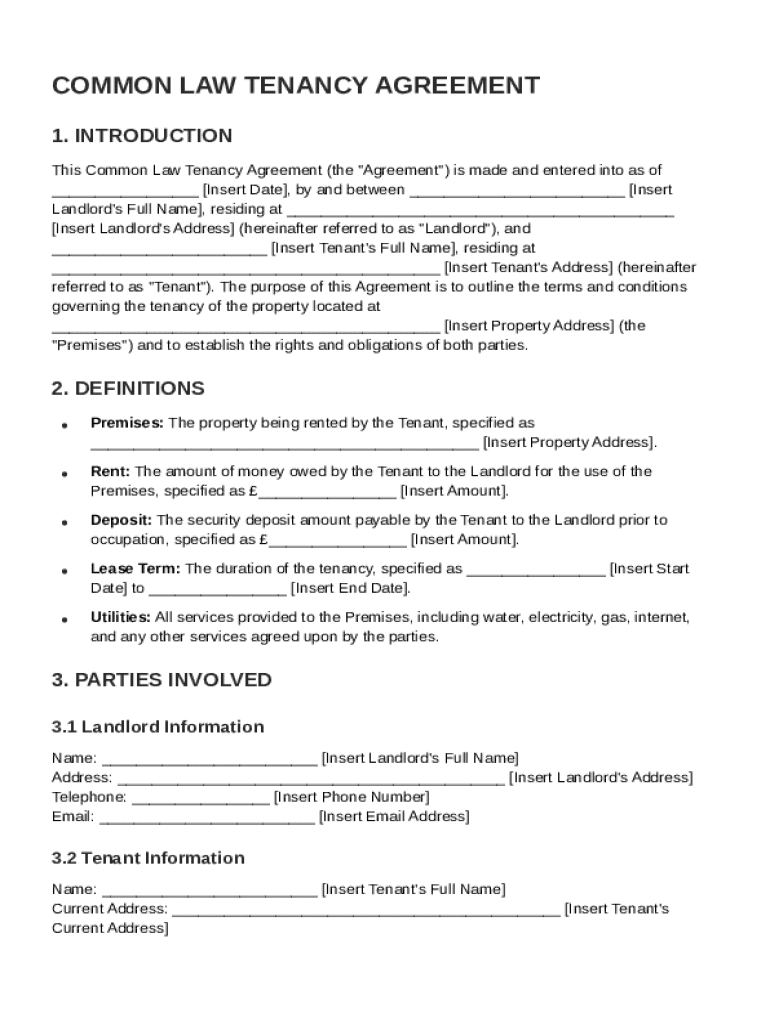
The Common Law Tenancy Agreement Template is a legal document used to define the terms and conditions between a landlord and tenant. This template addresses key elements such as the rental price, deposit requirements, the duration of the lease, and the responsibilities of both parties involved. Additionally, it covers important clauses related to the use of premises, termination procedures, dispute resolutions, and extra provisions like alterations and pet policies. This template is designed to establish clear rights and obligations for both the landlord and the tenant, ensuring fair and transparent interactions throughout the tenancy period.
How to Use the Common Law Tenancy Agreement Template
Using the Common Law Tenancy Agreement Template requires careful attention to detail to ensure all necessary information is accurately captured. Follow these steps to effectively utilize the template:
- Download the Template: Obtain the template in a preferred format compatible with your editing software.
- Review the Terms: Go through each section of the template to understand the standard clauses.
- Modify for Specific Needs: Customize sections such as rent amount, duration, and specific tenant or landlord responsibilities to fit the particular agreement being formed.
- Consult Legal Advice: For complex tenancies, it's advisable to have a legal professional review the template to ensure compliance with state laws.
- Finalize the Agreement: Once all details are correctly filled in, both parties should review and agree upon the terms.
- Sign the Document: Both parties must sign the agreement, with electronic signatures being a viable option as per the ESIGN Act.
Key Elements of the Common Law Tenancy Agreement Template
The Common Law Tenancy Agreement Template includes several crucial elements that define the landlord-tenant relationship:
- Rental Amount and Payment Method: Specifies the rent amount, due date, and acceptable payment methods.
- Security Deposit: Details the deposit amount, conditions for its return, and any deductions.
- Lease Term: Defines the lease period, including start and end dates.
- Responsibilities of Parties: Outlines the maintenance duties of landlords and tenants.
- Use of Premises: Clarifies allowable uses of the property and restrictions, if any.
- Termination Procedures: Describes the process for terminating the tenancy, including notice requirements.
- Dispute Resolution: Provides procedures for resolving conflicts between the landlord and tenant.
- Additional Provisions: Includes clauses on pet policies, property alterations, and subletting regulations.
Steps to Complete the Common Law Tenancy Agreement Template
To complete the Common Law Tenancy Agreement Template efficiently, follow these detailed steps:
- Identify the Parties: Enter the full names and contact details of both the landlord and tenant.
- Describe the Property: Provide the full address and description of the rental property.
- Define Lease Terms: Specify the lease duration, including the start and end dates.
- Set Financial Terms: Input details of the rent, deposit, and other financial obligations.
- Specify Responsibilities: Indicate who is responsible for utilities, maintenance, and repairs.
- Include Clauses for Early Termination: Outline conditions that allow for the lease to be ended before the agreed term.
- Sign and Execute: Both landlord and tenant must sign the agreement, ideally with a witness present.
Legal Use of the Common Law Tenancy Agreement Template
The Common Law Tenancy Agreement Template must be used in accordance with applicable legal frameworks:
- Compliance with State Laws: Ensure that the template adheres to the tenancy laws of the state where the property is located.
- Legally Binding Contract: The template must include provisions that convert it into a legally enforceable document once signed.
- Consumer Protection: It should incorporate clauses protecting tenant rights as per state requirements, such as notice periods and habitability standards.
State-Specific Rules for the Common Law Tenancy Agreement Template
Different states may have unique requirements for tenancy agreements:
- Notice Periods: Varying notice requirements for terminating leases depending on the state.
- Security Deposit Limits: Some states impose maximum limits on the security deposit amount.
- Rent Control Laws: Laws limiting the amount of rent increase can influence the template’s terms.
- Dispute Resolution Mechanisms: State-specific methods for handling tenant-landlord disputes might be required.
Examples of Using the Common Law Tenancy Agreement Template
Numerous scenarios demonstrate the template’s practical application:
- Residential Leasing: Used when renting out a house, ensuring the tenant understands their responsibilities and the ramifications of breaking lease terms.
- Commercial Properties: Modified to specify terms for business usage, including permitting alterations to suit the commercial activity.
- Multi-Tenant Dwellings: Adjusted for shared housing scenarios, including rent divisions and shared responsibility clauses.
State-by-State Differences
Recognizing state-specific differences is essential when using the template:
- California: Requires adherence to strict rent control laws and tenant rights.
- New York: Demands detailed disclosures on tenant’s rights and obligations.
- Texas: Has specific laws regarding security deposits and notice requirements.
Considering these variations ensures that the agreement remains legally valid and enforceable across different jurisdictions, protecting both landlords and tenants effectively.