







Definition & Meaning
The Wellhead Protection Program - Approval - State of Michigan is a comprehensive initiative aimed at safeguarding public drinking water sources. This program specifically focuses on protecting the areas surrounding wells, known as wellhead protection areas, from contaminants that could compromise water quality. In Michigan, the protection plan is approved and overseen by the Michigan Department of Environmental Quality (MDEQ), emphasizing the accountability and safety of local water supply systems. Designing a robust wellhead protection plan requires understanding specific local environmental factors, potential contamination threats, and community needs to ensure the entire water supply is maintained safely and effectively.
How to Use the Wellhead Protection Program - Approval - State of Michigan
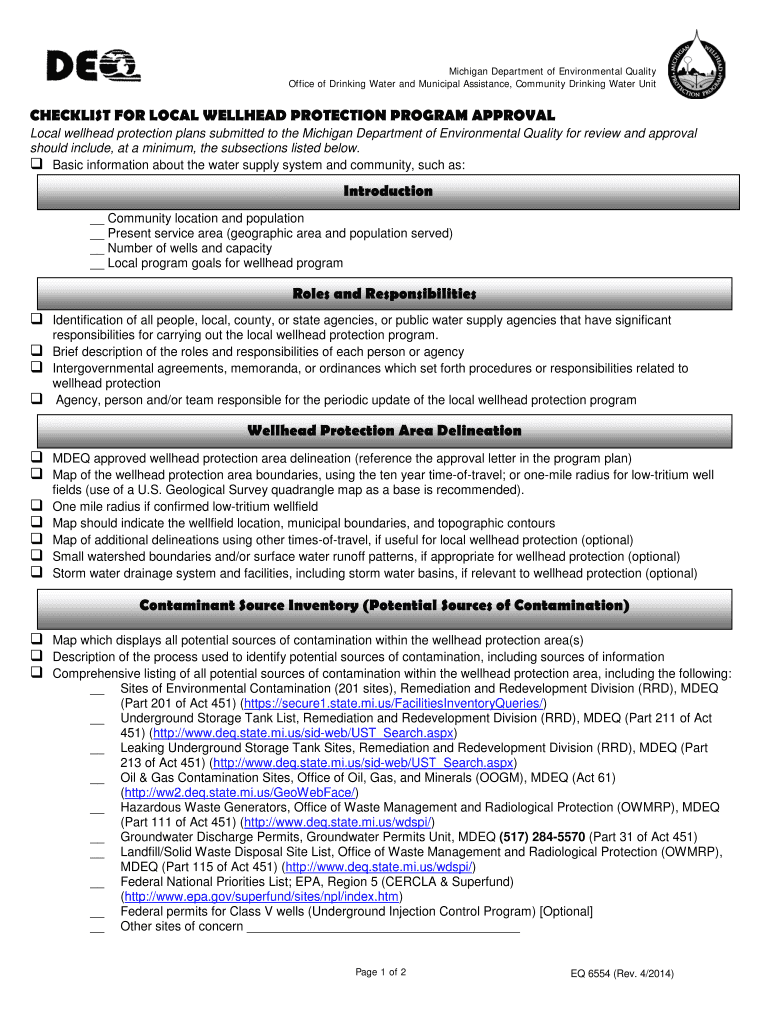
Utilizing the Wellhead Protection Program entails several structured steps to ensure effective implementation. First, local agencies need to delineate the wellhead protection areas by defining geographic boundaries that are prone to contamination. Conducting an inventory of potential contaminants within these boundaries is crucial, as this helps identify industrial, agricultural, or urban activities that pose risks of water pollution. Management strategies are devised to mitigate these risks, incorporating zoning laws, land use policies, and other regulatory measures. Active community involvement and education are essential throughout this process, fostering public awareness and engagement in protecting drinking water sources.
How to Obtain the Wellhead Protection Program - Approval - State of Michigan
Obtaining approval for a wellhead protection program in Michigan requires thorough preparation and adherence to specific criteria set by the MDEQ. Initially, applicants must submit a plan detailed with background information on their water supply system, including technical data about wells and water sources. After initial planning, a delineation study must be conducted to define the protection area accurately. The application should include potential sources of contamination and proposed management strategies. Once compiled, the plan is submitted to the MDEQ for review. Any feedback or recommendations provided by the department must be addressed promptly to garner approval.
Steps to Complete the Wellhead Protection Program - Approval - State of Michigan
- Identify the Water Supply System: Document all relevant information regarding water sources, including well locations, capacity, and usage.
- Conduct a Delineation Study: Use hydrogeological data to outline the wellhead protection area, specifying boundaries based on contaminant travel times.
- Inventory Potential Contamination Sources: Catalog existing and potential sources of contamination within the delineated area.
- Develop Management Strategies: Formulate policies and practices aiming to mitigate contamination risks and enforce them across the community.
- Engage the Public: Conduct educational outreach to ensure community support and compliance with protection strategies.
- Submit Plan for Approval: Compile all documentation and submit it to the MDEQ for review and feedback.
Key Elements of the Wellhead Protection Program - Approval - State of Michigan
- Water Source Information: Compile a comprehensive report on the water system, including technical specifications and historical data.
- Protection Area Delineation: Define the wellhead protection area using scientific methodologies.
- Potential Contaminant Analysis: Evaluate and list possible contamination sources, such as industrial waste or agricultural runoff.
- Management and Contingency Plans: Develop both proactive management policies and reactive contingency plans to handle contamination events.
- Public Involvement: Encourage community participation through education and public meetings to gather input and raise awareness.
- Monitoring and Review: Implement ongoing monitoring strategies to ensure the continuing effectiveness of the protection program.
State-Specific Rules for the Wellhead Protection Program - Approval - State of Michigan
The State of Michigan mandates particular guidelines and procedures for wellhead protection efforts. For instance, Michigan requires plans to include a unique component addressing future developments and how they may affect groundwater quality. Regular updates and maintenance of the delineation model are also required to account for changes in land use and climate conditions. It's imperative to work collaboratively with state agencies, local governments, and community members to comply with all regulatory requirements and effectively manage wellhead protection zones.
Required Documents
To apply for the Wellhead Protection Program approval in Michigan, several key documents need to be prepared:
- Wellhead Protection Delineation Report: Maps and hydrogeological data defining protection areas.
- Contaminant Source Inventory: Comprehensive list backed by research and field assessments.
- Management Strategy Report: Detailing proposed strategies, policies, and legal measures.
- Public Education and Involvement Plan: Explaining how community awareness and participation will be facilitated.
- Monitoring Plan: Outlining how water quality and protection efforts will be regularly reviewed and updated.
Application Process & Approval Time
The approval process for the Wellhead Protection Program involves multiple stages. Once a complete application is submitted, the MDEQ typically takes several months to review and provide feedback, although this timeline can vary based on the complexity of the submitted plan and any necessary revisions. Applicants should be prepared to make revisions and provide additional information as requested. Close collaboration with the MDEQ throughout this process can help streamline approval and ensure the protection plan meets all statutory requirements.
Legal Use of the Wellhead Protection Program - Approval - State of Michigan
The legal framework underpinning the Wellhead Protection Program in Michigan specifies numerous regulatory requirements and responsibilities for local agencies and municipalities. Approval from the MDEQ is essential to ensure that local water protection strategies meet state-imposed guidelines. Additionally, legal enforcement of zoning laws and land use regulations connected to these plans is necessary to mitigate potential contamination risks. Legal compliance helps reinforce the program's effectiveness in maintaining safe and uncontaminated drinking water supplies.
Penalties for Non-Compliance
Failure to comply with state regulations regarding wellhead protection can result in significant penalties. These may include fines, mandatory corrective actions, and potentially revoking permits related to water supply operations. It's essential for all stakeholders involved in wellhead management to strictly adhere to approved plans and guidelines to avoid legal and financial repercussions.
Digital vs. Paper Version
For the administrative convenience of diverse users, the Wellhead Protection Program documentation can be submitted in both digital and paper formats. The digital submission process is recommended due to its efficiency, allowing quicker processing times and easier communication with the MDEQ. Digital submissions also facilitate better record-keeping, enabling easy access for future reviews and updates to the protection program.




