







Definition & Meaning
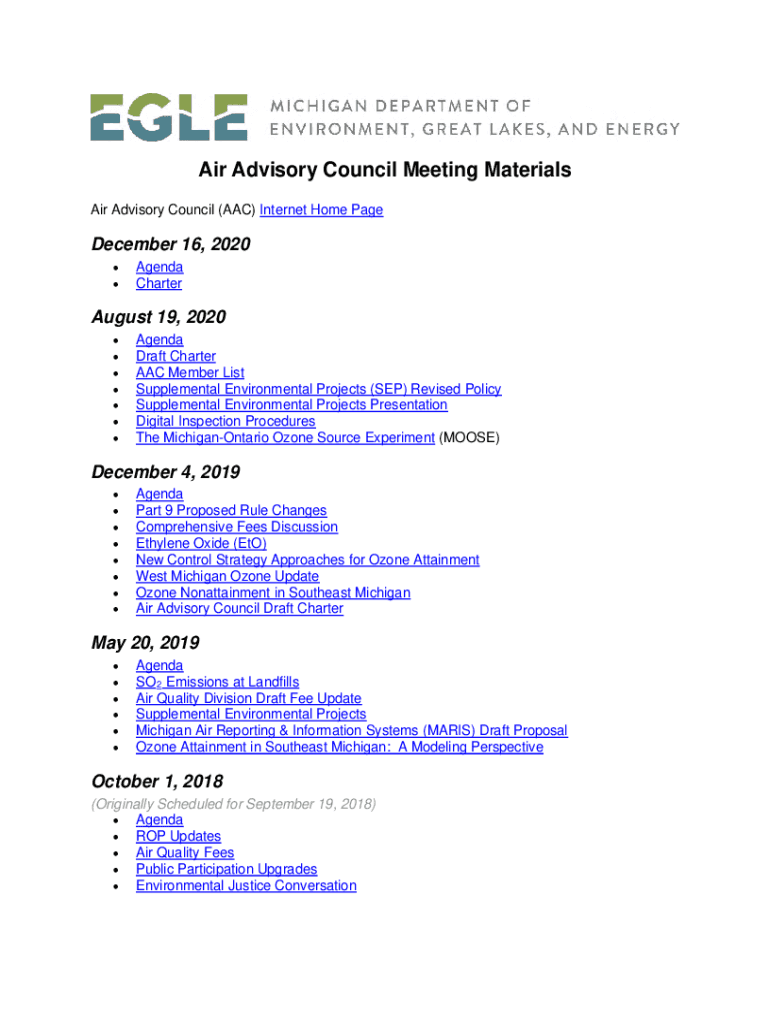
The Air Advisory Council (AAC) Internet Home Page serves as a central hub for accessing information and resources related to air quality management and environmental regulations. Typically, this home page aggregates data from various AAC meetings, including agendas, charters, and discussion outcomes. It is a valuable resource for stakeholders interested in air quality regulations, ozone attainment strategies, and updates on emissions and monitoring procedures.
The AAC Internet Home Page does more than just provide information; it serves as a tool for tracking policy changes and accessing crucial meeting documents. By consolidating vital data in one location, it simplifies the process for individuals and organizations to stay informed about environmental projects and regulatory changes.
Key Elements of the Air Advisory Council (AAC) Internet Home Page
The AAC Internet Home Page is designed with multiple interactive features that ensure users can easily find relevant information. Key elements include:
- Agendas and Minutes: Documents detailing upcoming and past AAC meeting agendas and minutes provide insight into ongoing discussions and decisions.
- Charters and Regulations: Access to charters and regulatory documents enables users to understand the framework guiding environmental initiatives.
- Discussion Summaries: These provide highlights of key discussions on topics such as emissions monitoring and ozone strategies.
How to Use the Air Advisory Council (AAC) Internet Home Page
Navigating the AAC Internet Home Page can seem daunting without proper guidance. Here’s how users can efficiently utilize this resource:
- Visit the Homepage: Start by accessing the official AAC home page through the designated URL or search engine.
- Access Meeting Materials: Look for sections dedicated to meeting agendas and minutes, which are often categorized by date.
- Review Environmental Reports: Check for latest updates on environmental projects and air quality reports, typically listed under specific tabs or links.
- Search Functionality: Use the search bar to quickly locate specific topics or documents related to air quality regulations or emissions data.
Steps to Complete the Air Advisory Council (AAC) Internet Home Page
While the AAC Internet Home Page itself is not a form to complete, individuals can complete tasks associated with obtaining and utilizing information from the page:
- Identify Information Needs: Determine what data or documentation is needed, such as meeting minutes or regulatory updates.
- Navigate Sections: Use the home page’s navigation tools to go to desired sections for specific information.
- Download Documents: Select and download any required documents, ensuring they are referenced for decision-making or compliance purposes.
Who Typically Uses the Air Advisory Council (AAC) Internet Home Page
Different stakeholders rely on the AAC Internet Home Page to meet varying needs. Common users include:
- Environmental Scientists: They use it to gather data for research and analysis.
- Policy Makers: For making informed decisions on air quality regulations.
- Educators and Students: As a resource for academic study related to environmental science.
- Businesses: Those involved in sectors influenced by environmental regulations, to maintain compliance and adapt business operations.


Legal Use of the Air Advisory Council (AAC) Internet Home Page
Utilization of the AAC Internet Home Page must adhere to specific legal guidelines to ensure compliance. Users must:
- Follow Data Use Policies: Adhere to any data use policies or terms of service outlined by the website.
- Respect Copyright and Licensing: Do not republish or redistribute content without permission unless clearly indicated.
- Verify Information: Ensure that data or information extracted is used in a contextually relevant and lawful manner.
Examples of Using the Air Advisory Council (AAC) Internet Home Page
Real-world scenarios illuminate how organizations leverage the AAC Internet Home Page:
- Regulatory Compliance: A manufacturing business accesses recent meeting minutes to ensure compliance with new emissions requirements.
- Academic Research: A graduate student uses data on ozone strategies for a thesis, enhancing the quality and robustness of the research.
Software Compatibility and Integration
The AAC Internet Home Page may intersect with various software applications to streamline data access and document management. Compatibility considerations include:
- Document Retrieval: Use various document management systems like DocHub or PDF readers for easy access and annotation.
- Integration with Compliance Software: Businesses may integrate information from the home page with compliance tracking software for automated updates on regulatory changes.
- Data Analysis Tools: Environmental scientists can incorporate data into analysis tools like Excel, facilitating robust data analysis for research projects.




