






Definition and Purpose of the Guest Blogger Agreement Template
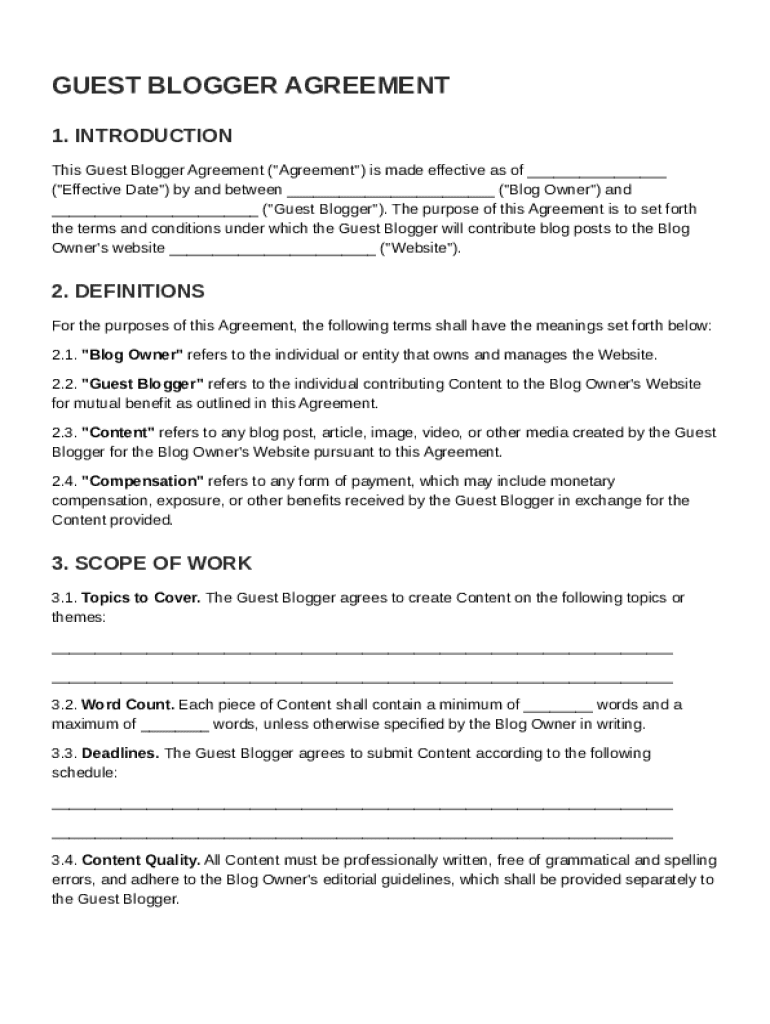
The Guest Blogger Agreement Template is designed to clearly outline the terms and conditions between a blog owner and a guest blogger for the contribution of content to a website. It sets expectations regarding content ownership, quality standards, and usage rights, providing a structured framework within which both parties can operate confidently. This document is essential for both safeguarding the intellectual property rights of the blog owner and ensuring the guest blogger's contributions are recognized appropriately. By defining these parameters, the agreement minimizes potential conflicts and promotes a harmonious collaboration.
How to Use the Guest Blogger Agreement Template
Utilizing the Guest Blogger Agreement Template involves several key steps to ensure all parties understand their roles and responsibilities. Begin by customizing the template to reflect specific details of the partnership, such as the topics to be covered and the frequency of submissions. Ensure that both the blog owner and the guest blogger thoroughly review each clause, paying close attention to sections covering content ownership and compensation. Once both parties agree on the terms, sign and date the agreement to make it legally binding. The signed document should then be stored in a secure location, accessible to both parties for future reference.
Steps to Complete the Guest Blogger Agreement Template
- Review and Customize the Template: Start by reading through the entire template to understand its provisions. Customize it with specifics like deadlines, payment terms, and content guidelines.
- Include Personal Details: Add the names and contact information of both the blog owner and the guest blogger.
- Define Content Specifications: Specify the type of content to be submitted, word count, and any other relevant guidelines to ensure quality.
- Outline Compensation Terms: Clearly state whether the guest blogger will receive monetary compensation, exposure, or other benefits.
- Set Ownership Rights: Clarify who will hold the rights to the content and any limitations on its use by either party.
- Review Legal Clauses: Ensure that all legal aspects, such as confidentiality and dispute resolution, are understood and agreed upon.
- Sign the Agreement: Both parties should sign and date the document to formalize the agreement.
- Distribute Copies: Each party should keep a signed copy for their records.
Key Elements of the Guest Blogger Agreement Template
- Content Ownership: Defines the proprietary rights of the blog owner over submitted content and any permissions granted to the guest blogger.
- Compensation Structure: Outlines the financial or non-monetary benefits provided to the guest blogger in exchange for their contributions.
- Quality Standards: Specifies the expected standard for submissions, including originality, style, and any editorial guidelines.
- Confidentiality Clause: Ensures that any private information exchanged remains protected, preventing unauthorized disclosure.
- Dispute Resolution: Provides a clear path for resolving any disagreements that may arise, including timelines and mediation processes.
Why You Should Use a Guest Blogger Agreement Template
Implementing a Guest Blogger Agreement Template protects both the blog owner and guest blogger by providing a formalized understanding of their partnership. This agreement prevents misunderstandings, sets clear boundaries regarding content use, and ensures a smooth working relationship. By detailing compensation and ownership rights, it eliminates ambiguity, thereby fostering a professional environment conducive to creativity and respect.
Important Terms Related to the Guest Blogger Agreement Template
- Exclusive Rights: The blog owner's right to use the content exclusively, with defined restrictions on the guest blogger's usage.
- Portfolio Usage: The guest blogger’s limited rights to showcase the work within a personal portfolio for career development.
- Non-Disclosure Agreement (NDA): A clause that prevents the sharing of proprietary information between the parties.
- Termination Clause: Conditions under which the agreement can be terminated by either party, including notice requirements.
Legal Use of the Guest Blogger Agreement Template
The Guest Blogger Agreement Template serves as a legally-binding contract once both parties sign it. It is crucial to ensure compliance with relevant laws, such as copyright regulations. This template assists in legally documenting the rights and obligations of both parties, providing legal recourse in the event of a breach. Consulting with a legal professional is advisable if there are any complex issues or state-specific laws to consider.
Digital vs. Paper Version of the Guest Blogger Agreement Template
Both digital and paper versions of the Guest Blogger Agreement Template serve the same fundamental purpose but offer different conveniences. A digital template is easily editable and can be shared electronically, facilitating a quicker review and signing process, especially when using platforms like DocHub. The paper version provides a tangible copy for those who prefer physical documentation. Choosing between digital and paper comes down to the preference of the parties involved and the resources available.