01. Edit your form online
Type text, add images, blackout confidential details, add comments, highlights and more.

Type text, add images, blackout confidential details, add comments, highlights and more.

Draw your signature, type it, upload its image, or use your mobile device as a signature pad.

Send it via email, link, or fax. You can also download it, export it or print it out.
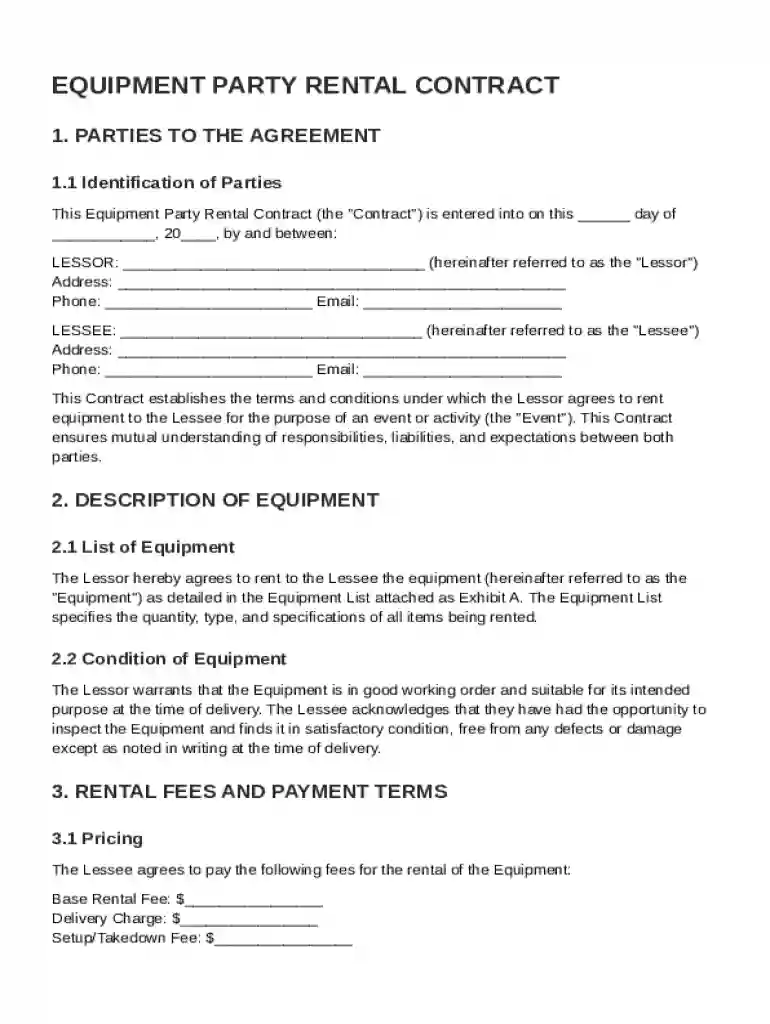
The Equipment Party Rental Contract Template is a legal agreement used primarily within event rental businesses to outline the terms of renting equipment from a lessor to a lessee for an event. The contract serves as a formal record of the equipment rented, its condition, terms of use, payment details, and responsibilities of each party involved. By providing detailed clauses and conditions, it facilitates a clear understanding between both the equipment provider and the renter, ensuring that all parties are aware of their obligations and the conditions under which the equipment is leased.
Using the Equipment Party Rental Contract Template efficiently requires understanding each section and ensuring the information filled is accurate and comprehensive. Begin by identifying all involved parties, including full names, contact information, and roles (lessor or lessee). Detail the equipment being rented, including descriptions and conditions at the time of the rental. Specify rental duration, delivery and pick-up times, and any associated fees. Clearly outline the responsibilities of the lessee, including proper use and maintenance of equipment. Ensure indemnification clauses are reviewed by both parties. Finalize with signatures to validate the agreement.
The template consists of several vital components, each serving a specific function to outline the rental relationship:
Completing the Equipment Party Rental Contract Template involves several structured steps:
While the template provides a general framework for equipment rental, there are state-specific legal considerations to keep in mind. Variations may include differing consumer protection laws, liability regulations, or business licensing requirements. Each state's jurisdiction might impose unique clauses or stipulations that need to be addressed. Consultation with a legal professional familiar with state law can ensure compliance and relevance, tailoring the contract to meet local legal expectations.
The contract must comply with all relevant federal and state laws to be legally binding. This includes adherence to rental business licensing laws, fair trade practices, consumer protection regulations, and specific industry requirements. Ensuring the template reflects current legal standards enhances its enforceability and minimizes risk for involved parties. Businesses should regularly review statutory changes to keep the contract up-to-date, facilitating lawful transactions and protecting stakeholder interests.
Consider a scenario where an event planner rents audiovisual equipment, such as projectors and speakers, for a corporate conference. The completed contract outlines the equipment's descriptions, rental duration, responsibilities, and liabilities, ensuring both parties are aligned on expectations and conditions. Another example could involve a wedding planner leasing decorations and lighting for a wedding ceremony, with detailed clauses covering handling instructions and return deadlines to prevent misunderstandings or disputes.
DocHub streamlines the use of this template, offering comprehensive support for various digital formats such as PDF, DOC, and more. Users can import existing files or start new documents within the platform, easily making modifications or adding electronic signatures. The platform's compatibility with Google Workspace enhances user convenience, allowing seamless transitions between drafting and accessing the contract template across commonly used software environments without additional software conversions or manual adjustments.
At DocHub, your data security is our priority. We follow HIPAA, SOC2, GDPR, and other standards, so you can work on your documents with confidence.