




01. Edit your form online
Type text, add images, blackout confidential details, add comments, highlights and more.

Type text, add images, blackout confidential details, add comments, highlights and more.

Draw your signature, type it, upload its image, or use your mobile device as a signature pad.

Send it via email, link, or fax. You can also download it, export it or print it out.
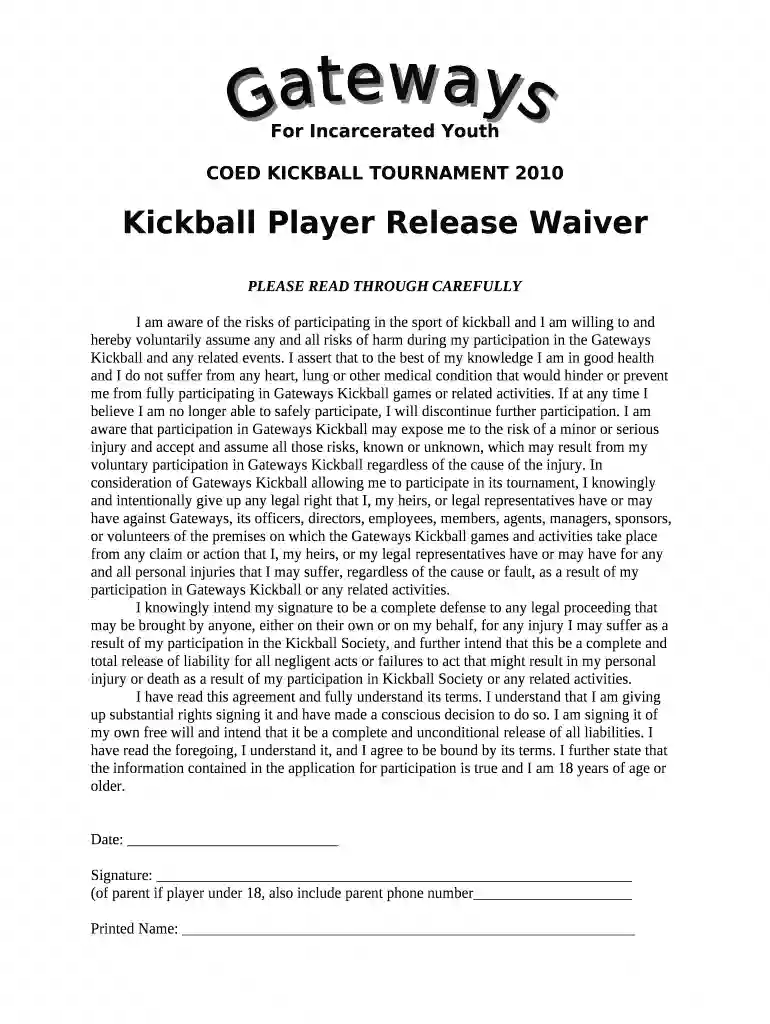
The Kickball Player Release Waiver is a legal document used primarily in recreational sports to protect organizations from liability in the event of participant injury. By signing this waiver, individuals acknowledge the inherent risks of playing kickball and agree not to hold the event organizers responsible for any accidents or injuries that may occur. This document serves both as a risk management tool for event organizers and ensures that participants are fully informed about the potential hazards involved in the activity.
Event organizers should distribute the Kickball Player Release Waiver to participants before the start of the tournament or league. Participants need to carefully read and understand each section of the waiver, especially the clauses related to risk acknowledgment and legal disclaimers. Once reviewed, each participant must sign the waiver, providing their consent to the terms. Organizers typically collect these waivers before allowing players to participate in the event, ensuring all participants have acknowledged the risks involved.
The waiver includes several critical components designed to comprehensively cover potential liability issues. These elements are essential for ensuring the document's effectiveness and legal enforceability:
Participants should follow these steps to ensure the waiver is completed properly:
The Kickball Player Release Waiver is commonly used by:
These entities utilize waivers to minimize their legal liability while promoting a safe and enjoyable environment for all participants.


In the United States, the enforceability of a kickball player release waiver can vary by state but generally requires:
Consultation with a legal professional is advisable to ensure compliance with state-specific laws and regulations.
Understanding specific terminology within the waiver can help clarify its implications:
These terms form the backbone of the waiver’s protective measures and should be thoroughly understood by all parties involved.
Legal requirements for the enforceability of waivers differ across states. For example:
Event organizers should ensure their waivers comply with the specific legal standards and practices of their state.
We've got more versions of the Kickball Player Release Waiver form. Select the right Kickball Player Release Waiver version from the list and start editing it straight away!
| Versions | Form popularity | Fillable & printable |
|---|---|---|
| 2010 | 4.7 Satisfied (53 Votes) |
At DocHub, your data security is our priority. We follow HIPAA, SOC2, GDPR, and other standards, so you can work on your documents with confidence.


