




01. Edit your form online
Type text, add images, blackout confidential details, add comments, highlights and more.

Type text, add images, blackout confidential details, add comments, highlights and more.

Draw your signature, type it, upload its image, or use your mobile device as a signature pad.

Send it via email, link, or fax. You can also download it, export it or print it out.
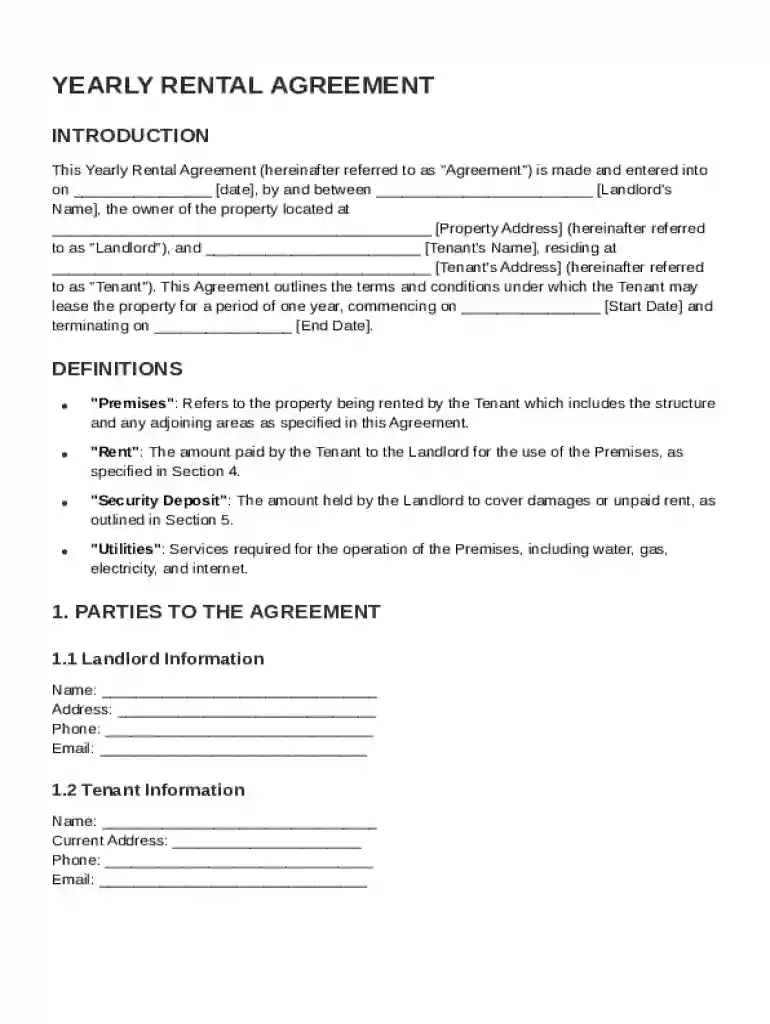
A Yearly Rental Agreement Template is a legally binding document used to outline the terms under which a property is rented from a landlord to a tenant for a period of one year. This document serves as a comprehensive guide detailing various aspects of the rental relationship.
Premises Details: Clearly describes the property being rented, including its address and any specific amenities or features included in the rental.
Rent Payment Procedures: Outlines the amount of rent, due date, acceptable payment methods, and any penalties for late payment.
Security Deposit Requirements: Details the amount of security deposit required, conditions for its return, and scenarios in which deductions might be made.
Utility Responsibilities: Specifies which utilities the tenant is responsible for and which are covered by the landlord.
Maintenance Obligations: Defines responsibilities related to property upkeep and conditions for reporting and handling repairs.
Property Use Rules: Includes guidelines on property usage, such as noise regulations or pet policies.
Termination Conditions: Explains terms under which the lease can be legally terminated by either party.
Governing Law: Identifies the legal jurisdiction that will govern any disputes related to the lease.
The Yearly Rental Agreement Template is primarily used by landlords and property managers to ensure a clear and mutual understanding with tenants regarding rental terms.
Landlords: Benefit from standardized agreements that protect their interests and clearly specify tenant obligations.
Tenants: Gain a complete understanding of their rights and responsibilities, ensuring protection against arbitrary changes.
Property Management Companies: Utilize the template to streamline the process of preparing rental agreements and maintain consistency across multiple properties.


Utilizing a Yearly Rental Agreement Template involves a systematic approach to ensure that all necessary terms and conditions are included and clearly communicated.
Select the Template: Choose a template that aligns with local regulations and your specific rental situation.
Fill Out Property and Party Details: Enter the full address of the property and the names and contact information of both landlord and tenant(s).
Specify Rent and Payment Terms: Clearly define the monthly rent, due date, acceptable payment methods, and any penalties for late payments.
Outline Responsibilities: Detail maintenance obligations, utility responsibilities, and any other pertinent tenant duties.
Include House Rules: Specify guidelines on various uses of the property, including allowable modifications and community rules.
Review and Sign: Both parties should thoroughly review the document to ensure the mutual agreement of terms before signing.
Distribute Copies: Provide signed copies to both the landlord and tenant for their records.
Completing a Yearly Rental Agreement Template is a detailed process involving several steps to ensure both compliance and understanding.
Gather Necessary Information: Ensure you have all relevant details, including tenant's background information and property specifics.
Customize Standard Clauses: Adjust template clauses to suit specific needs or alter local law requirements.
Attach Additional Documents: If needed, include disclosures or addendum forms clarifying any additional obligations or policies.
Verify Tentative Dates: Double-check the start and end date of the agreement and ensure any provisions for automatic renewal are clearly defined.
Finalize Signatures: Both parties should initial each page and provide full signatures at the end of the document.
A Yearly Rental Agreement Template must comply with local real estate laws and standards to ensure its legality and enforceability.
Compliance with State Laws: Check state-specific regulations regarding rental agreements to ensure the document's validity.
Disclosure of Hazardous Conditions: As required by law, landlords might need to disclose the presence of lead paint or other hazardous materials.
Fair Housing Compliance: Ensure the agreement adheres to federal and state fair housing laws.
Security Deposit Handling: Follow state mandates regarding the handling, accounting, and return of security deposits.
Understanding key terms within a Yearly Rental Agreement is essential for both parties involved.
Lease Renewal: Terms under which the lease may be renewed for another term, including any notice periods.
Late Fees: Defined penalties for rent payments not made by the due date.
Subleasing: Conditions and approvals required for the tenant to sublease the property.
Default and Remedies: Describes consequences of a tenant's breach of agreement and the legally permissible actions a landlord can take.
Different states have unique requirements for rental agreements which must be incorporated into the template for compliance.
Rental Caps and Increases: Some states have specific limits on how much and how frequently rent can be increased.
Tenant Rights to Repairs: Obligations of landlords to make timely repairs may vary from state to state.
Eviction Procedures: Legal processes a landlord must follow to evict a tenant differ by jurisdiction.
Understanding and incorporating these state-specific rules ensures that the agreement is enforceable and compliant with local laws.
Practical examples illustrate how landlords and tenants can effectively utilize this template.
Example for Vacation Rentals: Landlords managing seasonal properties might include specific sections relevant to short-term tenants.
Example for Multi-Family Units: When renting out units in an apartment complex, additional clauses might be needed to clarify shared community space usage.
Example for High-Value Properties: More detailed clauses might be required for luxury properties to clarify maintenance and insurance expectations.
Using the template appropriately can assist in varying rental contexts to ensure both parties' interests are met.
At DocHub, your data security is our priority. We follow HIPAA, SOC2, GDPR, and other standards, so you can work on your documents with confidence.




7 days ago Use the template below. Email + WhatsApp + registered post to the landlords address on the rental agreement. This is the day-zero document forRead more
Mar 31, 2026 It documents household rules, how utility payments are handled, and the households choice of conflict resolution. The Room Rental AgreementRead more


