






Definition and Purpose of the Pet Policy Rental Agreement Template
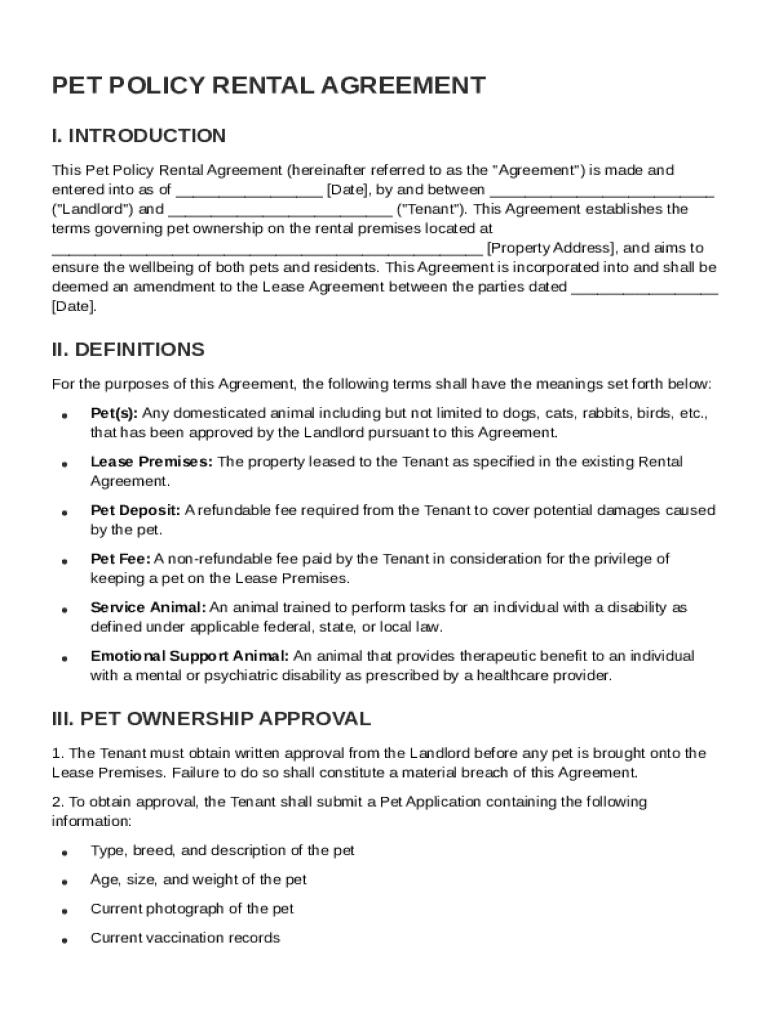
The Pet Policy Rental Agreement Template is a legal document designed to outline the specific terms and conditions under which tenants may keep pets in a rental property. Its purpose is to clearly define the roles, rights, and responsibilities of both the landlord and tenant regarding pet ownership. This agreement typically includes various sections detailing permitted pet types, approval processes, tenant responsibilities, financial obligations such as deposits and fees, and procedures for addressing pet-related issues.
Key Features of the Document
- Definitions of Pets: Specifies the types of animals considered as pets under the agreement, which can include dogs, cats, birds, and other domesticated animals.
- Approval Process: Details the steps a tenant must take to receive permission from the landlord to have a pet, which often involves a formal application and can include providing references or proof of the pet's behavior.
- Tenant Responsibilities: Outlines duties the tenant must fulfill, such as maintaining cleanliness, managing noise levels, and ensuring the pet’s health and safety within the rental property.
Financial Implications
- Pet Deposits and Fees: Typically requires a one-time deposit or recurring fee from the tenant to cover potential damages caused by the pet.
- Liability Issues: Addresses the tenant's responsibility in the event of property damage or personal injury caused by their pet.
Steps to Complete the Pet Policy Rental Agreement Template
Filling out the Pet Policy Rental Agreement Template involves several specific steps to ensure thorough compliance with both landlord’s requirements and tenant’s obligations.
Detailed Completion Guide
- Obtain Template: Acquire the template, typically from a landlord, property management company, or document management platform like DocHub.
- Input Tenant Information: Enter personal details including name, contact information, and unit number.
- Describe Pet: Provide detailed information about the pet, such as breed, age, weight, and vaccination status.
- Acknowledge Conditions: Carefully read and acknowledge all rules and restrictions set forth in the agreement, particularly those pertaining to pets’ behavior and care.
- Sign and Date: Both the tenant and landlord must sign and date the document to indicate agreement to the terms.
Important Considerations
- Required Attachments: Include necessary supporting documents, such as identification tags and proof of vaccinations.
- Review and Feedback: Both parties should review the agreement to ensure clarity and mutual understanding before signing.
Important Terms Related to the Pet Policy Rental Agreement
A comprehensive understanding of the terminology used in the Pet Policy Rental Agreement Template is vital to ensure clarity and compliance.
Commonly Used Terms
- Pet Deposit: A security deposit specifically allocated for potential damages caused by the tenant’s pet.
- Pet Fee: An additional non-refundable payment required for keeping a pet on the premises.
- Leash Requirement: A stipulation that pets must be on a leash when in common areas of the rental property.
Supplemental Context
- Breed Restrictions: Some agreements might restrict certain breeds based on size or perceived aggressiveness.
- Noise Control Measures: Steps tenants must take to minimize disturbances caused by pets, such as barking dogs.
Legal Use of the Pet Policy Rental Agreement Template
Understanding the legal basis and enforceability of the Pet Policy Rental Agreement is crucial for both landlords and tenants to prevent disputes.
Legal Considerations
- Compliance with Local Laws: Ensure the agreement aligns with local animal control laws and housing regulations.
- Amendment Provisions: Identify procedures for modifying terms if conditions change, such as the introduction of an additional pet.
- Conflict Resolution: Outline mechanisms for addressing disputes, including mediation or arbitration processes.
Key Elements of the Pet Policy Rental Agreement Template
Recognizing the essential components of the template is vital for its effective application and enforcement.
Core Components
- Pet Responsibilities: Outlines daily care, hygienic practices, and behavioral expectations.
- Reporting Procedures: Establish guidelines for reporting pet issues, such as accidents or incidents, within the property.
- Termination Clause: Provides conditions under which pet privileges can be revoked, such as repeated violations or failure to comply with the agreement’s conditions.
Practical Examples
- Case Study: A tenant’s timely reporting led to successful resolution of a pet damage issue without further conflict.
- Scenario Analysis: Agreement enforcement prevented potential eviction due to prior peaceful negotiation protocols.
State-Specific Rules for the Pet Policy Rental Agreement Template
Variations in state laws can significantly influence the terms of a Pet Policy Rental Agreement.
Regional Differences
- California Specifics: May have more stringent guidelines on animal retention fees and tenant rights to have pets.
- New York Policies: Could require additional clauses related to the landlord’s obligations to maintain pet-friendly environments.
Guidance for Tenants
- Research: Tenants should familiarize themselves with state or city-specific regulations that might impact pet ownership in rental properties.
- Legal Advice: Seeking counsel from a licensed attorney can provide clarity on jurisdiction-specific rules.
Examples of Using the Pet Policy Rental Agreement Template
Real-world examples demonstrate the practical application and benefits of a robust Pet Policy Rental Agreement Template.
Real-World Scenarios
- Resolution of Disputes: An agreement clearly outlining responsibilities led to amicable resolution of a noise complaint related to pets.
- Successful Deposit Usage: Pet deposit successfully covered the cost of minor repairs, showing the importance of including financial terms in the agreement.
Lessons Learned
- Preventive Measures: Implementing preventative care measures, such as regular pet inspections, ensures a harmonious living environment.
- Community Awareness: Agreements supporting community standards foster better landlord-tenant relationships.