
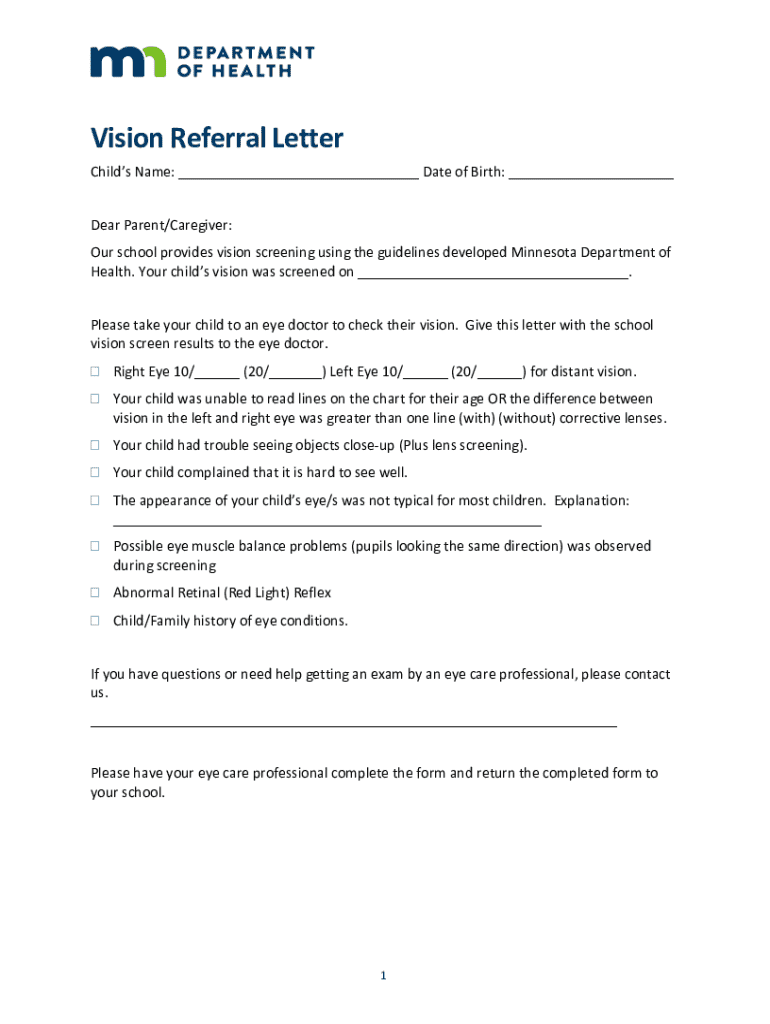







Definition & Meaning
The Vision Screening Referral Letter for Children: Eye Care Guidance is an informational document typically issued by schools or pediatric healthcare facilities. This letter is a formal communication directed towards the parents or guardians of a child who has undergone a vision screening. It details any potential vision issues identified during the screening, such as difficulties in reading or signs of eye conditions. The primary purpose of this letter is to ensure that the child receives a professional evaluation and necessary follow-up care from an eye care specialist.
Purpose and Components
- Communication: The letter conveys screening results to parents or caregivers.
- Recommendations: It suggests further examination by an eye care provider.
- Documentation: Some versions include sections for the provider to record findings and recommendations.
How to Use the Vision Screening Referral Letter
The Vision Screening Referral Letter should be used by caregivers to initiate professional eye care for their child. Upon receiving the letter, it's important to read it thoroughly to understand the specific vision issues flagged during the screening.
Practical Steps for Parents or Guardians
- Review the Results: Carefully examine the noted concerns highlighted in the letter.
- Contact an Eye Care Professional: Schedule an appointment with an optometrist or ophthalmologist.
- Take the Letter to the Appointment: Provide the eye care professional with the letter for context on the concerns raised during the screening.
- Follow Professional Advice: Adhere to any recommendations for treatment or further testing suggested by the eye care provider.
Steps to Complete the Letter
Completing the Vision Screening Referral Letter involves conscientious attention to detail. Typically, schools or healthcare facilities fill out the initial data, while the subsequent sections may be used by eye care professionals after consultation.
Process Outline
- School or Healthcare Facility: Completes the student's name, screening results, and any immediate concerns.
- Parent or Guardian: Provides the letter to the eye care professional during the appointment.
- Eye Care Professional: Records findings, recommendations, and any prescribed treatments.
- Follow-up: Return any required documentation back to the school if necessary.
Key Elements of the Referral Letter
The referral letter consists of several critical components designed to communicate effectively between the involved parties.
- Child’s Information: Name, age, and school details.
- Screening Results: Specific issues observed, such as difficulty reading text or potential eye conditions.
- Recommendation: Guidance for professional evaluation.
- Provider Section: Space for the eye care provider to record findings and treatment plan.
Legal Use of the Vision Screening Referral Letter
The Vision Screening Referral Letter for Children serves a critical legal and medical purpose to ensure adequate eye care.
Legal Considerations
- Compliance with Health Privacy Laws: All personal information should be handled in compliance with HIPAA to safeguard the child's health data.
- School Policy: Adheres to mandatory health assessments generally required in school settings.
Who Typically Uses the Letter
The primary users of the Vision Screening Referral Letter include school officials, healthcare providers conducting screenings, and eye care professionals.


Specific User Roles
- Educators: Issue the letter post-screening.
- Health Practitioners: Conduct initial screenings.
- Eye Care Specialists: Provide follow-up evaluation and document any professional insights.
Important Terms Related to the Referral Letter
Understanding specific terminology related to the Vision Screening Referral Letter can aid in its use and comprehension.
Glossary of Terms
- Vision Screening: A preliminary test to identify potential visual impairments.
- Referral: A recommendation for further evaluation by a specialist.
- Ophthalmologist/Optometrist: Professionals qualified to perform comprehensive eye exams.
- Visual Acuity: A measurement of the sharpness or clarity of vision.
Examples of Using the Referral Letter
Several scenarios highlight the practical application of the Vision Screening Referral Letter.
Common Use Cases
- Routine School Screening: Following a standard vision test, a child exhibits unusual eye strain, prompting a referral letter.
- Parental Concern: A caregiver receives notice of difficulty during classroom activities, leading to further investigation through the referral process.
- Healthcare Facility Check-up: Regular pediatric check-ups identify potential issues, resulting in a formal referral for eye specialist evaluation.




