



01. Edit your form online
Type text, add images, blackout confidential details, add comments, highlights and more.

Type text, add images, blackout confidential details, add comments, highlights and more.

Draw your signature, type it, upload its image, or use your mobile device as a signature pad.

Send it via email, link, or fax. You can also download it, export it or print it out.
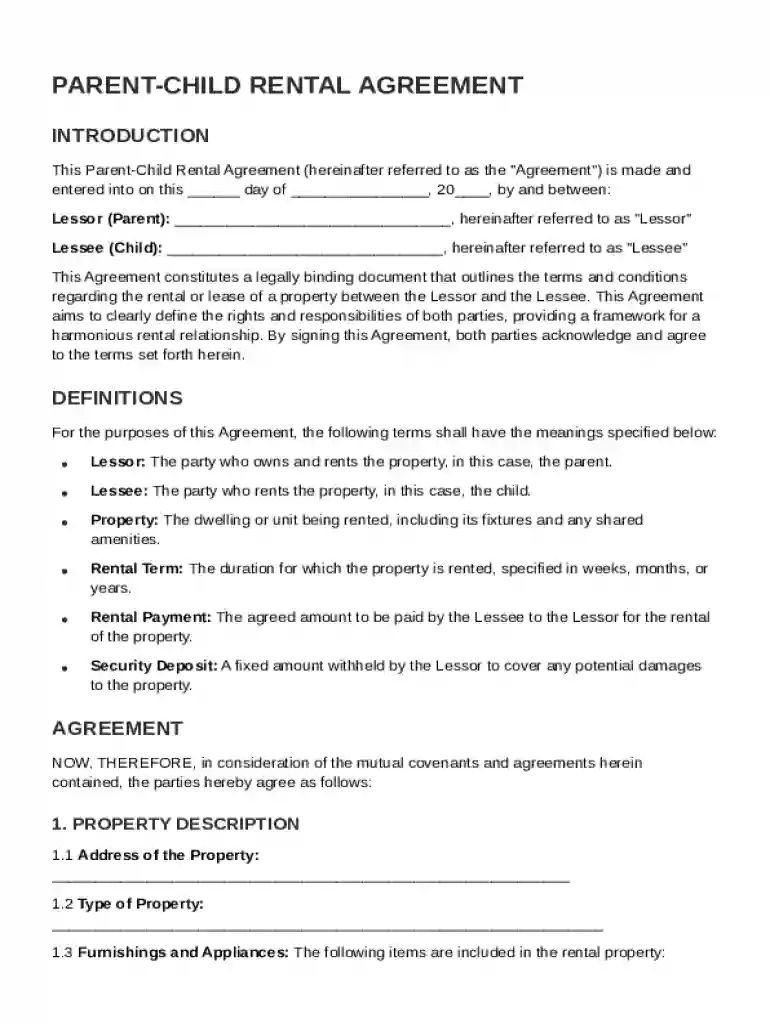
The Parent-Child Rental Agreement is a legally binding document that sets specific terms and conditions for renting property between a parent, who acts as the lessor, and a child, who is the lessee. This agreement is designed to define the responsibilities of both parties, ensuring clear communication and understanding of expectations. It covers various aspects such as rental payment terms, security deposit conditions, maintenance responsibilities, and procedures for termination or dispute resolution. By clarifying these details, both parties can maintain a harmonious rental relationship and prevent potential conflicts.
This template includes several important components, which are crucial for creating a comprehensive rental agreement:
Rental Payment Details: Specifies the amount, due date, and method of payment. This ensures the lessee understands their financial obligations and helps in maintaining a consistent payment schedule.
Security Deposit Conditions: Outlines the amount required for the security deposit, its intended use, and conditions for refunding it at the end of the lease. This helps in managing expectations regarding any potential damages.
Maintenance Obligations: Details the responsibilities of both the lessor and lessee concerning property upkeep. Regular maintenance ensures that the property remains in good condition throughout the lease term.
Termination Procedures: Provides information on how either party can terminate the agreement, including required notice periods. Clear termination terms help both parties prepare for the end of the lease.
Dispute Resolution Methods: Establishes how any conflicts between the lessor and lessee will be handled. Having a clearly defined method for resolving disputes can prevent prolonged disagreements.
Preparing Information: Gather personal information such as names, addresses, and contact details for both the parent and child. Also, ensure you have details about the property being rented.
Defining Terms: Clearly outline the rental amount, due dates, and payment methods. Include any other financial arrangements, such as late payment fees.
Setting Conditions: Specify security deposit details, as well as any conditions related to property maintenance responsibilities.
Finalizing Terms: Agree on termination procedures and dispute resolution methods. It's important that both parties agree to these terms before proceeding.
Signing: Both parties should review the document thoroughly and sign in the appropriate sections to formalize the agreement.
Storing the Document: Keep copies of the signed agreement in a secure and easily accessible location for future reference.
The Parent-Child Rental Agreement Template serves as a formal and legally recognized document, aligning with U.S. laws related to rental agreements. For it to be a legally binding contract, both parties must have the capacity to contract, and the terms must be clear, lawful, and supported by consideration (exchange of value). Within the context of this agreement, consideration usually involves the child agreeing to make rental payments and the parent providing the right to use the property. It's advisable to consult a legal professional to ensure the template complies with specific legal standards applicable in your state.
Rental agreements can vary based on state laws. Some states may have specific disclosures or additional requirements that need to be included in the rental agreement, such as:
Security Deposit Limits: Certain states impose limits on the amount a landlord can charge for a security deposit.
Notice Requirements: Varying notice periods for termination of the lease or rent increases may apply.
Tenant Rights: Some states have specific tenant rights regarding privacy, property access by the landlord, and necessary repairs.
Always verify local regulations to ensure compliance and consider seeking legal counsel for assistance.
This template can be used in various real-world scenarios, including:
Long-Term Rental: Parents renting out a property to a child for an extended period, providing housing stability while teaching financial responsibility.
Short-Term Housing Need: Offering the child temporary accommodations during a transition period such as college or while searching for a new home.
Property Management Learning: Assisting children in learning how to manage rental responsibilities, including budgeting for expenses and understanding tenant obligations.
The Parent-Child Rental Agreement Template is typically available in multiple file formats, making it compatible with various document management software. Examples include:
DocHub: This platform allows users to edit and sign documents online, providing a streamlined way to handle and manage rental agreements digitally. It supports PDF, DOC, and other file types ensuring easy access.
Google Workspace: Users can import the document from Google Drive, make necessary changes, and then save or share it seamlessly, supporting an integrated document workflow.
Opting for a digital version of the Parent-Child Rental Agreement Template offers several advantages:
At DocHub, your data security is our priority. We follow HIPAA, SOC2, GDPR, and other standards, so you can work on your documents with confidence.




The agreement should be complete and address how you and the landlord will handle situations such as necessary repairs, unauthorized pets or guests, nonpaymentRead more
This lease checklist provides examples of what you may find in a residential lease agreement. This information is intended for reference purposes only.
4 days ago If you live with a parent, spouse or adult child whose Aadhaar already shows the correct address, you can apply using their Aadhaar numberRead more


