




01. Edit your form online
Type text, add images, blackout confidential details, add comments, highlights and more.

Type text, add images, blackout confidential details, add comments, highlights and more.

Draw your signature, type it, upload its image, or use your mobile device as a signature pad.

Send it via email, link, or fax. You can also download it, export it or print it out.
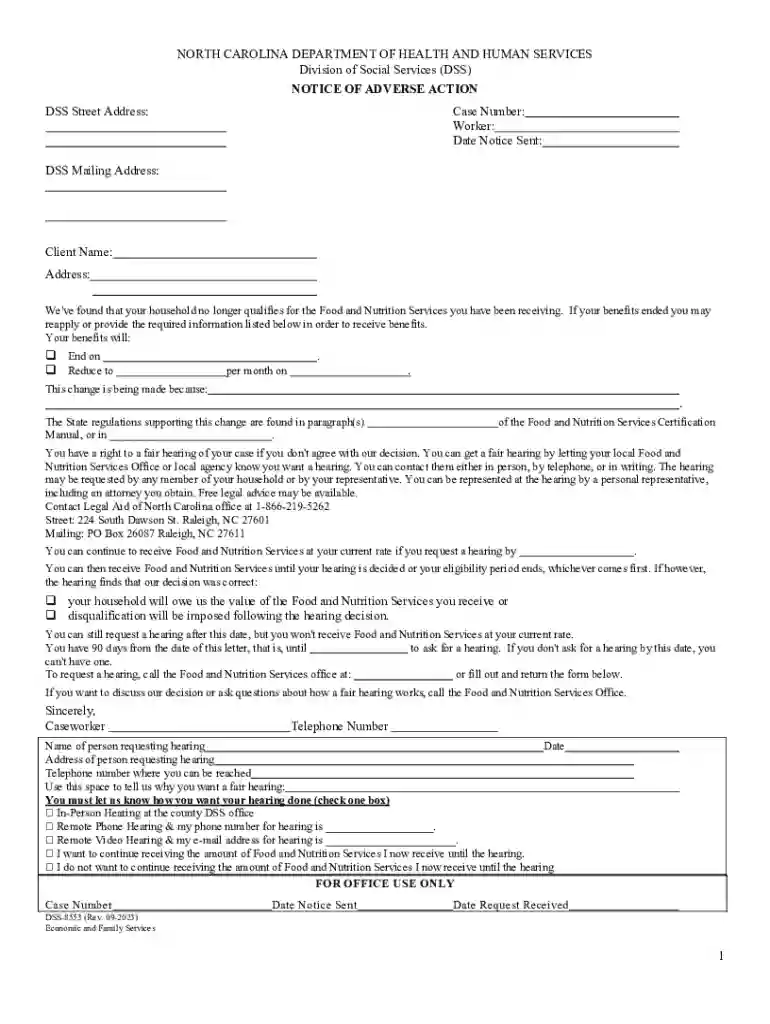
"DSS Street Address: Case Number: Worker: Date Notice Sent" likely refers to a structured format used by the Department of Social Services or a similar agency to organize and send notices. These fields are essential for identifying the specific case, the client involved, the caseworker handling the situation, and when the notice was dispatched. This format is specifically important for administrative coherence and helps in tracking communication between the department and its clients.
Individuals receiving this notice should carefully review each section to understand the context and implications of the communication. Ensuring accuracy is critical, as errors in any of these fields could lead to misunderstandings or administrative complications.
When filling out forms related to this format or responding to the notice, it's essential to follow a systematic approach to maintain clarity and prevent issues.
Understanding key terms associated with this format can prevent misunderstandings and improve communication with the department.
Receiving a notice structured in this way from the department signals important changes or requirements in your benefits or services. It might pertain to eligibility, compliance issues, or adjustments needing immediate attention.
This format is often used by:


The structure provides a comprehensive method to organize and process client-related communication and documentation efficiently.
Each state might have unique guidelines or variations in how these notices are formatted or processed based on local regulations or administrative practices.
We've got more versions of the DSS Street Address: Case Number: Worker: Date Notice Sent form. Select the right DSS Street Address: Case Number: Worker: Date Notice Sent version from the list and start editing it straight away!
| Versions | Form popularity | Fillable & printable |
|---|---|---|
| 2023 | 4.2 Satisfied (44 Votes) |
At DocHub, your data security is our priority. We follow HIPAA, SOC2, GDPR, and other standards, so you can work on your documents with confidence.


Was the adequate notice (DSS-8110) sent within 10 days of the Work List. Provide the name of the case worker. Be provided no later than 30 days after the date
Notice Sent: DSS Street Address: (DSS) Medical Report Please complete this form for the above patient/client. to provide verification of their medical condition


