






Definition & Meaning
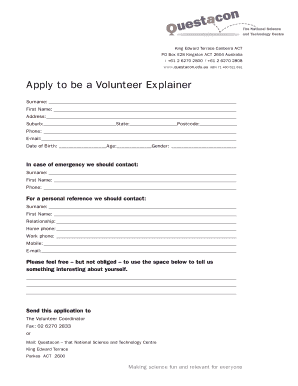
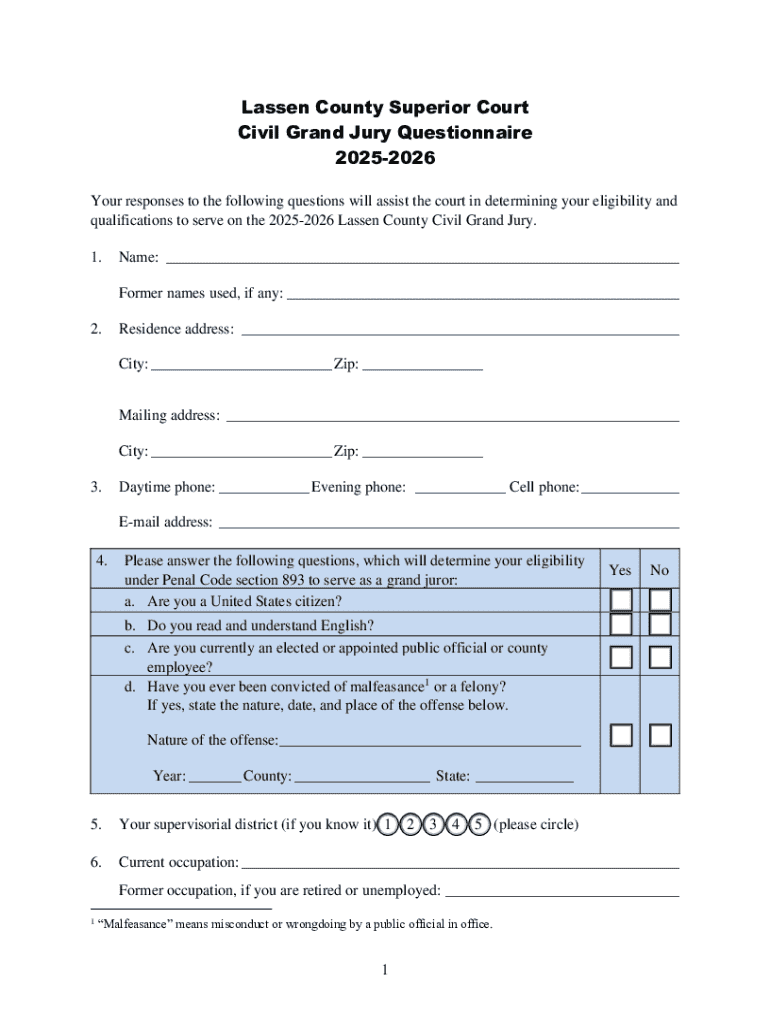
The Civil Grand Jury Questionnaire is a document designed to gather personal information, assess eligibility, and understand the motivations of potential candidates wishing to serve on the Civil Grand Jury. This form plays a crucial role in securing qualified individuals capable of performing the duties required by this public service role. Typically, applicants must provide contact details, verify eligibility criteria based on legal standards, and articulate their interest and willingness to participate in the jury process.
The Civil Grand Jury operates as an investigatory body within the judicial system, often tasked with examining governmental functions, handling public complaints, and ensuring accountability. The questionnaire ensures that prospective jurors have no conflicts of interest and meet the necessary legal requirements for service. It acts as both an application and a vetting tool for selecting candidates who can uphold the integrity and responsibilities of the jury system.
Key Elements of the Civil Grand Jury Questionnaire
This questionnaire involves several critical sections that applicants must complete.
- Personal Information: Includes fields for name, address, phone number, and email address, allowing for clear identification and communication.
- Eligibility Assessment: Queries related to age, citizenship, residency, and criminal history, ensuring compliance with legal requirements for jury service.
- Experience and Skills: Applicants may be asked about their background, work experience, and any specific skills that could benefit the jury, such as knowledge of legal processes or expertise in certain investigation areas.
- References and Endorsements: Some counties might require applicants to provide references or endorsements from community leaders to affirm their character and suitability for the role.
- Motivation Statement: A section inviting candidates to explain their reasons for wanting to serve, reflecting their commitment to public service and understanding of the jury's civic duties.
Steps to Complete the Civil Grand Jury Questionnaire
Completing the questionnaire is a straightforward process, but attention to detail is crucial.
- Gather Necessary Information: Collect all required personal and legal documents, such as proof of residency and identification, before starting the form.
- Review Eligibility Criteria: Ensure you meet all the legal requirements, such as age and residency, before proceeding to avoid disqualification.
- Fill Out Personal Details: Enter your personal information accurately, including contact details and legal identifiers.
- Complete the Eligibility Section: Honestly answer all eligibility-related questions, as providing false information can result in legal penalties.
- Detail Experience and Skills: Carefully articulate relevant experiences and skills that would contribute to your effectiveness as a juror.
- Provide References, if Required: Attach any references or endorsements if needed by your local jurisdiction.
- Submit Motivation and Commitment: Write a compelling narrative about your willingness to serve and what motivates your interest in participating.
- Finalize and Submit: Double-check all entries for accuracy, attach requested documents, and follow the instructions for submission, whether online or by mail.
Important Terms Related to Civil Grand Jury Questionnaire
Understanding specific terminology used in the questionnaire is essential.
- Applicant: The individual submitting the form for consideration as a juror.
- Eligibility Criteria: The specific legal and personal requirements that candidates must meet to qualify for jury service.
- Conflicts of Interest: Situations or relationships that could impair an applicant's impartiality and objectivity.
- Endorsement: Formal support or recommendation from a credible source, sometimes required for application.
- Motivation Statement: A personal essay reflecting the applicant’s commitment and reasons for wishing to serve on the jury.
State-Specific Rules for the Civil Grand Jury Questionnaire
While the core format of the questionnaire remains consistent, specific states may impose unique guidelines:
- California: Applicants must meet more rigorous documentation needs and can face stringent background checks due to the state’s larger urban areas and higher case loads.
- Texas: Emphasis might be placed on candidates’ understanding of local issues, given the state's vast diversity and regional variations.
- New York: May require additional references or community endorsements due to the city's high-profile public and political cases.
These differences underline the significance of understanding local requirements and adjusting applications to reflect these nuances.
Legal Use of the Civil Grand Jury Questionnaire
The Civil Grand Jury Questionnaire functions within a strict legal framework designed to ensure fairness and impartiality in jury selection. The legal usage of this questionnaire includes:
- Verification of Eligibility: Ensuring that all selected candidates conform to the statutory requirements for civil service.
- Conflict of Interest Identification: Disclosing any affiliations or situations that could jeopardize unbiased decision-making.
- Screening for Legal Impediments: Identifying any legal barriers, such as specific criminal convictions, that could prevent service.
- Supporting Judicial Accountability: Actively contributing to the integrity and effectiveness of the judicial process through responsible candidate selection.
Examples of Using the Civil Grand Jury Questionnaire
Providing context through illustrative scenarios enhances understanding:
- Scenario 1: An applicant provides false information about residence. During the vetting process, the discrepancy is discovered, resulting in immediate disqualification and potential legal consequences.
- Scenario 2: A candidate with extensive experience in local government reports a conflict of interest due to professional ties with investigation subjects, leading to their removal from consideration but maintaining transparency.
- Scenario 3: An applicant with a background in finance highlights their skills, subsequently being selected to investigate financial misconduct within a county department.
These examples highlight the questionnaire's pivotal role in ensuring the quality and readiness of juror candidates.
Application Process & Approval Time
Understanding the application timeline and approval process helps manage expectations.
- Initial Submission: Timing varies based on county deadlines; check local guidelines for specific submission windows.
- Review Period: After submission, applications typically undergo a review process for eligibility and completeness, usually taking several weeks.
- Interview Phase: Qualifying candidates may be invited to participate in interviews or additional assessments, ensuring suitability.
- Final Decision: Successful applicants receive notification of their selection along with details of their term and orientation process.
- Orientation and Training: New jurors participate in orientation sessions to familiarize themselves with responsibilities and procedures before beginning their term.
Each step plays a vital role in ensuring a smooth and effective selection process.