






Definition and Purpose of the EA-309
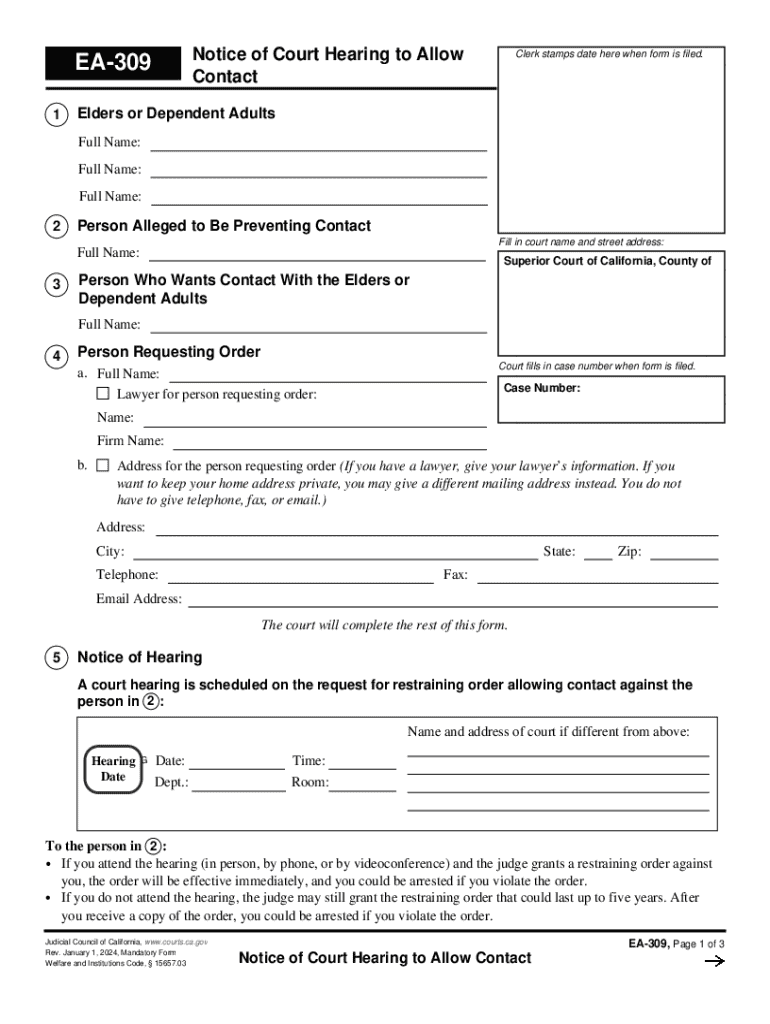
The EA-309 form serves as a Notice of Court Hearing to Allow Contact, primarily used in the context of restraining orders involving elders or dependent adults. This legal document outlines the request for allowing contact despite an existing restraining order. The primary aim is to safeguard the well-being of vulnerable individuals while permitting necessary contact under specified conditions.
Key Functions of the EA-309
- It details the process for amending a restraining order to permit contact.
- Identifies all parties involved in the hearing, ensuring transparency and accountability.
- Specifies the court's requirements for properly serving the documents to relevant parties.
- Highlights the consequences of attending or not attending the scheduled hearing.
Steps to Complete the EA-309
Completing the EA-309 involves a series of precise legal steps to ensure that the form is filled correctly and submitted to the court without errors. Here’s a breakdown:
- Obtain the Form: Access the EA-309 from your local court’s website or physical court offices.
- Fill Out Personal Information: Include the full details of all parties involved.
- Detailed Request: Clearly specify the nature of the contact being requested and any supporting reasons.
- Serve Required Parties: Ensure all involved individuals are notified, which may include legal representatives.
- Attach Supporting Documentation: Provide evidence that supports the request for contact modification.
Legal Use of the EA-309
The EA-309 form is legally binding and must be used responsibly to uphold its integrity within the legal system:
- It must be filed within the jurisdiction where the original restraining order was issued.
- All involved parties must strictly adhere to the court's guidelines throughout the process.
- The EA-309 provides structured means for individuals to make legitimate requests for contact despite existing restrictions, ensuring it aligns with current legal frameworks.
Who Typically Uses the EA-309
The EA-309 is especially relevant for individuals and parties involved in circumstances requiring modification of restraining orders related to elders or dependent adults:
- Family members or caretakers needing to adjust contact terms under court guidance.
- Legal professionals representing clients in such sensitive cases.
- Elders or dependent adults involved, assuring their rights and protection remain a priority.


Key Elements of the EA-309
Several crucial components form the backbone of the EA-309 form, which must be accurately completed:
- Contact Details: Essential identification information for all parties involved.
- Nature of Request: A detailed explanation of why contact is necessary and the benefits it offers.
- Legal Justifications: Reference to existing laws and legal precedents that support the request.
- Court Details: Information about the court handling the hearing, ensuring the form is correctly routed.
Important Terms Related to the EA-309
Understanding the terminology associated with the EA-309 is vital for accurate comprehension and application:
- Restraining Order: A legal order issued by a court to protect individuals from harm or harassment.
- Petitioner: The person or party making the request for contact through the EA-309.
- Respondent: The party opposing or responding to the court hearing request.
State-Specific Rules for the EA-309
While the EA-309 serves a general purpose across jurisdictions, some state-specific rules may impact its use:
- Filing Deadlines: Deadlines can vary by state, influencing the timing and scheduling of hearings.
- Service Requirements: Different states may have unique requirements for notifying parties of court hearings.
- Content Specifications: States might dictate specific language or information that must be included on the form.
Examples of Using the EA-309
Real-world scenarios provide a contextual understanding of the EA-309’s application:
- A granddaughter seeking permission to visit her elderly grandmother despite a restraining order initiated due to past familial disputes.
- A caretaker requesting court-modified contact terms to ensure proper care and management of a dependent adult's health condition.
This comprehensive overview of the EA-309 form emphasizes its critical role in facilitating court-mandated contact adjustments while maintaining protective measures for vulnerable populations. The detailed usage guidelines serve those navigating legal and personal complexities tied to elder care and dependent adult support.