






Definition and Purpose of JV-594
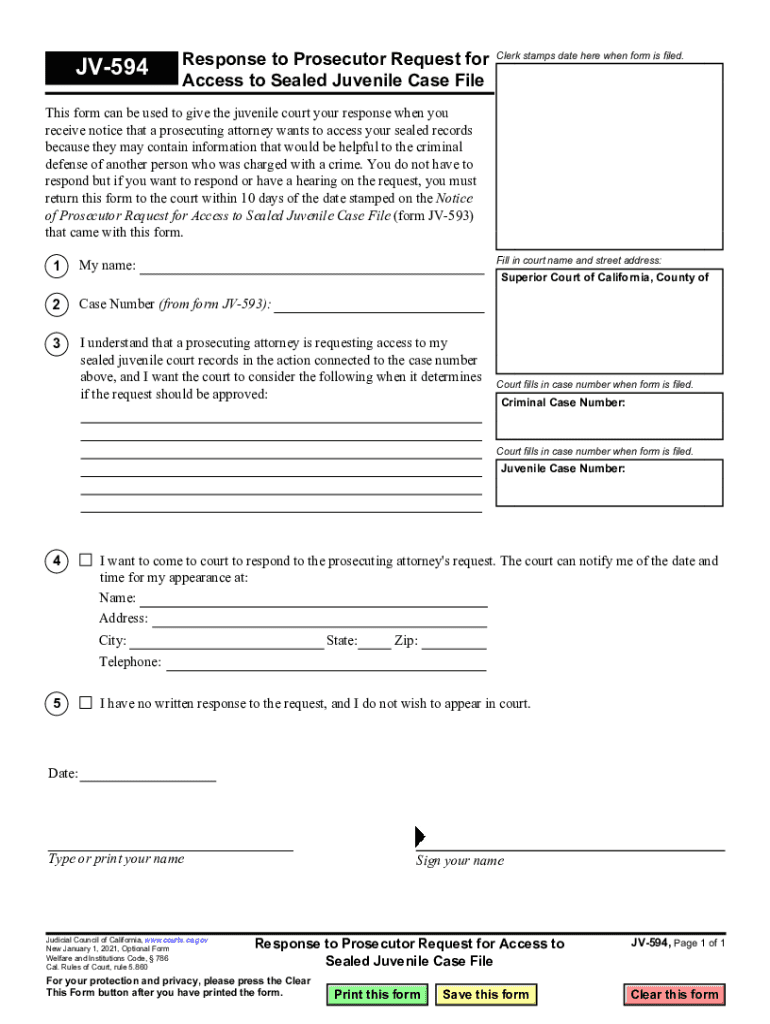
The JV-594 form, officially known as the "Response to Prosecutor Request for Access to Sealed Juvenile Case File," is a critical legal document used within the judicial system. It allows individuals to formally respond when a prosecutor requests access to their sealed juvenile case files. This form is part of the Judicial Council's efforts to maintain a structured process for such requests, ensuring that all parties involved have the opportunity to express their stance on the matter. Sealed records typically contain sensitive information, and the JV-594 form helps protect privacy while permitting necessary legal proceedings.
Importance of the JV-594 Form
Responding to a prosecutor's request for access to sealed juvenile case files using the JV-594 form is essential for several reasons:
- Privacy Protection: Sealed records often contain sensitive information regarding a minor's past. Responding ensures that any unwarranted breaches of privacy are contested.
- Legal Rights: Completing this form is a way to exercise your right to contest or agree to the opening of your sealed records.
- Documentation: Submitting the form provides an official record of your response, which can be referenced in future legal actions if needed.
Steps to Complete the JV-594 Form
-
Review the Request Notification: When a prosecutor requests access to your sealed juvenile case file, review the notification carefully to understand the implications.
-
Gather Necessary Information: Collect your juvenile case details, such as case numbers or relevant dates, required to complete the form accurately.
-
Fill Out Personal Information: Enter your full name, address, and contact information. Ensure these details match court records.
-
State Your Response: Clearly indicate whether you consent to or oppose the prosecutor's request for access to your sealed file. Provide additional comments or justification if necessary.
-
Sign and Date the Form: Ensure the form is signed and dated before submission, verifying the authenticity of your response.
Legal Use and Implications
Usage of the JV-594 form follows specific legal processes:
- Court Hearing: If you oppose the request, your response may lead to scheduling a court hearing, where a judge will decide based on the arguments presented by both parties.
- Judicial Review: The form is reviewed to ensure compliance with legal standards and to ascertain whether access to the sealed records is justified.
- Deadline Compliance: It is crucial to submit the form before the deadline stated in the prosecutor’s request to avoid default decisions granting access.
Key Elements of the JV-594 Form
Important components included in the JV-594 form are:
- Personal Identification: Accurate personal details to match court records.
- Response to Request: A clear statement of consent or opposition.
- Justification and Comments: Any additional information supporting your position.
- Signature: Legal verification of the document's authenticity and your agreement with the contents.
Who Typically Uses the JV-594 Form
The form is primarily utilized by:
- Individuals with Sealed Juvenile Records: Those whose records are being sought after by legal authorities.
- Attorneys: Legal representatives acting on behalf of individuals to ensure proper legal proceedings.
- Prosecutors: The requesting party ensures due process by filing the appropriate paperwork.


Filing Deadlines and Important Dates
-
Response Timeframe: Typically, there is a specified period within which you must respond, often 15 to 30 days from notice. Check the exact deadline stated in the notification you receive.
-
Court Hearings: If a hearing is scheduled, adhere to the dates provided by the court to ensure your arguments are heard.
Form Submission Methods
There are multiple ways to submit the JV-594 form:
- Mail: Traditional mailing to the appropriate court office.
- In-Person: Direct submission to a court office can ensure immediate receipt confirmation.
- Online: Some jurisdictions may offer electronic submission through their judicial or court websites. Verify the availability of this option with your local court.
State-Specific Rules and Variations
Regulations regarding sealed juvenile records can vary by state, impacting how the JV-594 form is processed:
- State Legislation: Different states may have unique conditions under which sealed files can be accessed.
- Judicial Procedures: Local courts might have specific procedures for handling these requests, affecting response time and submission methods.
By understanding the nuances associated with the JV-594 form, individuals can better navigate the complexities of responding to prosecutor requests regarding sealed juvenile case files, ensuring their legal rights and privacy are adequately protected.