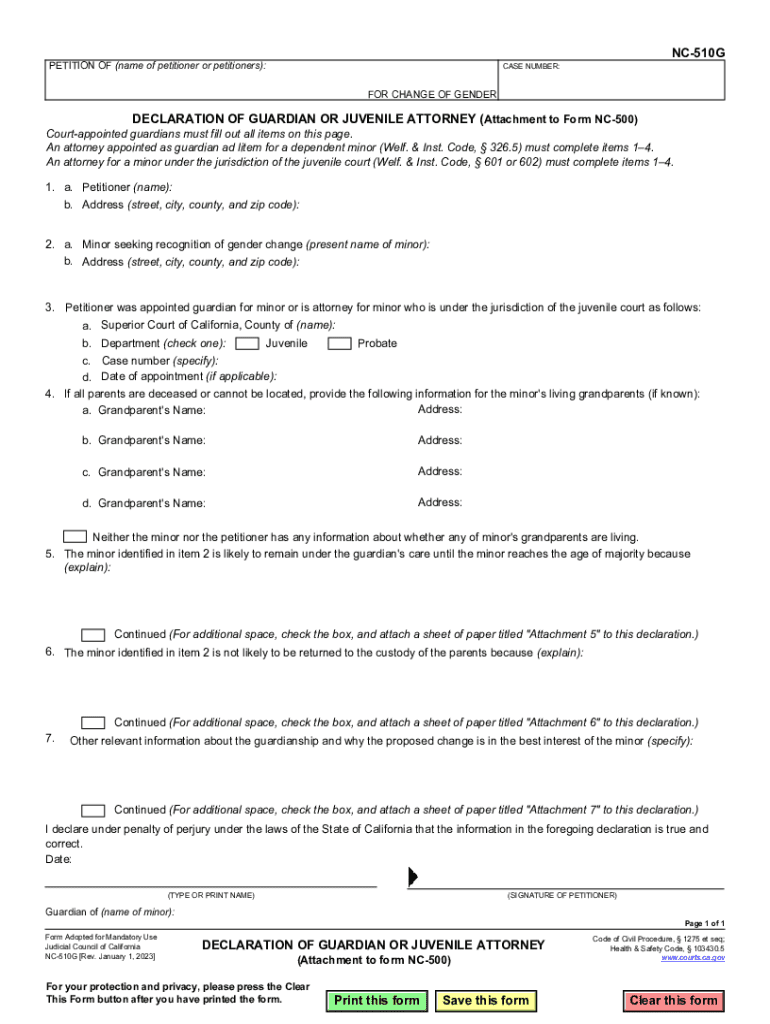







Definition and Purpose of NC-510G
The NC-510G is a legal petition form specifically utilized for processing a gender change for minors under guardianship or juvenile court jurisdiction. This form is crucial for ensuring that the legal system recognizes the gender identity of a minor, providing them with the appropriate documentation to reflect their gender identity accurately. The form requires detailed information about the petitioner, the minor, and the guardianship arrangement, making it an essential tool for legal recognition and social acceptance.
How to Obtain the NC-510G
Acquiring the NC-510G form can be done through several avenues to suit different preferences and situations. It is available for download from relevant legal portals or government agency websites. These sites typically offer the form in a PDF format, ensuring easy access for printing or digital completion. Alternatively, physical copies can be requested in person from local court offices or legal aid centers, providing a direct channel for obtaining official documentation.
Steps to Complete the NC-510G
Completing the NC-510G form requires careful attention to detail. Follow these steps to ensure the form is filled out correctly:
-
Gather Necessary Information: Collect detailed information about the minor, petitioner, and guardianship arrangement.
-
Fill Out Petitioner’s Section: Include personal information about the petitioner along with their relationship to the minor.
-
Complete Minor's Section: Provide the minor's details, including current legal name, desired gender identity, and any existing legal identifications.
-
Guardianship Details: Outline the guardianship arrangement, specifying why the minor is under guardianship and the feasibility of returning them to parental custody.
-
Declaration of Truthfulness: The petitioner must sign this section to affirm that all information provided is accurate and truthful.
Legal Use of the NC-510G
The NC-510G is used within legal frameworks to process and recognize gender changes for minors under court jurisdiction. It aligns with legal requirements ensuring that the gender identity of minors is recognized and respected in documentation. This form supports legal and social endeavors for inclusion and representation, providing minors with the rightful legal standing and identity recognition.
Importance of the NC-510G
Utilizing the NC-510G form is vital for legal identity recognition, which plays a significant role in the minor’s social inclusion and mental well-being. It serves as a formal acknowledgment of their gender identity, contributing to their sense of identity and belonging within legal and social contexts. Additionally, this form helps simplify legal processes related to gender identity, reducing potential challenges that minors might face.
Key Elements of the NC-510G
The NC-510G form contains several critical sections that ensure comprehensive processing:
-
Petitioner Information: Details of the individual filing the petition.
-
Minor Information: Essential data about the minor, including personal and legal identifiers.
-
Guardianship Details: Information on the minor's guardianship status and arrangements.
-
Justification for Gender Change: Explanation as to why the gender change is necessary for the minor’s well-being.
-
Declaration of Truthfulness: A formal statement confirming the accuracy of the details provided.
Eligibility Criteria for NC-510G
Specific criteria must be met to file an NC-510G form, intended for cases involving minors under specific circumstances:
-
Guardianship Status: The minor must be under guardianship or juvenile court jurisdiction.
-
Proof of Necessity: There must be clear reasons supporting the gender change and why returning to parental custody is not feasible.
-
Petitioner Legitimacy: The petitioner should have a vested legal interest in the welfare of the minor, such as a guardian or legal representative.


Filing Methods and Requirements for NC-510G
The NC-510G form can be filed via several methods, catering to different needs and preferences:
-
Online Submission: Completing the form digitally and submitting it through relevant legal portals.
-
Mail: Sending a completed physical copy through postal services to the designated courthouse.
-
In-Person Submission: Directly handing the form to a court clerk for processing, offering a more hands-on approach.
Each method requires adherence to specific procedural guidelines, including the inclusion of any supplemental documentation required for the petition.