






Definition and Purpose of the DHS Civil Rights Complaint Form
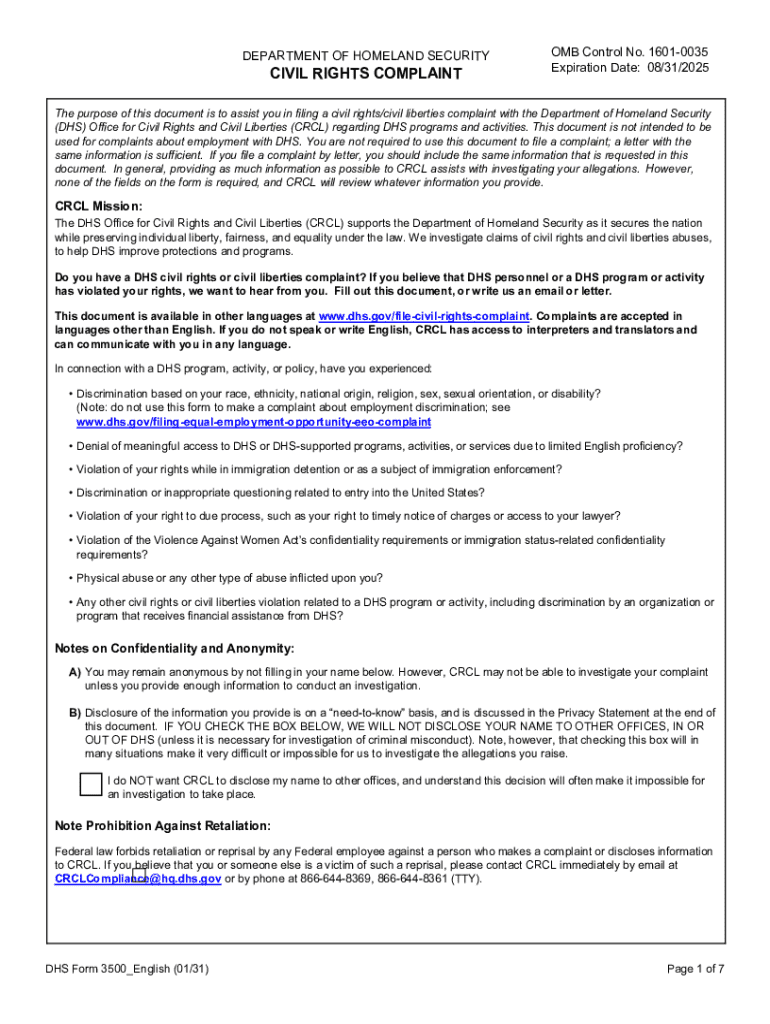
The DHS Civil Rights Complaint Form is a document used by individuals to report civil rights or civil liberties violations to the Department of Homeland Security's Office for Civil Rights and Civil Liberties (CRCL). This form is essential for enabling citizens to formally voice concerns regarding discrimination or infringement of rights by DHS programs or activities. The form's purpose is to assess allegations of discrimination based on race, color, national origin, disability, religion, sex, or age, providing an official channel to address and investigate these issues. Importantly, the process ensures confidentiality to protect complainants and prohibits retaliation against those who file a complaint.
Steps to Complete the DHS Civil Rights Complaint Form
Filling out the DHS Civil Rights Complaint Form involves several critical steps to ensure accuracy and completeness:
- Provide Personal Information: Start with your full name, contact information, and details on any representatives, if applicable.
- Detailed Description: Clearly outline the circumstances of the alleged civil rights violation, including dates, locations, and the individuals involved. Specificity helps in assessing the complaint accurately.
- Supporting Evidence: Attach relevant documents or evidence supporting your claims, such as emails, photographs, or witness statements.
- Authorization Section: Complete this part to grant or withhold permission for the release of your information, dictating how your data can be shared during the investigation.
- Review and Submit: Double-check all fields for correctness. Once satisfied, submit the form through your preferred method, whether by mail, online, or in-person.
How to Obtain the DHS Civil Rights Complaint Form
The DHS Civil Rights Complaint Form can be accessed through several channels:
- Online: Download a copy directly from the DHS or CRCL websites, where digital versions are available for both viewing and printing.
- Mail Request: Contact the Office for Civil Rights and Civil Liberties to request a physical form be sent to your address.
- In-Person: Visit a DHS office or local government facility where forms may be available for pickup.
Key Elements of the DHS Civil Rights Complaint Form
The form is comprised of several key sections, each with specific requirements:
- Complainant Information: This section requests basic personal and contact information to establish your identity.
- Nature of Complaint: You are asked to describe the violation in detail, including incident dates and involved parties.
- Requested Action: Outlines any specific resolution or outcome desired from the complaint process.
- Certification: Requires a signature to verify that the information provided is accurate and truthful.
Legal Use and Significance of the DHS Civil Rights Complaint Form
Submitting the DHS Civil Rights Complaint Form initiates a legal process underpinned by the Civil Rights Act and related laws. This formality ensures that all complaints are documented and properly handled under established federal standards. Using this form provides a legal avenue for victims of discrimination to seek redress, potentially leading to corrective actions or policy changes within DHS. This legal framework underlines the integrity of the complaint process and establishes trust with complainants.
Examples of Utilizing the DHS Civil Rights Complaint Form
Several real-world scenarios illustrate the practical application of the form:
- Workplace Discrimination: An employee at a DHS facility experiences racial discrimination from a supervisor, prompting the filing of a formal complaint.
- Airport Screening Bias: A traveler believes that they were unfairly singled out during airport security checks due to their religious attire, utilizing the form to report this incident.
- Accessibility Issues: A citizen with disabilities encounters barriers at a DHS facility, using the form to highlight the lack of accessibility features and seek remediation.
Eligibility Criteria for Filing the DHS Civil Rights Complaint Form
Eligibility to use the DHS Civil Rights Complaint Form is broad to ensure inclusive access:
- Individual Status: Any individual who believes they have been subjected to discrimination or rights violations by DHS actions or policies.
- Representative Filings: Authorized representatives or advocates can file on behalf of affected individuals or groups.
- Witness Reports: Witnesses to a violation may also report incidents, provided they furnish detailed information about the event.


Submission Methods for the DHS Civil Rights Complaint Form
The form offers versatile submission options to cater to different needs:
- Online Submission: Use secure web portals to upload the completed form and any attached documentation.
- Mail Submission: Send the form via postal service to the designated DHS complaint handling unit.
- In-Person Delivery: Present the form at a local DHS office for direct processing.
This diverse range of submission methods ensures accessibility and accommodates individual preferences.