






Definition & Meaning
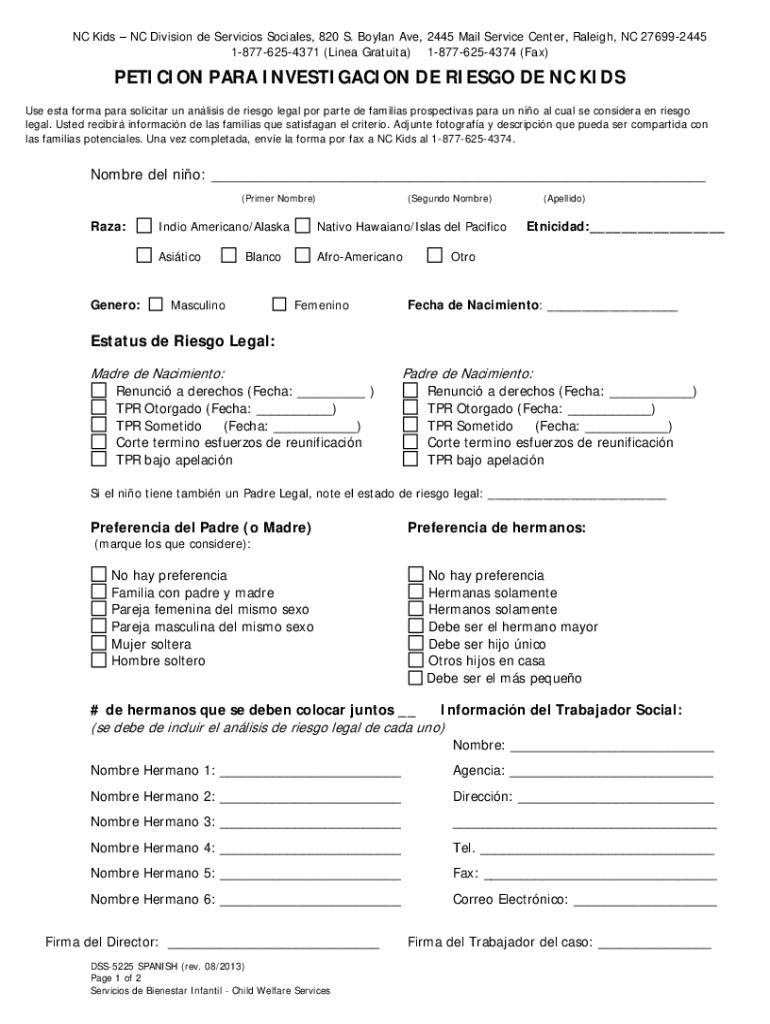
The "North Carolina State Government Social Services" form is a crucial document used to assess the risk and needs of children at risk within the state. This form is essential for prospective families intending to understand and address the specific requirements and legal standing of children under their care. It involves providing detailed information about the child's current circumstances, the legal status of their case, and any additional support they might require.
Detailed Understanding
- Purpose: This form aims to evaluate and manage the welfare of children through state-administered social services.
- Content: Includes sections for personal, legal, and specific care needs of children.
Steps to Complete the North Carolina State Government Social Services
-
Gather Necessary Information
- Collect the child's personal details, including their legal documents.
- Understand the child’s medical history and any special needs or disabilities.
-
Fill Out Personal Information
- Include the child's name, date of birth, and any identification numbers.
- Capture the details of legal guardians or prospective families.
-
Provide Legal Status Details
- Describe the current legal standing of the child.
- Highlight any ongoing court cases or legal proceedings.
-
Document Preferences and Special Needs
- Cite the preferences for the child's placement.
- Specify any medical or psychological conditions requiring special attention or care.
Important Considerations
- Accuracy: Ensure all information is precise and up-to-date.
- Thoroughness: Double-check all sections to provide comprehensive data.
How to Obtain the North Carolina State Government Social Services
-
Request from Local Social Services Office
- Contact the North Carolina Department of Social Services to request the form.
- Forms can often be mailed or picked up in person.
-
Access Online Resources
- Download available versions from official state or county websites.
- Verify the form's version to ensure it's the latest.
Practical Scenarios and Tips
- Contact Information: Keep a list of important contacts, like caseworkers, for assistance.
- Technology: Use electronic resources for faster form access and submission.
Important Terms Related to North Carolina State Government Social Services
- Legal Guardian: A person lawfully responsible for the child.
- Placement Preferences: The desired living arrangement for the child.
- Special Needs: Additional requirements due to medical or psychological conditions.
Glossary
- Risk Assessment: Evaluation of potential harm or needs within the child's environment.
- NC Kids: The department handling form processing and child placements.
Who Typically Uses the North Carolina State Government Social Services
-
Prospective Families
- Those looking to adopt or provide foster care.
-
Social Services Professionals
- Caseworkers and counselors managing child welfare cases.


Real-World Examples
- An adoption agency using the form to evaluate a child’s needs.
- Foster families needing to understand a child's background and requirements.
Key Elements of the North Carolina State Government Social Services
- Personal Information Section: Captures the identity and demographic data of the child and caretaker.
- Legal Details and Status: Documents any legal involvements or custody arrangements.
- Health and Special Needs: Area to describe any specific care, medical conditions, or requirements.
Important Parts to Note
- Required Fields: Necessary areas that cannot be left blank.
- Recipient Assignment: Sections where specific fields are meant for particular parties.
State-Specific Rules for the North Carolina State Government Social Services
- Regulatory Compliance
- Adheres to North Carolina's specific child welfare laws.
- Involves procedures unique to the state's social services policies.
Compliance Guidelines
- Ensure all state-specific criteria are met to avoid processing delays.
- Familiarize yourself with North Carolina's child welfare legislation.
Legal Use of the North Carolina State Government Social Services
- Permitted Usage
- For the lawful assessment and management of children's welfare.
- Facilitates the correct placement and care planning for at-risk children.
Legal Framework
- ESIGN Act Compliance: For digital signatures and electronic submission.
- Confidentiality: Maintaining the privacy of involved parties is essential.
Form Submission Methods (Online / Mail / In-Person)
-
Online Submission
- Complete and submit electronically via the state's official platforms.
-
Mail Submission
- Print the form and send it to the designated state office address.
-
In-Person Delivery
- Deliver directly at local offices for immediate processing confirmation.
Consideration for Submission
- Deadlines: Be aware of submission deadlines.
- Verification: Confirm receipt of submission with the relevant authority.