






Understanding the Civil Grand Jury Application Process
The Civil Grand Jury Application is a crucial document for individuals interested in serving on a Civil Grand Jury, specifically in San Mateo County, California. This section provides an overview of the application process, highlighting the steps to successfully apply and serve as a juror.
-
Familiarize Yourself with the Civil Grand Jury Responsibilities
- Prospective jurors should thoroughly understand the role and duties involved in serving on a Civil Grand Jury. Responsibilities include investigating local government operations and assessing practices to ensure transparency and accountability.
- Jurors typically review a wide range of topics, including government budgets, public records, and community complaints.
-
Review Eligibility Criteria
- Applicants must meet specific eligibility criteria to qualify for jury service. These include being at least 18 years old, a U.S. citizen, and a resident of the county where the jury is convening.
- Candidates must also have sufficient knowledge of the English language and should not have felony convictions.
Steps to Complete the Civil Grand Jury Application
The application for the Civil Grand Jury involves several critical steps. Here is a comprehensive guide to completing the application effectively:
-
Gather Required Documentation
- Ensure you have all necessary documents, including proof of citizenship, residency, and identification. You may need to submit these as part of your application.
- Specific documents might include a driver’s license, utility bill, or voter registration card to verify residency and identity.
-
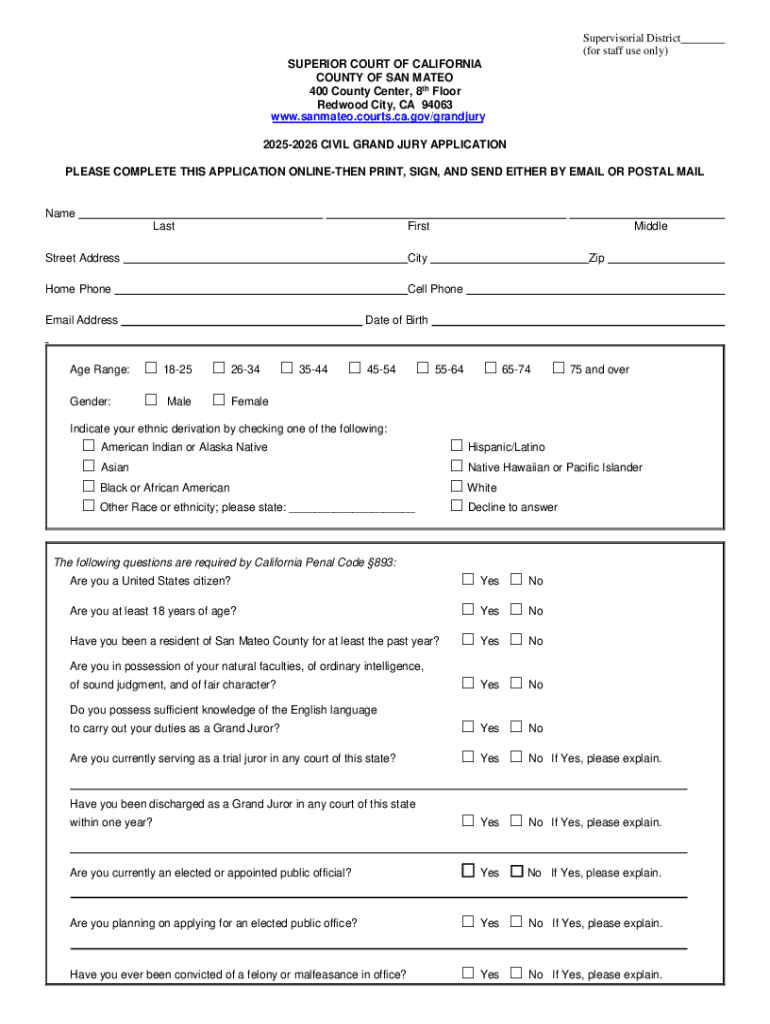
Completing the Application Form
- Fill out the Civil Grand Jury Application thoroughly, providing accurate demographic information, educational background, and any prior service or experience related to jury duties.
- The form includes sections for applicants to describe their interest in serving and any relevant skills such as analytical ability or familiarity with legal processes.
-
Submit Background Information
- Applicants may undergo a background check, which assesses their criminal history and confirms eligibility. Be prepared to provide any additional information required for this process.
- Background checks help ensure the integrity and reliability of selected jurors.
Important Dates and Deadlines
Timelines are crucial when applying to serve on a Civil Grand Jury. Missing a deadline can disqualify an application.
-
Application Availability and Final Submission Dates
- Applications are typically available early in the year for the upcoming judicial period. Be mindful of submission deadlines, which are often well-defined to allow time for selection and training processes.
-
Interview and Training Schedule
- Shortlisted candidates may be asked to participate in interviews and must be available for pre-service training sessions. Scheduling flexibility is recommended to accommodate these requirements.
Legal Considerations and Compliance
Understanding the legal implications of serving on a jury is critical for applicants.
-
Confidentiality and Ethical Standards
- Jurors must uphold strict confidentiality regarding the proceedings and findings of the jury. Violation of this can result in legal consequences.
-
Non-Compliance Penalties
- Failing to adhere to juror responsibilities or confidentiality agreements can lead to penalties, including legal action or dismissal from the jury.
Who Uses the Civil Grand Jury Application
The application is designated for residents interested in performing civic duties by reviewing and evaluating governmental operations.
- Demographic and Professional Diversity
- The selection process strives for a diverse jury pool, representing various ages, backgrounds, and professional experiences to ensure comprehensive oversight and recommendations.
State-Specific Rules and Differences
Each state may have unique rules regarding the operation and formation of Civil Grand Juries.
- California-Specific Procedures
- In California, the Civil Grand Jury is distinct from criminal grand juries, primarily focusing on civil oversight rather than indictments or criminal proceedings.
Electronic and Paper Versions of the Application
The Civil Grand Jury Application is available in both digital and physical forms, catering to different applicant preferences and technological access levels.
-
Digital Submission Advantages
- Electronic applications can be submitted more efficiently and might allow for faster processing and confirmation. Ensure your submitted files are in the appropriate format as specified, often PDF or DOC.
-
Paper Submissions
- For those preferring traditional methods or lacking digital access, paper applications are acceptable. Follow mailing instructions carefully to ensure timely delivery.
This comprehensive guide provides targeted information on understanding, completing, and submitting the Civil Grand Jury Application. Ensuring thorough preparation and attention to detail will enhance the likelihood of selection and contribute to a successful jury tenure.