







Definition and Purpose of the Form
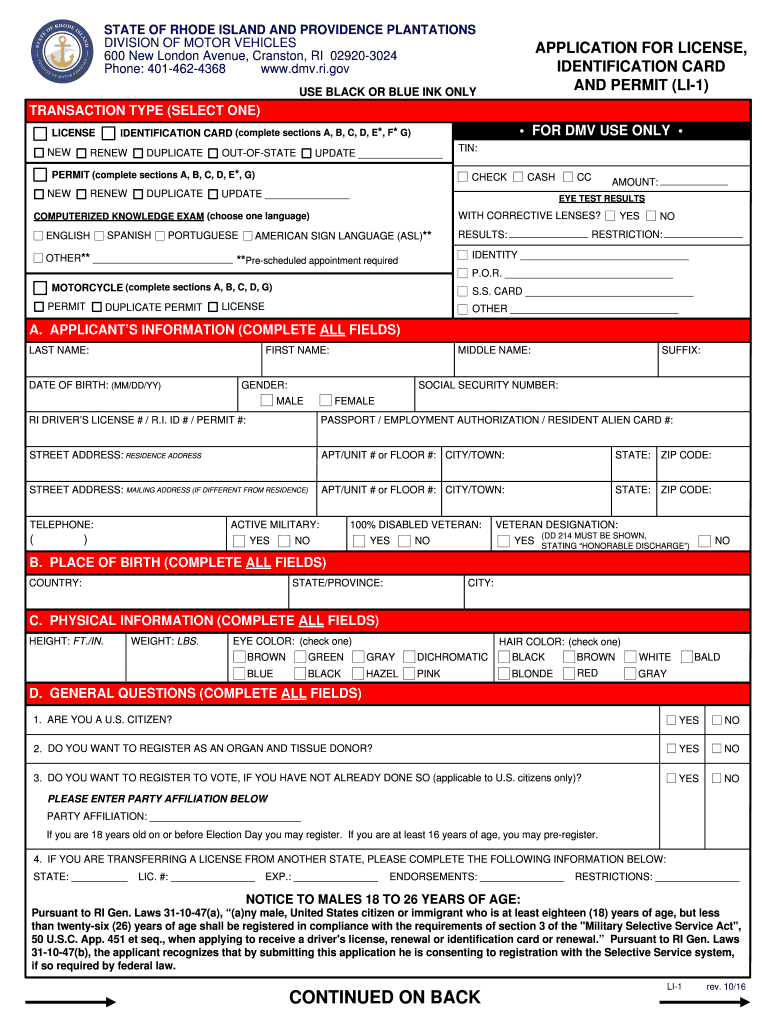
The State of Rhode Island: Division of Motor Vehicles (DMV) form is essential for individuals applying for a driver's license, identification card, or permit within the state. It collects personal data, physical details, and citizenship status, ensuring applicants meet the state's legal prerequisites for these documents. The form features sections addressing military service declarations, voter registration, and compliance with selective service requirements for applicable applicants.
How to Obtain the Form
You can access the DMV form through the Rhode Island Division of Motor Vehicles' official website or in person at a DMV office. If you opt for online access, you can download and print the form directly. For those visiting a DMV office, physical copies are available at customer service desks, allowing individuals to complete the form on-site or take it home for later submission.
Steps to Complete the Application
Filling out the DMV form requires attention to detail and accuracy. Follow these instructions:
-
Provide Personal Information
- Include your full name, date of birth, and contact information. Ensure all details match your identification documents.
-
Enter Physical Details
- Specify your height, weight, and eye color. These details help verify your identity.
-
Declare Citizenship Status
- Indicate whether you are a U.S. citizen, permanent resident, or have another status, and provide supporting documentation.
-
Military and Voter Registration Declarations
- Indicate military service, if applicable. Confirm your voter registration status or express consent to register.
-
Submit Supporting Documents
- Attach necessary documents, such as proof of residency or identity, depending on your application type.
Required Documents
For successful form submission, prepare several supporting documents:
- Proof of Identity: Valid passport, birth certificate, or permanent resident card.
- Residency Proof: Utility bill, lease agreement, or recent bank statement showing a Rhode Island address.
- Additional Documents for Minors: Parental consent forms, school enrollment verification.
Ensure that all documents are the original or certified copies, as photocopies are not accepted unless specified.
Form Submission Methods
Applicants can submit the form:
- Online: Some forms allow submission through the DMV's portal, especially if no additional documentation is needed.
- In-Person: Visit any Rhode Island DMV office. This method ensures assistance is available if you encounter issues during submission.
- By Mail: If submitting by mail, include all necessary documents and send them to the specified DMV address.
Each submission method may have unique requirements, so review the process specific to your form type.
Key Terms
Understanding critical terminology aids in navigating the DMV process:
- Permit: A temporary license allowing new drivers to practice under supervision.
- Selective Service: A requirement for males aged 18-25 to register with the U.S. Selective Service System.
- Endorsements: Additional qualifications on a license, such as motorcycle or commercial vehicle operation.
State-Specific Rules
Rhode Island mandates specific guidelines to comply with when applying for licenses:
- Age Requirements: Specific minimum age thresholds exist for permits and licenses.
- Instructional Permits: A prerequisite period for new drivers before taking a road test.
- Driver's Education: Mandatory courses for applicants below a certain age.
Applicants must familiarize themselves with these state-specific rules to avoid delays.
Legal Use and Compliance
State laws require adherence to DMV regulations:
- License Validity: It’s crucial to renew your license before expiration.
- Traffic Laws: Complied with to avoid penalties or license suspension.
- Documentation Accuracy: Falsifying information can lead to legal consequences and impact future applications.
Proper compliance ensures the lawful use of the documents obtained through the DMV.
Examples of Practical Use
Consider the following scenarios to understand application contexts:
- A new resident transfers their out-of-state license to Rhode Island, necessitating proof of residency and driving history.
- A teenager applying for their first instructional permit engages in driver's education to fulfill requirements.
- An international worker secures a Rhode Island ID for banking and leasing purposes, even without pursuing a driver’s license.
These examples illustrate varied use cases for different applicants.




